What Is Answer Engine Optimisation (AEO)? 2026 AI SEO Expert Guide
AI SEO

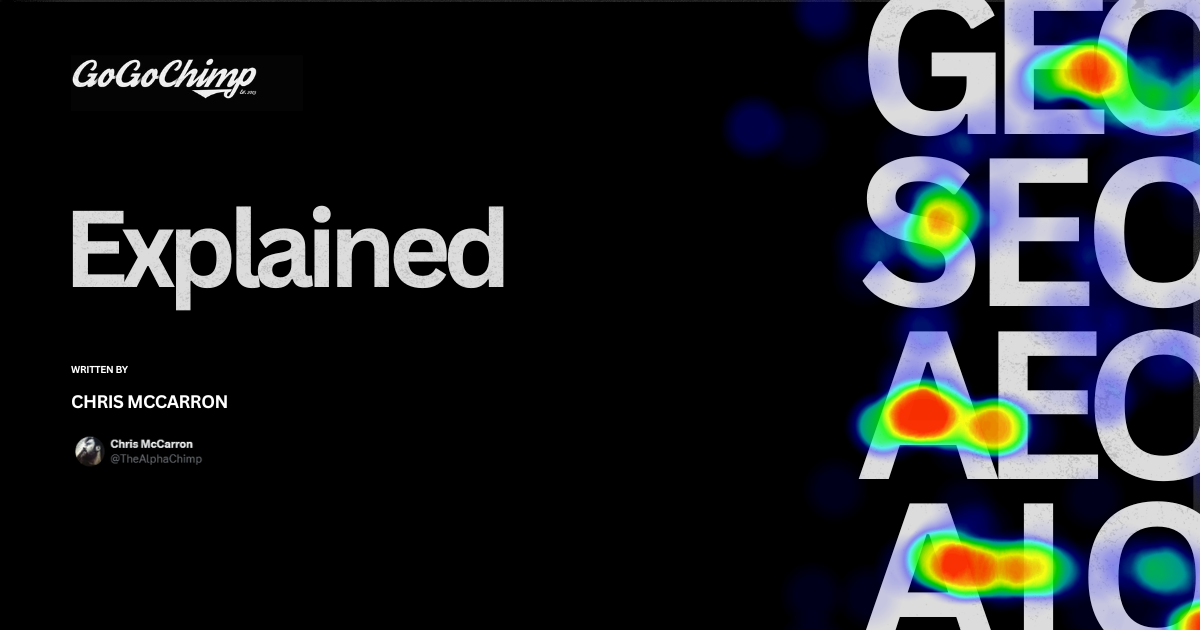
Half of US searches now serve an answer at the top before the ten blue links. The publisher's click never fires. Desktop click-throughs drop 47.5% on those queries (Authoritas, 2025). That is the compression event most conversion teams haven't priced in properly.
Answer Engine Optimisation (AEO), or "answer engine optimization" in US English, is what you do about it. It is not a rebrand of SEO. It is a different retrieval layer, with different signals, different winners, and different measurement.
I've been running conversion work for 13 years. Twenty-four months ago Microsoft Copilot cited one of our listicles to a buyer typing "best Shopify CRO agencies UK" into the answer box. That single citation surface now sends more qualified sessions than the whole first page of Google organic. Ninety days of Bing Webmaster Tools AI Performance data (2026-07-01 snapshot) showed 6,700 Copilot citations against 82 Google organic clicks on the same content. 44 Bing citations for every Google click.
The trajectory has since accelerated: the 30-day window ending 2026-07-06 recorded 4,496 citations, sustained at 279 to 402 per day for the first week of July. Two retrieval layers, one site, opposite verdicts on which page belongs in the answer.
This guide is the working operator's field manual. How we earn those citations. How the four answer engines actually rank the same content differently. Where the 6-step framework holds, where it snaps, and what the measurement looks like when Google Search Console can't see any of it. It sits underneath our definitive GEO pillar, which covers the wider generative-engine surface. AEO is the answer-shaped subset of that discipline.
AEO is the answer-shaped subset of a wider discipline. For the umbrella that covers Discovery, Retrieval, and Citation across every AI answer surface, see our AI SEO pillar covering the three-pillar framework and the six-move sequence that produced 5,600 Bing Copilot citations across three months at gogochimp.com.
What is Answer Engine Optimisation (AEO)?
AEO stands for Answer Engine Optimisation (US English: "answer engine optimization"). The acronym is used in a handful of unrelated fields, American Eagle Outfitters (retail), Authorised Economic Operator (customs and trade), Agriculture or Education Officer (public-sector role titles). In marketing and search, AEO always means Answer Engine Optimisation, the discipline this guide covers.

Answer Engine Optimisation is the discipline of writing and structuring content so that answer engines (Google's featured snippets and AI Overviews, Microsoft's Bing answers and Copilot, Perplexity's direct-answer surface, ChatGPT's synthesised responses) lift a specific passage of your page into the answer they give the user. The user often never sees the blue link. They see the answer, and (sometimes) a citation next to it.
How has AEO evolved since Google introduced featured snippets in 2014?
AEO is older than most people realise. Featured snippets, introduced by Google in 2014, were the first answer-engine surface. Bing quick answers followed. The shape of the discipline hasn't fundamentally changed. Write a clean, standalone, extractable answer. Make it easy for the retrieval layer to find it. Give the answer engine something it can quote verbatim without paraphrasing.
What changed in 2024-2026 is the surface count. There used to be two answer engines that mattered commercially: Google featured snippets and Bing quick answers. Now there are four (add Perplexity and ChatGPT), and Google's own answer surface has split into featured snippets, People Also Ask, and AI Overviews. Each has slightly different mechanics. The discipline overlaps enough that a well-optimised page can win multiple surfaces at once, which is where the compounding returns sit.
Why does AEO matter commercially in 2026?
Across GoGoChimp's Bing Webmaster Tools AI Performance report (verified 2026-07-11), our three most answer-shaped listicles account for 87.25% of a 6,700-citation footprint over 90 days. The most dominant grounding query, "best Shopify CRO agencies UK", earns a 62.75% Copilot citation share.
Why it matters commercially: cited pages earn organic clicks even when the user reads the answer without clicking. Seer's 2026 study across AIO-eligible queries recorded a 35% CTR lift on downstream organic clicks when the brand is cited inside the AIO (Seer, 2026). That's the click-clawback mechanic. Even when the AIO absorbs the visit, the presence of your citation nudges a meaningful share of readers to click through anyway.
The ceiling is bigger than the current numbers suggest. Google confirmed at I/O 2026 that AI Mode has crossed one billion monthly users, with query volume more than doubling every quarter since launch (Google, 2026). Semrush's 2026 AI Visibility Index measured AI-sourced traffic to US retail sites climbing 1,324% between October 2024 and May 2026, and travel sites 2,215% (Semrush, 2026). The answer surface is where the retrieval traffic is going.
AEO vs SEO vs GEO: where AEO sits inside the wider stack
The acronyms have multiplied. Three matter today.
SEO (Search Engine Optimisation)
is the traditional discipline. Rank a page in a ranked list of results. Win the click on the blue link.
AEO (Answer Engine Optimisation)
is the subset of the discipline concerned specifically with earning citation inside answer surfaces: featured snippets, People Also Ask, Google AI Overviews, Bing Copilot, Perplexity, ChatGPT. AEO overlaps heavily with classical SEO on the fundamentals (topical authority, technical hygiene, structural clarity) but weights extractable answer passages, structured data, and third-party trust signals more heavily.
GEO (Generative Engine Optimisation)
is the wider discipline covering all generative retrieval surfaces, including but not limited to answer engines. GEO is the umbrella. AEO sits underneath it as the answer-specific application. Every AEO tactic is a GEO tactic. The two disciplines overlap heavily but don't perfectly map. The definitive GEO pillar covers the wider ground; this post is the AEO-specific working manual.
The distinctions aren't purely academic. They map to how the retrieval layer treats your content.
| Axis | SEO | AEO | GEO |
|---|---|---|---|
| Primary output surface | Blue link on a SERP | Answer box, featured snippet, PAA, AIO citation | Any generative-engine citation surface, including AEO surfaces |
| Primary win condition | Rank in the top 10 | Be the extracted passage (usually top 3 of the retrieval set) | Be cited anywhere in the generated answer |
| Signal weight | Backlinks, on-page keywords, technical health | Extractable passages, dated statistics, schema, third-party trust | All AEO signals plus entity coverage, source-corpus alignment, brand mention density |
| Query type it wins | Head and long-tail keyword phrases | Question-shaped natural-language queries | Any query the generative retriever decomposes into sub-queries |
| Measurement | Rankings, impressions, clicks | Snippet ownership, AIO citation frequency, PAA presence | Cross-engine citation share, brand mention frequency, referral clicks from AI engines |
The three disciplines aren't mutually exclusive. A page that ranks well on Google, wins the featured snippet, gets cited inside the AIO, and also gets cited by ChatGPT and Perplexity is winning all three surfaces simultaneously. Our top-cited listicles do exactly this. But the tactics that move each surface differ enough that you need to think in three registers, not one.
The other quiet split is where the traffic goes. Classical SEO sends clicks. AEO sends fewer clicks but higher-quality ones (the user has already read a version of the answer and clicks to verify or expand). GEO citations often send no direct click but build brand association that pays out on a later query. If you're only measuring direct clicks, you're missing most of the AEO and GEO value.
For the full four-way breakdown covering AEO, GEO, AIO, and how SEO fits underneath them, see our comparison at GEO vs SEO vs AEO vs AIO.
The four engines AEO targets
Four answer engines account for essentially all of the commercially significant answer-surface traffic in 2026. Each has different mechanics, different citation rates, and different tactics that win.
Google (featured snippets + AI Overviews + People Also Ask)
Google is the largest answer surface by volume and the most complex. Three distinct answer formats sit on the same SERP: featured snippets (the traditional position-zero box), People Also Ask (the expandable question set), and AI Overviews (the generative summary at the top of eligible SERPs).
Featured snippets predate AI. They still matter because they carry click-through rates well above the classical top-10 average and they're the format Google's retrieval layer treats as the highest-confidence answer for a given query. Winning them still requires a page that ranks in the top 10 organically, with a clean 40-60 word answer chunk that directly addresses the query.
People Also Ask boxes are where the query decomposition happens. Google surfaces related questions the user might also ask, each with its own expandable answer. PAA presence is high-value because each expansion is a citation opportunity, and PAA questions often become the sub-queries the AIO layer draws from.
AI Overviews (rolled out from May 2024, expanded through 2025-2026 and joined by AI Mode at I/O 2026) are the newest and largest surface. AIO prevalence estimates vary wildly across the industry: Xponent21 measured 60.32% of US SERPs in April 2026; Conductor's Q1 2026 benchmark across 21.9 million queries put it at 25.11%; BrightEdge's 9-industry tracker recorded 48% by March 2026; Google's own I/O 2026 disclosure implied roughly 50%. What everyone agrees on: the surface is expanding, not contracting.
Winning Google's answer surfaces rewards the classical SEO discipline (on-page depth, backlinks, E-E-A-T signals) plus a small set of AEO overlays. The overlays: answer capsules directly under H1s, FAQPage schema, semantic HTML comparison tables, dated statistics, inline hyperlinked third-party citations. Pages that satisfy both surfaces get cited more heavily than pages that only satisfy one.
The Google-specific playbook (featured snippets, PAA, and AI Overviews) is at How to rank in Google AI Overviews.
Bing (quick answers + Copilot)
Bing's answer surface splits between traditional quick answers (the Bing equivalent of featured snippets, older surface) and Microsoft Copilot (the generative answer engine that surfaces both inside Bing search and inside the standalone Copilot app). Copilot is where GoGoChimp is winning today.
The first-party measurement surface here is genuinely excellent. Bing Webmaster Tools' AI Performance report (free, first-party, confound-free) shows which of your pages Copilot cites, on which grounding queries, at what frequency. No proxy layer. No polling of the answer engine. Microsoft's own citation counter, exposed to publishers directly. If you're serious about AEO measurement and you haven't claimed Bing WMT, that's the first move today.
Copilot's retrieval bias is heavily commercial and comparison-driven. Our 90-day reading shows 32% of top 25 grounding queries carry buyer intent, 40% research intent, 24% informational intent. Best-of listicles with semantic HTML comparison tables dominate the extraction pattern. Head-to-head comparison posts perform second-best. Definitional glossaries perform third.
Perplexity
Perplexity is the most citation-forward engine of the four: it is built to cite, with numbered sources in its answers. That inverts the ChatGPT maths. A Perplexity answer shows its sources by design. A ChatGPT answer often shows none.
Perplexity's source pool is heavily Reddit-weighted. 46.7% of Perplexity's top-10 source share is Reddit (Profound, 2025), and 6.6% of all citations are Reddit-sourced. That's higher than any other engine's Reddit dependency by a wide margin. Perplexity effectively treats Reddit as its default authoritative corpus for opinion-heavy queries, which covers a huge share of purchase-research and comparison intent.
Winning Perplexity therefore means winning at Reddit as much as it means winning on your own site. Genuine sustained Reddit participation over 12+ months, using a real name in the subreddits your buyers actually inhabit, moves Perplexity citation share in ways that on-page work alone won't.
ChatGPT
ChatGPT is the trickiest of the four. It often cites nothing. In the US, 48% of its answers had no citation in March 2026, before citations rebounded in May (seoClarity, 2026). Its retrieval corpus is heavily Wikipedia-weighted: Wikipedia is 47.9% of ChatGPT's top-10 source share and 7.8% of all its citations (Profound, 2025). The average ChatGPT response cites 15 sources (Semrush, 2026), which is 5x the source count Gemini uses on the same prompts.
Brand citation rate on ChatGPT is remarkably low. Superlines tracked its own brand across 34,234 AI responses and got a 0.59% citation rate on ChatGPT against 13.05% on Perplexity (Superlines, 2026).
Winning ChatGPT means winning at the corpus level, not the page level. Wikipedia coverage (get your brand, methodology, and founder onto Wikipedia via legitimate WP:N sourcing, then defend). Mainstream news pickups (Forbes brand mention, TechNewsWorld named quote, TechnologyAdvice contribution all surface in ChatGPT's retrieval pool over time). Long-form academic content. First-party blog content is fourth in the priority stack.
One useful advantage: opening questions in a ChatGPT session are 2.5x more likely to trigger citations than turn-10 questions (Profound, February 2026). ChatGPT searches the web most on the first question and less as a conversation goes on. So aim to be the answer to the question that opens the session.
At-a-glance: 4 answer engines compared
| Engine | Snippet type | Citation rate | Format preference | Winning tactic |
|---|---|---|---|---|
| Google (featured snippets + AI Overviews + PAA) | Featured snippet, PAA expansion, AIO citation link | Links its sources inside the Overview. About 50% of US SERPs show AIO | Answer capsule + FAQPage schema + comparison table + E-E-A-T stack | Classical SEO discipline plus 40-60 word answer capsules under H1 and per H2 |
| Bing (quick answers + Copilot) | Bing quick answer + Copilot cited grounding source | First-party measurement via Bing WMT AI Performance report; buyer-intent-heavy retrieval | Best-of listicle with semantic HTML comparison table in first 40% of page | Ship the semantic table with 4-6 axes, every cell filled, per-vendor sections below |
| Perplexity | Direct-answer paragraph with numbered inline citations | Built to cite, with numbered sources in its answers | Reddit-weighted retrieval (46.7% of top-10 source share) plus on-page content | Genuine sustained Reddit participation plus buyer-comparison content on your site |
| ChatGPT | Synthesised answer with occasional inline links (browsing/search enabled) | Often none: 48% of US answers had no citation in March 2026, before a May rebound (seoClarity, 2026) | Wikipedia-weighted retrieval (47.9% of top-10 source share) plus mainstream news | Wikipedia entity anchor plus long-cycle earned-media investment. Opening questions are 2.5x more likely to trigger citations than turn-10 questions (Profound, February 2026) |
The four engines don't share their winners. Averi's 2026 research found only 11% of domains cited by both ChatGPT and Perplexity (Averi, 2026). Optimising for one engine buys you 11% coverage of the others. Pick the two engines your buyers actually use and cover both.
The AEO framework: 6 steps to winning answer-engine citations
The framework below is the working discipline behind our top-cited pages. Six steps. Sequenced by lift-per-hour, not by novelty.
Step 1: Write a 40-60 word answer capsule directly under the H1
LLMs and answer-engine retrievers preferentially lift standalone summary passages. Princeton's controlled study found this pattern the single highest-lifting structural change they tested (Princeton, 2024). The capsule should be definitional, specific, and standalone. It must contain the primary keyword, the entity you want cited, and at least one hard number.
Do not tease. Answer.
Worked example: the capsule at the top of this post contains "Answer Engine Optimisation (AEO)", "Google", "Bing", "Perplexity", "ChatGPT", "3,141 of 6,700 citations", "87.25% concentration", and "111 unique grounding queries". Eight citable specifics inside 55 words.
Step 2: Structure every H2 as a self-answering chunk of 150-400 words
Retrieval systems split documents into passages of roughly that length. Production RAG pipelines chunk at 400-600 tokens with 10-20% overlap, then retrieve top-30 to top-50 and rerank to top-5 (Firecrawl, 2026). Match that shape.
Open each H2 with a 40-60 word self-contained answer. Support it with one specific statistic, one named example, one blockquote-formatted quotable capsule. If your section is 900 words of wall-to-wall prose, the retriever treats it as one lump and extraction quality collapses.
The whole-page numbers matter too. Pages of 2,500-4,000 words are cited at 57-63% frequency in one 2026 benchmark, versus 3-4% for pages under 800 words (Presence AI, 2026). Grade 8-10 reading level earns 67% of ChatGPT citations; grade 14+ drops to 18-31%. Long enough to be substantive, plain enough to be extractable.
Step 3: Cite every number inline
Every numerical claim, every named study, every third-party stat gets an inline hyperlinked source. Third-party trust signals lift AI citation likelihood by roughly 75x, per Muck Rack and Seer's 25-million-link study (Muck Rack + Seer, 2026). Earned media alone accounts for 84% of AI citations. Pages that link out to authoritative sources are trusted with citations back.
This is the discipline most guides skip. It looks like academic pedantry. It's actually the single strongest structural trust signal the retrieval layer reads. If your page says "conversion rates rose by 34%" without a source, the retriever discounts the claim. If your page says "Enzymedica UK's conversion rate rose to 16.9% during Black Friday 2021 (case study)", the retriever treats the entire section as citable.
Step 4: Ship a FAQ section with schema
FAQ blocks are the highest-ROI structural pattern in AEO. They're pre-decomposed into query-answer pairs, which is exactly the shape the retriever wants. Wrap the block in FAQPage schema so the extractor can parse it without heuristics.
Rules: 6-10 questions minimum for a standard guide, 10-20 for a pillar. Each question phrased the way a real user would type it into Google or ChatGPT. Each answer 40-60 words, self-contained, containing at least one numeric claim within the first sentence.
Worked example: the FAQ at the bottom of this post carries 13 questions. Each opens with a hard number or named entity in the first sentence.
Step 5: Add page-level structural signals
Structured data at the page level. FAQPage schema on any FAQ block. HowTo schema on any step-by-step framework. DefinedTerm schema on any glossary term (AEO, GEO, AIO). Article schema on every post with a real author byline and Person schema for the author. BreadcrumbList schema for navigation context.
Add llms.txt at the root of your domain (View our's here: gogochimp.com/llms.txt). This was novel in 2025. It's table stakes by end of 2026. Ship it, keep it lean, iterate quarterly.
Add a proper Organization schema in the site footer with a real address, phone number, and sameAs list linking to LinkedIn, X, YouTube, Substack, Trustpilot, Google Business Profile, and any Wikipedia or Wikidata anchor. The retriever pattern-matches these signals as trust markers.
Step 6: Measure with Bing WMT AI Performance and Google Search Console
Bing Webmaster Tools' AI Performance report is the single first-party measurement surface built by an answer engine platform itself. Everything else (Profound, Ahrefs Brand Radar, third-party trackers) is a proxy built from external polling. Both are useful. But the first-party surface (which pages Copilot cites, on which grounding queries, at what frequency, from Microsoft themselves) is the anchor.
Google Search Console provides the AIO impressions proxy on the Google side. GSC doesn't yet distinguish AIO impressions from classical organic impressions, but movements in the impressions curve on pages that satisfy the AEO framework are diagnostic. Watch the impressions curve on any pillar you AEO-optimise. If impressions rise sharply without a corresponding rankings movement, that's the AIO citation signal moving.
One measurement caveat: LLM recommendation lists are almost never the same twice. Rand Fishkin's SparkToro / Gumshoe study ran 12 prompts through ChatGPT, Claude, and Google AI 2,961 times across 600 volunteers. ChatGPT and Google AI Overviews returned the same brand list less than 1% of the time; the same list in the same order less than 0.1% (SparkToro, 2026). Measure share, not rank. A brand's visibility percentage across many runs of similar prompts is the meaningful metric.
Content formats that consistently earn answer citations
Not every content format is equally citable. Five formats disproportionately earn answer-engine citations across our own footprint and the wider industry research.
Best-of listicles with semantic HTML comparison tables
The dominant format for answer-engine citation. All three of our top-cited pages are best-of listicles with a semantic HTML comparison table near the top. /blog/best-ab-testing-tools-2026 earns 1,500 Bing Copilot citations across 90 days. /best-cro-agency-uk-2026 earns 1,200. /blog/best-heatmap-tools-2026 earns 441. Together, 3,141 of 6,700 citations.
Why the format wins: the retriever preferentially lifts comparison tables into answer surfaces almost verbatim. Copilot's Bing-integrated retrieval layer is especially aggressive about this. If your listicle uses markdown pipes rendered as prose, or omits the comparison table entirely, you're leaving the single biggest lever on the table.
The construction rule: semantic <table> markup with <thead>, <tbody>, <th>, <td>. Not decorative CSS grids. Not div-based layouts styled to look like tables. The retriever reads the HTML. Give it something it can parse.
Definitional pillars
Long-form definitional guides on a category-defining term (this post is one, our GEO pillar is another). Answer engines route "what is X" queries to whichever page is the most extractable definitional source.
Format: answer capsule under H1. Table of contents. 10-20 H2 sections. Each section opens with a 40-60 word standalone answer. Blockquote-formatted quotable capsules inside major sections. FAQPage schema at the bottom. Named-author byline with Person schema.
Dated statistics posts
Statistics posts age poorly if the dates aren't visible. Statistics posts that carry the year in the title, in the meta description, in the schema datePublished field, and in the answer capsule earn citations because the retriever weights recency heavily. Content updated inside the last 30 days is cited at 71% frequency; content 1-2 years old drops to 18% (Presence AI, 2026).
Format: dated title ("X statistics 2026"). Answer capsule with the top-line number. Ranked list of statistics, each with source hyperlinked inline. Methodology section explaining how the statistics were selected. Update the post quarterly and update the updated_date field.
FAQ pages
Every pillar should carry a FAQ block. Standalone FAQ pages also earn direct answer-engine citation on question-shaped queries. Format: FAQPage schema, question-heading + answer-body pairs, 40-60 words per answer, phrased the way a real user types the question.
Comparison posts (head-to-head)
Head-to-head comparison posts (X vs Y) are the second-most citation-earning format on our footprint. /blog/vwo-vs-optimizely-2026 earns 67 Copilot citations. /blog/gogochimp-vs-cxl earns 1. The Baymard cart-abandonment research pages are external examples of comparison-heavy content earning citation across ChatGPT, Perplexity, and Google AI Overviews.
Format: intro that names both entities and the comparison axis. Semantic HTML comparison table near the top. Per-entity H2 sections with balanced treatment. Explicit "which to pick" section with reasoning (not fence-sitting). FAQPage schema.
Structured data for AEO: FAQPage, HowTo, DefinedTerm, QAPage
Structured data (Schema.org JSON-LD blocks in the page head) is the machine-readable layer AEO retrieval systems parse to extract passages cleanly. Four schema types do most of the work.
FAQPage schema
wraps a set of question-answer pairs. Use it on any FAQ block, whether at the bottom of a pillar or as a standalone FAQ page. It maps directly to how retrievers structure their internal Q-A representation. FAQPage schema on 46 GoGoChimp posts (post the June 2026 schema enrichment programme) contributed to the Bing Copilot citation growth from about 100/day mid-June to 326/day on 1 July.
HowTo schema
wraps a step-by-step framework. Use it on any post structured as a numbered process. The 6-step framework in this post takes HowTo schema at the section level. Each step gets a name and text property. Retrievers use HowTo schema to extract step-by-step answers to "how to X" queries.
DefinedTerm schema
wraps a glossary term with its definition. Use it on any definitional pillar or glossary page. The terms AEO, GEO, and AIO in this post each take DefinedTerm schema. Retrievers use DefinedTerm schema to extract clean definitions for "what is X" queries.
QAPage schema
wraps a single Q-A pair on a page dedicated to answering one question (think Quora, Reddit, Stack Overflow answer pages). Use it when the entire page is structured around one question. Retrievers weight QAPage schema pages heavily on question-shaped queries because the schema signals the page's entire purpose.
Beyond these four, ship Article schema on every post with a real author byline and Person schema for the author, BreadcrumbList schema for navigation context, and Organization schema in the site footer with a real sameAs list. Our schema markup for AI SEO guide walks through the exact JSON-LD blocks worth shipping.
The schema-at-scale point matters. One page with Article schema is a good start. A hundred pages with the full stack (Article + BreadcrumbList + FAQPage + Person + Organization) is a citation asset. Schema on one hero page is a novelty. Schema on the whole site is a moat.
Case studies: two GoGoChimp pages and how they win AEO
/blog/best-ab-testing-tools-2026: the 1,500-citation champion
Our single largest AEO-cited page. 1,500 Bing Copilot citations across 90 days ending 2026-07-01. Google organic position 6.7 with roughly 818 impressions across the same 90-day GSC window. The Bing-citations-to-Google-impressions ratio sits at approximately 1.83 to 1: Copilot cites the page almost twice as often as Google impresses it.
What's on the page. A best-of listicle covering A/B testing platforms across four buyer segments (self-serve, mid-market, enterprise, open-source). A semantic HTML comparison table with 10-plus rows and 6 axes. Per-vendor H2 sections of 200-350 words each. A methodology section explaining the ranking criteria. An 8-question FAQ with quantitative answers. Full schema stack (Article + FAQPage + ItemList + Person + Organization).
Why it wins. The grounding queries citing the page carry buyer intent at high citation share. "best A/B testing platforms for growth teams" earns 23.06% Copilot share. "best A/B testing platforms 2026" earns 27.63% share. "server-side A/B testing platforms for engineering teams" earns 40.35% share. "best A/B testing platforms for growth teams" (specific phrasing) earns 42.37% share. Every one is a consideration-stage buyer evaluating specific vendors, and the retriever preferentially cites the page that already did the vendor comparison work.
The tactical lesson. The 1,500-citation ceiling isn't a ceiling. It's a floor for a properly-structured comparison listicle on a topic where the buyer set uses AI search heavily. Every SaaS category has a "best X tools 2026" query with commercial intent behind it. Comparison table plus per-vendor sections plus FAQ plus schema, published once, refreshed quarterly.
/best-cro-agency-uk-2026: 1,200 citations at Google position 22.4
The reference implementation for the AEO thesis. 1,200 Bing Copilot citations across 90 days. Google organic position 22.4. That's not top 10. Not top 20. Position 22.4, deep in the second page of results. Yet the Copilot retrieval layer treats it as the second most authoritative page on the site.
The citations-to-Google-clicks ratio is roughly 1,200 to 1. Copilot cited the page 1,200 times across 90 days. Google organic sent 1 click in the same window.
What's on the page. A 12-agency listicle. A 12-row, 7-column semantic HTML comparison table (Rank, Agency, Location, Specialty, Named-client win, Starting price, Endorsements). Per-agency H2 sections of 150-300 words with named clients and dated results. Methodology section. Nine external citations spanning Clutch, Neil Patel, Noah Kagan, Wikipedia, Shopify Enterprise Blog, Awwwards, The Drum, Forbes Council, HubSpot. An 8-question FAQ. Full schema stack.
Why it wins despite ranking so poorly on Google. The retriever is optimising for extractability and trust, not for Google's ranking signal. A comparison page with 12 named agencies, each with a named client win, dated statistics, and a linked source, is a page the retriever can lift verbatim into an answer. Position 22.4 doesn't matter to the retriever. The signals Google's classical ranking algorithm weights (backlink authority, click-through rate, dwell time) are not the signals the AI retrieval layer weights most heavily.
The tactical lesson. Stop optimising to Google's ranking signal alone if you want AEO citations. The two surfaces reward different things. A page can rank poorly on Google and still earn 1,200 answer-engine citations, or rank well on Google and earn zero. Judge each page on the surface you're trying to win.
Common AEO mistakes to avoid
Seven patterns to strip on sight.
Mistake 1: Optimising only for AI Overviews and ignoring the other three engines
AIO is one surface. Bing Copilot, Perplexity, and ChatGPT are the others, and only 11% of domains are cited by both ChatGPT and Perplexity (Averi, 2026). Optimise for the surfaces your buyers use, not the one your competitors talk about.
Mistake 2: Writing "content for AI" that no human reads
The 2024-2025 SGE spam wave taught the industry this the hard way. Google's March 2024 core update targeted scaled AI content directly. 129 of 130 sites in Lily Ray's Helpful Content Update cohort never recovered. Real experts. Real bylines. Real methodology. Real citations. That's what wins.
Mistake 3: Skipping the FAQ block
FAQ blocks are the highest-ROI structural pattern in AEO. Pre-decomposed for retrieval. Ships as FAQPage schema. Matches the exact query patterns AI users type. And they're the easiest single addition to any existing pillar. If your top 10 posts don't have FAQs, that's the next sprint.
Mistake 4: Publishing once and walking away
Source share on Reddit vs Wikipedia inside ChatGPT can shift 60% to 10% inside a fortnight (Profound, 2025). Answer engines are fast-moving surfaces. Dated statistics need updating. Citations need refreshing. If your pillar's last-updated field says 2024, the retriever notices.
Mistake 5: Ignoring earned media as an AEO channel
84% of AI citations come from earned media, and third-party trust signals lift citation likelihood by roughly 75x (Muck Rack + Seer, 2026). Digital PR is not a separate discipline from AEO. It's the trust layer AEO runs on. A brand with 40 pieces of earned media across DA-70+ outlets will beat a brand with 400 blog posts and no earned media, at the same content quality.
Update, September 2026: third-party sources dominate AI citations overall, but the picture flips at B2B evaluation. Across AI search as a whole, 96% of citations point to third-party sources, up from about 80% a few months earlier (Writesonic via Search Engine Journal, 2026). Nelson Brassell's study for Ten Speed, 7,387 citations across 170 B2B evaluation-stage prompts measured through Peec AI, found the opposite: 88.3% of citations at evaluation come from pages the brand controls, with product pages the most cited type at 24.1%, articles at 17.4%, comparison content at 13.3% and listicles at 13.2% (Ten Speed, 2026). Citations look completely different at the top and bottom of the funnel. Always say which stage you mean.
Mistake 6: Skipping the semantic HTML comparison table on listicles and comparison posts
This is the most-extracted structural element on our top-3 pages. If your listicle uses markdown pipes rendered as prose or omits the comparison table entirely, you're leaving the largest citation lever on the table. Semantic <table> markup. Not decorative CSS grids. Not divs.
Mistake 7: Measuring AEO with SEO tools alone
Rankings and impressions are Google organic. Citations are the answer surface. They measure different things. If you're tracking "AI SEO performance" with position-tracking dashboards alone, you're missing the entire citation surface. Bing WMT AI Performance is the first-party citation surface. Use it or you're guessing.
AEO by vertical: ecommerce, SaaS, law, healthcare, and Shopify
The discipline scales across verticals but the winning tactics shift based on how the retrieval layer treats the category.
AEO for ecommerce (Shopify, WooCommerce, headless)
Product-comparison content wins. Best-of listicles filtered by vertical (best AI CRO tools for Shopify DTC, best heatmap tools for enterprise ecommerce) earn citation share disproportionately. Named-client case studies with hard revenue numbers earn cross-engine retrieval. Ecommerce category pages benefit from FAQ blocks (not just product pages), which earn People Also Ask and featured snippets.
AEO for SaaS
Definitional pillars beat listicles on SaaS categories where the buyer researches the category before comparing vendors. Long-form "what is X" pillars earn ChatGPT retrieval share. Head-to-head comparisons ("X vs Y") earn Perplexity and Copilot. SaaS is where structured data does the most work: SoftwareApplication, offers, and pricing schema all feed the retrieval layer directly.
AEO for law firms
Jurisdictional content earns citation because the retrieval layer scopes by geography for legal queries. City-specific and state-specific pillars ("personal injury settlement calculator California", "employment law consultation Manchester") outperform national-scope pillars for local intent. Clear scope disclaimers (jurisdictions covered, scope of advice) matter for retrieval trust, not just compliance.
AEO for healthcare
YMYL scrutiny is heaviest. Author credentials matter more than in any other vertical. Named-author bylines with Person schema and clear medical or clinical qualifications earn citation share; unattributed health content is discounted by every retrieval layer. Third-party citation density has to skew academic (PubMed, peer-reviewed journals) rather than industry blog posts.
AEO for Shopify, Webflow, and WordPress
The platform your site sits on doesn't directly influence retrieval, but it shapes what schema you can ship at scale. Shopify's built-in Product and Article schema is a solid starting layer. Webflow's flexibility means you own the JSON-LD block per page (as we do on gogochimp.com). WordPress ecosystems have Yoast and RankMath handling schema at scale. Ship the full stack (Article + FAQPage + Person + Organization + BreadcrumbList) regardless of platform.
AEO measurement in 2026
The measurement stack is still forming. Four tools do the heavy lifting today.
Bing Webmaster Tools AI Performance report
Free. First-party. The primary AEO measurement surface. Shows which of your pages Copilot cites, on which grounding queries, at what frequency, across a rolling 90-day window. Claim it today if you haven't. Cross-reference weekly.
Google Search Console AI Overviews impressions proxy
GSC doesn't yet cleanly distinguish AIO impressions from classical organic impressions, but movements in the impressions curve on pages you've AEO-optimised are diagnostic. Watch the impressions curve on any pillar you retrofit. Rising impressions without rising rankings often signal AIO citation.
Profound. Third-party AI citation tracking across ChatGPT, Perplexity, Gemini, and AI Overviews. Enterprise pricing. Best for cross-engine coverage and source-share analysis. GoGoChimp uses Profound's public research posts as reference (source-share weightings across ChatGPT, Perplexity, AIO) but doesn't currently pay for the tracker.
Ahrefs Brand Radar
Brand-mention monitoring with an AI-search lens. Bundled into the Ahrefs subscription (from about £85/month for Lite). Used weekly for brand-mention tracking and entity graph work.
The independent SparkToro finding on inconsistency (SparkToro, 2026) is worth internalising. ChatGPT and Google AI Overviews return the same brand list less than 1% of the time on identical prompts. Never measure AEO from a single query on a single day. Measure visibility percentage across many runs of similar prompts. The stable metric is share of voice, not position.
Semrush's 2026 AI Visibility Index found that 45% of marketing leaders can't measure their brand's visibility in AI-generated answers, and only 9% have the tools to track it across platforms (Semrush, 2026). Among teams that fully integrate SEO and AI visibility into one workflow, 81% report increased traffic or leads from AI platforms. Among teams managing the two separately, 36%. The measurement gap is also the biggest single competitive advantage for teams that close it early.
The named AEO tool picture
If you're evaluating an AEO tracker, checker, or grader before committing to enterprise pricing, this is the current picture:
- Bing Webmaster Tools AI Performance report, free, first-party, primary
- Profound, enterprise cross-engine tracker (ChatGPT, Perplexity, Gemini, AI Overviews)
- Semrush AI Visibility Index, 126 million-prompt dataset, category benchmarks
- Ahrefs Brand Radar, brand-mention monitoring bundled in Ahrefs subscription
- HubSpot AEO grader, free content-checker (use for spot-checks, not primary measurement)
- G2 review corpus, indirect but important; buyer-review content feeds Perplexity retrieval heavily
Free first-party stack: Bing WMT + Google Search Console. First paid step: Ahrefs Brand Radar. Enterprise step: Profound.
Predictions for AEO 2026-2027
Four dated forecasts. Judge each on evidence, not confidence.
Prediction 1: Google will fully merge featured snippets, PAA, and AI Overviews into one AI Mode answer surface by end of 2027
The three surfaces are already overlapping in retrieval logic. Google's I/O 2026 announcements pushed AI Mode toward the default rather than an opt-in. Expect the three answer boxes to consolidate into one AI-generated block with citations, killing the featured snippet as a distinct surface. The tactic implication: optimise for AIO-style extraction now. Featured-snippet-specific tactics (40-60 word paragraph answer inside a top-10 ranking page) still work, but they're converging with the AIO tactics rather than diverging.
Prediction 2: Microsoft Copilot citation volume will overtake Google organic click volume for niche B2B brands by mid-2027
Our own current ratio is 6,700 Bing Copilot citations to 82 total Google organic clicks over 90 days. That's 44 Bing citations per Google click. At any reasonable extrapolation of Copilot growth and Google click compression, the trend line crosses inside 12 months for niche B2B verticals. Directionally, this is confidence-high. Precisely which month, confidence-medium.
Prediction 3: llms.txt will be table stakes rather than differentiator by end of 2026
Current adoption sits at roughly 10-28% of studied domains, but 97% of the roughly 38,000 domains with a valid llms.txt received zero requests for it in May 2026 (SE Ranking, 2026). The format is diffusing fast. Ship it, keep it lean, and move on.
Prediction 4: Citation-driven publisher revenue programmes will spread from Perplexity to at least one other major engine by end of 2027
Perplexity's Comet Plus programme allocates a $42.5 million pool with an 80/20 revenue split favouring publishers whose content is cited in AI-generated answers (Perplexity, 2026). Expect one of Google, OpenAI, or Microsoft to launch a comparable programme inside 18 months. When they do, "which content earns citations" becomes a P&L line item, not a brand metric.
ChatGPT-specific mechanics
ChatGPT is the toughest of the four answer engines to earn a citation on. It gave one tracked brand a 0.59% citation rate over 30 days (Superlines, 2026), and its retrieval corpus is 47.9% Wikipedia-weighted. For the ChatGPT-specific playbook covering Wikipedia entity anchoring, earned media cadence, session-opener queries, and the seven moves that shift the odds, see How to Get Cited by ChatGPT: 2026 Playbook.
FAQ
What does AEO stand for?
AEO stands for Answer Engine Optimisation (US English: "answer engine optimization"). In marketing and search, it always refers to the discipline of earning citations inside answer engines, Google featured snippets and AI Overviews, Bing Copilot, Perplexity, and ChatGPT. The acronym is also used in unrelated fields (American Eagle Outfitters, Authorised Economic Operator, Agriculture/Education Officer). Context disambiguates.
What is Answer Engine Optimisation (AEO)?
Answer Engine Optimisation (or "answer engine optimization" in US English) is the practice of structuring content so answer engines (Google featured snippets and AI Overviews, Bing Copilot, Perplexity, ChatGPT) lift a specific passage of your page into the direct answer. Adding quotations lifts citation likelihood by 41%, statistics by 32%, inline citations by 30% (Princeton, 2024).
How is AEO different from SEO?
Classical SEO targets a blue-link ranking on a search results page. AEO targets a cited passage inside an answer box, snippet, or AI Overview. The overlap is on clarity, structure, and trust signals; AEO weights extractable passages, dated statistics, structured data, and third-party citations more heavily. Roughly 83% of AI Overview citations come from pages outside the Google top 10 (Seer, 2026).
How is AEO different from GEO?
Generative Engine Optimisation (GEO) is the wider discipline covering all generative retrieval surfaces, including answer engines. AEO is the answer-specific subset of GEO. Every AEO tactic is a GEO tactic. The two disciplines overlap heavily but don't perfectly map. The GEO pillar covers the wider ground.
Which answer engines cite content the most?
Perplexity is built to cite, with numbered sources in its answers. ChatGPT often cites nothing: in the US, 48% of its answers had no citation in March 2026, before citations rebounded in May (seoClarity, 2026). Only 11% of domains appear in both ChatGPT and Perplexity (Averi, 2026). Winning one doesn't win the others.
How long does AEO take to work?
Faster than classical SEO. Answer-engine retrieval indexes content within days to weeks versus months for a traditional ranking cycle. First AI citations on a well-structured pillar often appear inside 30-60 days. The GoGoChimp listicle earning roughly 1,500 Copilot citations took approximately 90 days to reach that citation frequency from first publish.
What content formats earn the most answer-engine citations?
Best-of listicles with semantic HTML comparison tables, definitional pillars, dated statistics posts, FAQ pages, and head-to-head comparison posts. Nearly four in five pages cited by ChatGPT include at least one list, against 28.6% of Google's top results for the same queries (AirOps, 2025). Three GoGoChimp listicle pillars earn 87.25% of our 6,700-citation footprint.
Do I still need traditional SEO if I'm doing AEO?
Yes. Roughly 83% of AI Overview citations come from pages outside the Google top 10, so ranking isn't the winning condition. But organic clicks still convert, and AI Overview citations lift downstream organic click-through by 35% (Seer, 2026). Run both in parallel.
What's the ideal page length for winning AEO citations?
Pages of 2,500-4,000 words are cited at 57-63% frequency in one 2026 benchmark, versus 3-4% for pages under 800 words (Presence AI, 2026). Grade 8-10 reading level earns 67% of ChatGPT citations. Long enough to be substantive, plain enough to be extractable.
How do I measure AEO performance?
Start with Bing Webmaster Tools' AI Performance report (free, first-party Copilot citation data). Add Google Search Console for AIO impressions proxy. Add Profound or Ahrefs Brand Radar for cross-engine coverage. Track citation frequency, cited-page distribution, and referral clicks from AI engines in GA4 (referrers include chatgpt.com, perplexity.ai, gemini.google.com, copilot.microsoft.com). Measure share of voice across many runs, not single-query snapshots.
Do AEO citations cross language markets?
Sometimes. Our Bing WMT AI Performance data shows /blog/best-ab-testing-tools-2026 earning a 5.76% Copilot citation share on the German query "Marketing Plattformen mit A/B Testing" (227 citations across 3 months) despite zero German-language content on the page and no hreflang="de" declaration. Copilot translated the query and matched our English content by entity signals and semantic HTML table structure. Cross-market citation is a bonus signal, not a strategy. Pages with strong entity graphs and semantic HTML tables travel best.
Does content freshness matter for AEO?
Yes. Content updated inside the last 30 days is cited at 71% frequency; content 1-2 years old drops to 18% (Presence AI, 2026). Refresh dated statistics quarterly. Update updated_date fields on refresh. Don't leave a pillar over a year old without a review.
What's the growth trajectory look like for a well-optimised AEO pillar?
On our own footprint the pattern is exponential. Early May 2026: roughly 10 Bing Copilot citations per day site-wide. Mid-June: 100 to 200 per day, with a single-day peak of 464 on 11 June. Early July: 279 to 402 per day for the first week (7/1 through 7/6), averaging 331. The 30-day window ending 2026-07-06 recorded 4,496 citations. That is roughly a 30-fold increase in daily citation volume across eight weeks, with the trajectory still accelerating rather than flattening.
Are AEO citations really delivering leads yet or is this speculative?
Directionally proven, precisely opaque. Being cited in an AI Overview lifts downstream organic click-through by 35%. Cited brands earn 120% more organic clicks per impression (Seer, 2026). Bing WMT doesn't yet expose downstream conversion. On our own footprint we see qualified inbound leads name AI-search queries in discovery calls. That's the current best evidence.
Where to go next
If you run a Shopify store, a SaaS site, or a lead-gen business and none of your content is being cited by answer engines yet, the first move is diagnostic. Check your Bing Webmaster Tools AI Performance report. Count the citations. See which pages are earning them and which aren't.
For the wider AI-search discipline that AEO sits inside (GEO plus AEO plus AIO plus per-engine work), see the AI search optimisation playbook.
Then read the definitive GEO pillar for the wider generative-engine discipline that AEO sits inside. If you're running conversion work on the same site, our AI CRO methodology covers what happens after the citation earns you the click. And our state of AI CRO citations 2026 report walks through the exact share-of-voice dashboard we build for clients.
Then ask the harder question: if a buyer in your category types their question into ChatGPT tomorrow morning, whose page gets cited in the answer?
If it isn't yours, you now know what the work is.
How do I know if my pages clear each gate?
Rubric scores every page against the retrieval, selection and generation gates separately, ranks fixes by projected uplift, and calibrates against real Copilot citation data. Six engines scored independently. Full disclosure: I built it.
References
- AirOps. (2025). Why Ranking on Page One Isn't Enough. https://www.airops.com/report/structuring-content-for-llms
- Authoritas. (2025). The State of AI Overviews: User Intent Research (December 2024). https://www.authoritas.com/seo-ai-research-whitepapers/the-state-of-aios-user-intent-research-dec-2024
- Averi. (2026). ChatGPT vs. Perplexity vs. Google AI Mode: The B2B SaaS Citation Benchmarks Report. https://www.averi.ai/how-to/chatgpt-vs.-perplexity-vs.-google-ai-mode-the-b2b-saas-citation-benchmarks-report-%282026%29
- Baker, L. (2026, 7 July). SEO Study: 5 Lessons From Running AI Agents Across Every Search (Writesonic research). Search Engine Journal. https://www.searchenginejournal.com/seo-study-5-lessons-from-running-ai-agents-across-every-search/581663/
- Brassell, N. (2026, 3 September). What AI Actually Cites for B2B Evaluation Stage Prompts. Ten Speed. https://www.tenspeed.io/blog/what-ai-cites-b2b-evaluation-stage
- Firecrawl. (2026). Best Chunking Strategies for RAG (and LLMs) in 2026. https://www.firecrawl.dev/blog/best-chunking-strategies-rag
- Gandhi, M. (2026, updated 19 June). Tracking the Volatility of ChatGPT's Citations: A Global Trend Analysis. seoClarity. https://www.seoclarity.net/chatgpt-citation-decline-analysis
- GoGoChimp. (2026). Bing Webmaster Tools AI Performance Report (verified 2026-07-11, 90-day window). Internal data. https://www.gogochimp.com
- Google. (2026). Google Search's I/O 2026 updates: AI agents and more. https://blog.google/products-and-platforms/products/search/search-io-2026/
- Muck Rack. (2026). What Is AI Reading? May 2026 Edition (25 million-link analysis). https://muckrack.com/blog/what-is-ai-reading-may-2026
- Perplexity. (2026). Introducing the Perplexity Publishers' Program. https://www.perplexity.ai/hub/blog/introducing-the-perplexity-publishers-program
- Presence AI. (2026). 2026 GEO Benchmarks Report: AI Search Traffic Statistics & Trends. https://presenceai.app/blog/2026-geo-benchmarks-ai-search-traffic-statistics
- Princeton University. (2024). GEO: Generative Engine Optimization. https://arxiv.org/abs/2311.09735
- Profound. (2025). AI Platform Citation Patterns 2025-2026. https://www.tryprofound.com/blog/ai-platform-citation-patterns
- Profound. (2026). How ChatGPT sources the web. Brandon Punturo, 3 February 2026. https://www.tryprofound.com/blog/chatgpt-citation-sources
- SE Ranking. (2026). LLMs.txt: Why Brands Rely On It and Why It Doesn't Work. https://seranking.com/blog/llms-txt/
- Seer Interactive. (2026). AIO Impact on Google CTR: 2026 Update. https://www.seerinteractive.com/insights/aio-impact-on-google-ctr-2026-update
- Semrush. (2026). Semrush Releases Expanded 2026 AI Visibility Index, Analyzing 126 Million AI Search Prompts. https://www.semrush.com/news/463141-semrush-releases-expanded-2026-ai-visibility-index-analyzing-126-million-ai-search-prompts/
- SparkToro. (2026). NEW Research: AIs are highly inconsistent when recommending brands or products. https://sparktoro.com/blog/new-research-ais-are-highly-inconsistent-when-recommending-brands-or-products-marketers-should-take-care-when-tracking-ai-visibility/
- Superlines. (2026). AI Search Statistics 2026: 60+ Data Points on Visibility, Citations, and Traffic. https://www.superlines.io/articles/ai-search-statistics/
- Xponent21. (2026). AI Overviews Prevalence in US Search Results (April 2026). Referenced in aggregation of measurement-discipline disagreement between Xponent21 (60.32%), Conductor (25.11% Q1 2026, 21.9M queries), BrightEdge (48% March 2026, 9-industry), and Google I/O 2026 (about 50% disclosed).
.png)
Free chapter
Read Chapter 1 of CITED, free.
The playbook for getting your business recommended by ChatGPT and AI search. Read the first chapter, on me.
Read Chapter 1 freeWant us to do this for your site?
Book a free AI audit. 15 minutes. We’ll show you three things your site is missing and what we’d test first.
Book my free AI audit →