Best AI SEO Tools 2026: The 14 We Actually Use (First-Party Test)
AI SEO

.png)
What are AI SEO tools?
AI SEO tools measure and improve how AI answer engines (ChatGPT, Perplexity, Copilot, Google AI Overviews, Gemini) cite your brand. Where traditional SEO optimises for ten blue links, AI SEO tools optimise for the moment your brand is named inside a generative answer. Four categories cover the market: citation trackers, content optimisers, visibility graders, and developer tools.
How we chose the 14 best AI SEO tools and software in 2026
Three criteria. First-party data over proxy: tools that surface citations captured by the engine itself rank higher than tools inferring them from prompt libraries. Category-honest ranking: we do not conflate content optimisers with citation trackers. Receipt-backed pricing: tracker prices were re-checked on each vendor's own pricing page on 30 September 2026, and where a vendor publishes no price we say so. If a tool cannot pay back its floor within 90 days for a business the size of the reader, we say so.
Quick answer: the best AI SEO tool for each job
- Best for citation tracking on Copilot + Bing: Bing Webmaster Tools AI Performance report (free, first-party, no third-party polling).
- Best for cross-engine citation tracking: Peec.ai for share, Profound for multi-engine, Ahrefs Brand Radar for correlation modelling.
- Best content optimiser for AI extractability: Surfer AI Mode + Clearscope in parallel. Surfer wins for structure, Clearscope for topical depth.
- Best free tool for AI visibility signal: HubSpot AI Search Grader (free), plus SparkToro/Gumshoe for entity graph analysis.
- Best full-site AI SEO audit with prioritised fix list: Rubric. Crawls your whole site, scores every page on 44 checks weighted for six engines, and ranks the fixes in its Action Plan. Disclosure: I built it.
- Best rank tracker for AI Overviews: SE Ranking AI Overview Tracker plus Rankability for prompt-based visibility.
- Best for developers and technical GEO: llms.txt validators, Wikidata tooling, Rank Math AI for on-page schema.
- Best free discovery tool for what AI cites in your category: run the query in ChatGPT + Perplexity + Google AI Overview manually every week. Log the cited sources.
Also evaluated but did not make our stack: Frase, Rankscale.ai, AthenaHQ, Scrunch AI, ZipTie, CapstonAI, Arvo. See Category 1-4 sections for context on why.
Which AI SEO tools help brand awareness in AI search?
No tool creates brand awareness in AI answers on its own. What the tools do is measure it and show you where you're missing. Profound, Ahrefs Brand Radar, Peec.ai and Semrush's AI Visibility Toolkit track how often AI engines mention your brand across a prompt library, and Bing Webmaster Tools shows the Copilot citations you actually earned.
Awareness itself comes mostly from being named on other sites the engines trust, and from your own pages answering the question in a passage an engine can lift.
The 37.5:1 gap that tells you which tool matters
Only one AI SEO tool test matters in 2026: can it show you the queries and pages an AI answer engine already cites you on? Anything else is guesswork wrapped in a dashboard. Bing Webmaster Tools AI Performance was the first free first-party tool to answer that question, and it is what surfaced GoGoChimp's 37.5:1 Copilot-to-Google gap (April to July 2026).
You can't fix what you can't see. The single most important 2026 AI SEO tool test is whether the tool shows you the queries and pages an AI answer engine already cites you on. Anything else is guesswork with a dashboard.
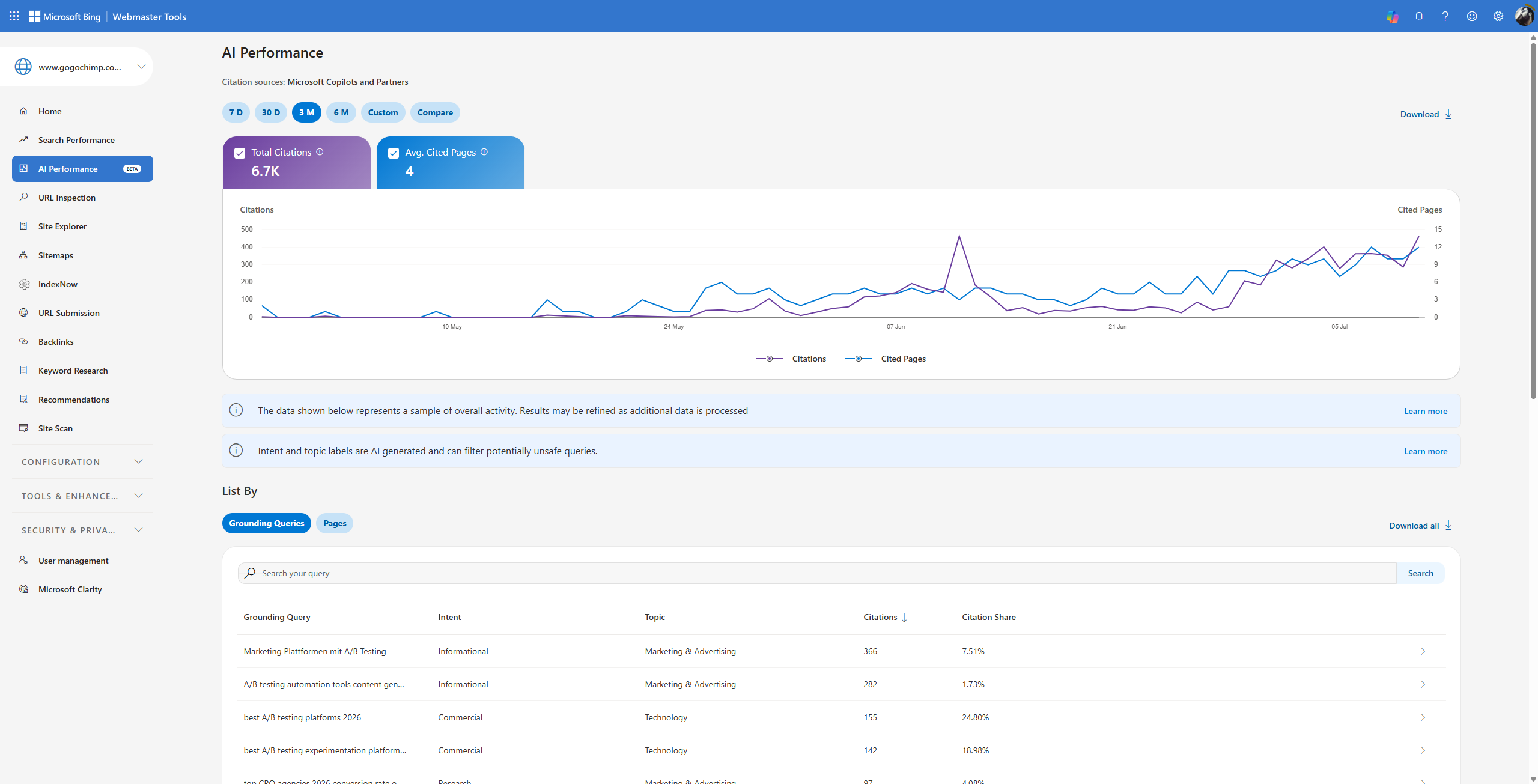
Between 28 April and 30 June 2026, GoGoChimp's Bing Copilot citation footprint went from 144 in the first 30 days to 2,898 in the last 30. The Bing Webmaster Tools AI Performance report surfaced the trend line, the top-cited pages, the top grounding queries, and the daily citation share. It cost £0.
Read that ratio slowly. Our 3,263 Copilot citations in that window outnumbered the 87 clicks Google organic sent us (19 April to 3 July 2026) by more than 37 times. Google is not the search engine your buyer is using to research your category anymore. Copilot is. And Copilot is where the citation trail is measurable.
That is the yardstick for every other tool on this list. Does it show you first-party data, or does it show you a proxy? Does it cover the engine where your citations are actually happening, or does it cover four engines and miss the one that matters?
The volatility that makes proxy tools risky
Semrush's AI Overview volatility study found that 96% of AI Overviews saw a domain change over a month, and 91% of the URLs studied were removed at some point (Semrush, November 2024, on October 2024 US data). Ahrefs found 45.5% of AI Overview citations change when the overview updates (Ahrefs, November 2025). If your tracker runs a fixed 30-prompt library once a week, it misses most of that churn between runs.
That churn reinforces the first-party thesis: measure what the engine actually cited, not what a proxy library says it might have.
Four tool categories, one comparison table
| Tool | Category | Engines covered | First-party data? | Pricing (2026) | Chris's verdict |
|---|---|---|---|---|---|
| Bing Webmaster Tools AI Performance | Citation tracker | Copilot, Bing AI | Yes | Free | Free, first-party (Copilot) |
| Google Search Console (Gen AI report) | Citation tracker | AI Overviews, AI Mode | Yes (partial) | Free | Impressions only, still worth running |
| Profound | Citation tracker | ChatGPT, Perplexity, AI Mode, Gemini, Copilot, DeepSeek, Claude, AIO, Exa Search (Enterprise) | No | Free trial; Enterprise custom | Overkill for sub-£10K MRR stores |
| Ahrefs Brand Radar | Citation tracker | ChatGPT, Perplexity, Gemini, Copilot, AIO, AI Mode | No | $199/mo per index, $699/mo bundle | Solid if you already run Ahrefs |
| Rank Math AI SEO | Content optimiser | n/a (qualitative) | No | Free tier; Premium from $59/yr | Best free-tier value in WordPress |
| Surfer SEO (AI Mode) | Content optimiser | ChatGPT, Perplexity, Gemini, Google AI answers (via AI Tracker) | No | $99-$219/mo (Essential to Scale) | The most complete non-WordPress pick |
| Yoast AI (AI+ tier) | Content optimiser | ChatGPT, Gemini, Perplexity (AI+ only) | No | Free tier; Premium $118.80/yr; AI+ $358.80/yr | Fine if you already use Yoast |
| SparkToro / Gumshoe | Prompt-based grader | ChatGPT, Claude, Gemini, Perplexity and others (11 tracked, 6 per audit) | No | Free sample audit; from $99/mo per project | Right frame: share, not rank |
| HubSpot AI Search Grader | Prompt-based grader | ChatGPT (GPT-5.4 mini), Perplexity, Gemini | No | Free, one-time (form required) | Run it once. Marketing, not measurement. |
| Peec.ai | Prompt-based grader | Choose 3 of ChatGPT, AI Mode, AIO, Copilot, Gemini, Naver AI; Perplexity add-on | No | €85/mo entry (monthly) | Mid-market pick with granularity |
| llms.txt validators (GitHub OSS) | Developer / technical | n/a (qualitative) | No | Free (open source) | Solves a real problem for docs-heavy sites |
| Semrush AI Visibility Toolkit | Developer / technical | ChatGPT, Gemini, Perplexity, AIO | No | $99/mo per user (Toolkit) | Benchmark data, expensive floor |
| Wikidata + entity-graph tooling | Developer / technical | All (Wikidata feeds every major LLM) | n/a (public data) | Free (Wikidata + OpenRefine) | Most under-used lever. Also unforgiving. |
The AI SEO tools market conflates four different products into a single ranking, and that's the mistake most listicles make. Trackers measure where a brand is already cited. Optimisers shape a draft toward AI-friendliness. Prompt-based graders query models and count mentions. Developer tools prepare the raw material AI systems ingest. Ranking Semrush against a Rank Math plugin is a category error.
The AI SEO tools market conflates four different products into one ranking. Trackers measure where a brand is already cited. Optimisers shape a draft toward AI-friendliness. Prompt-based graders query models and count mentions. Developer tools prepare the raw material AI systems ingest. Ranking Semrush against a Rank Math plugin is a category error. The four categories all sit inside the broader generative engine optimisation framework, but each solves a different problem.
The table below sorts the 14 by category first, then by first-party status, then by monthly cost. Six axes. Read it as: "which tool in which category solves which problem."
Category 1: Citation trackers and the essential audit companion
Citation trackers answer one question: where is my brand already cited by an AI answer engine? Only two of the four in this category are first-party. The other two are proxy trackers running fixed prompt libraries. If you can only afford one tool across the four categories, buy from this one.
Citation trackers answer "where is my brand already cited by an AI answer engine?" Only two of the four are first-party. The other two are proxy trackers running prompt libraries. If you can only afford one tool in the four categories, this is the category to buy from.
Tool 1: Bing Webmaster Tools AI Performance report
Pricing 2026
Free. Requires only a verified site in Bing Webmaster Tools.
Engines covered
Microsoft Copilot, AI-generated summaries in Bing, and "select partner integrations" per Microsoft's help documentation.
Feature set
Total citations, top cited pages, top grounding queries with intent and topic labels, citation share, daily trend line. In June 2026 four capabilities were added globally in preview: Intents, Topics, Citation Share, and Compare.
First-party? Yes. It is the first free first-party tool that shows which of your pages Copilot and Bing AI answers cite. Microsoft Clarity Citations (May 2026) and Google Search Console's generative AI report (June 2026) have since joined it.
Launched: Public preview 10 February 2026.
Chris's verdict
Free, first-party, and the deepest view of your Copilot citations, so set it up first. If you own a website in 2026 and cannot see this report, you're guessing.
When to pick it: Always. It's free, it's first-party, and it's the anchor for every other measurement decision you make.
Weakness: Bing and Copilot only. It won't tell you what ChatGPT, Perplexity, Gemini, or Google AI Overviews are doing with your content. But because the same content signals often drive citation across engines, Bing correlates with what happens elsewhere. Not perfectly, but usefully.
Tool 2: Google Search Console (Search Generative AI performance report)
Pricing 2026
Free. Requires a verified property in Search Console.
Engines covered
Google AI Overviews, Google AI Mode, and generative AI features in Discover. No coverage of ChatGPT, Perplexity, Claude, Copilot.
Feature set
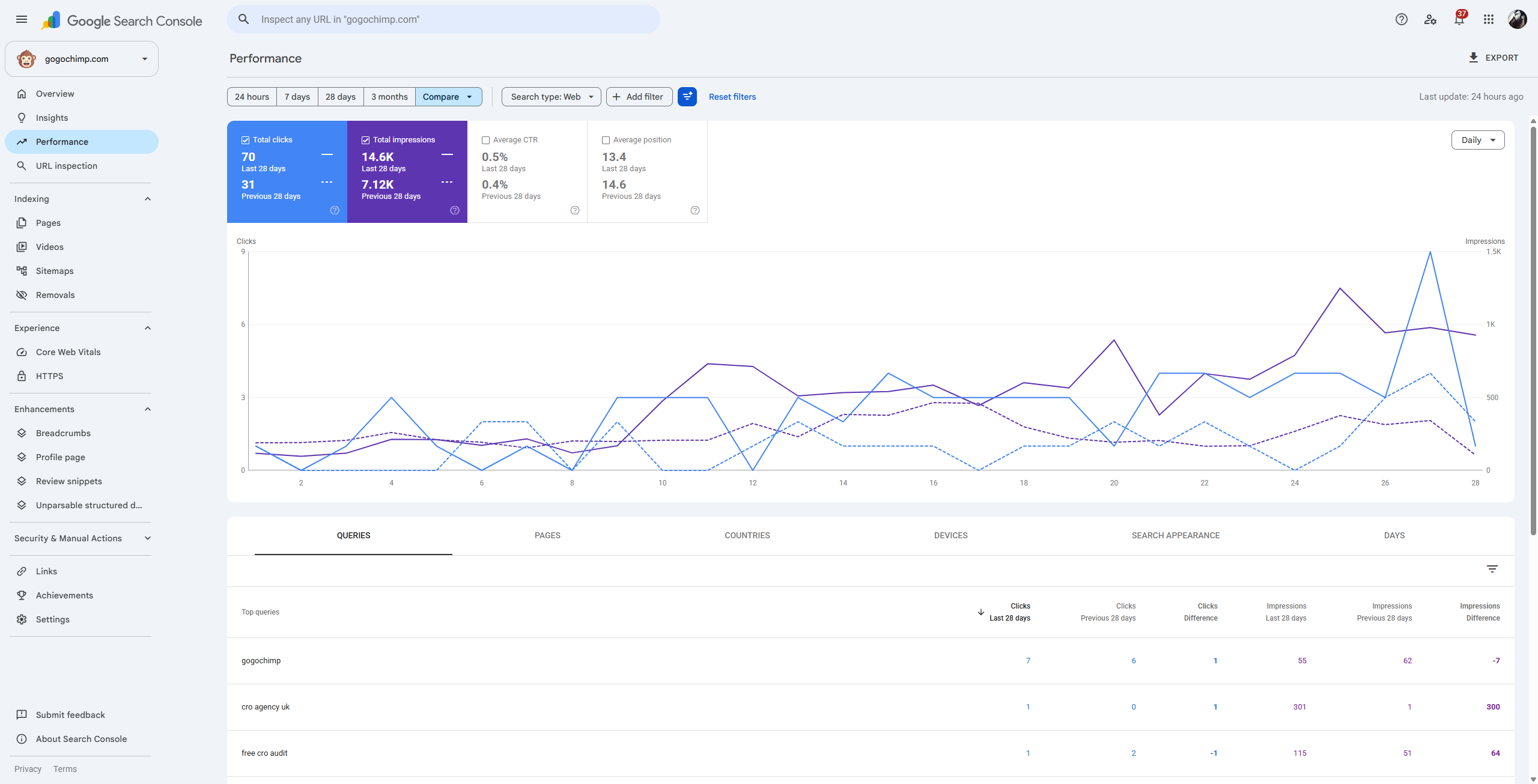
Impressions only. Broken down by page, country, device, and date, per Google's June 2026 announcement. No click, CTR, or query data yet.
First-party? Yes, partial. Google says it is considering adding more metrics over time.
Rollout: Google rolled the report out to all websites worldwide on 31 August 2026. A site with too few impressions may still not see it.
Chris's verdict
The second free first-party feed. Not as rich as Bing WMT (no query breakdown), but it's the only signal that surfaces when Google's generative features show your URLs.
When to pick it: Always. Set it up alongside Bing WMT the same afternoon.
Weakness: Impressions only, no clicks, no queries. That gap is the story. When we compared our 87 Google organic clicks (19 April to 3 July 2026) against our 3,263 Copilot citations (28 April to 30 June 2026), the ratio (37.5:1) showed that Bing surfaces a signal Google hides.
Tool 3: Rubric
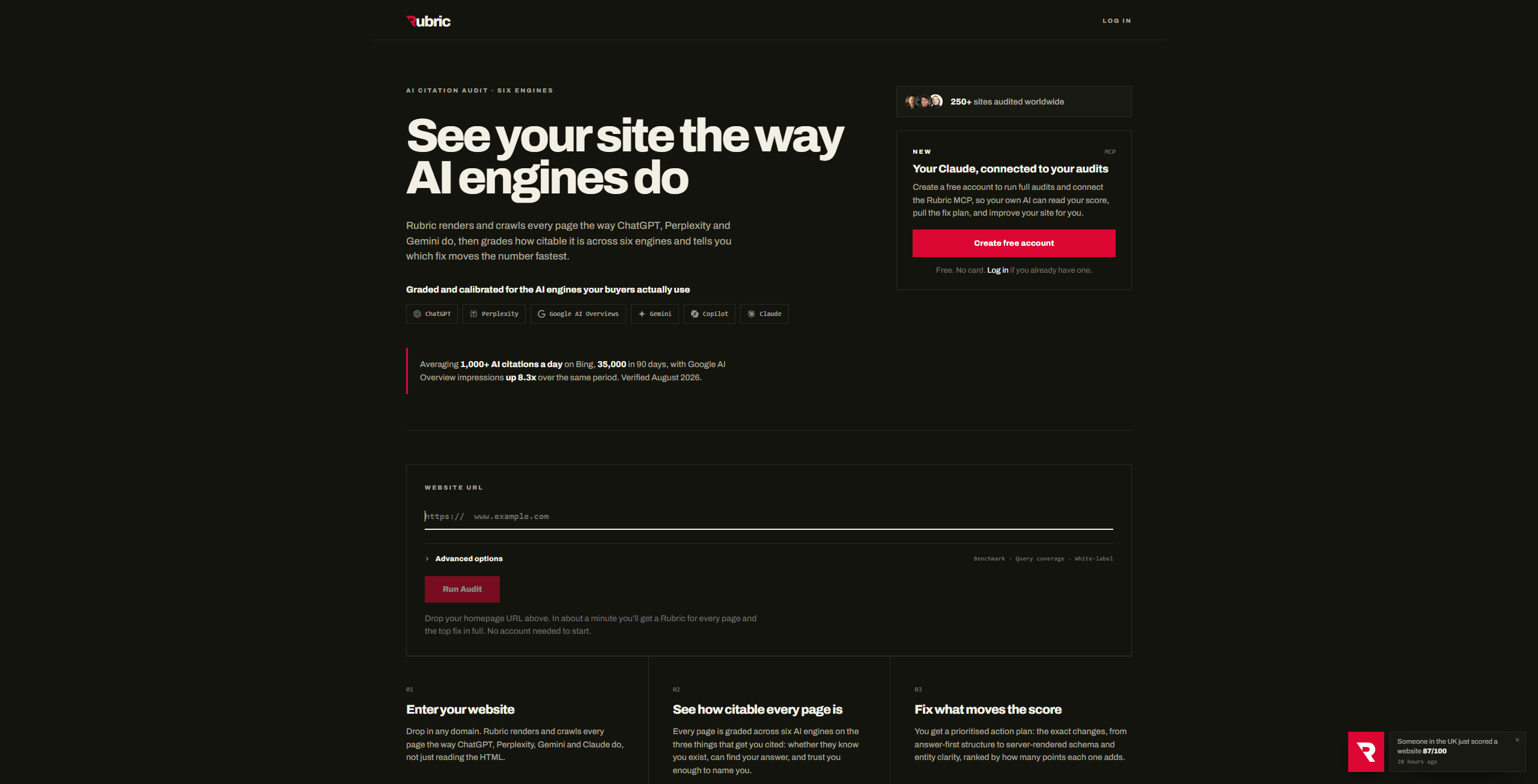
Pricing 2026: Free, and it stays free. The audit needs no sign-up and previews 25 pages. A free account crawls up to 500 pages and includes the ranked Action Plan, the hosted MCP, PDF and CSV exports and five tracked sites. Rubric Pro is $99 a year at the founding price for the first 100 accounts, locked in for as long as you keep Pro (the standard price is $149), and matters if your site runs past 500 pages or you deliver reports to clients: it adds up to 25,000 pages per audit, unlimited sites, white-label reports and exports, and priority crawls (Rubric pricing). Readers of CITED get their first year of Rubric Pro free, through a code printed on the last page of the book.
Engines covered: Six: ChatGPT, Perplexity, Google AI Overviews, Copilot, Gemini and Claude. Each is weighted separately, and the Engines tab shows readiness for each. Render parity is a scored check: ChatGPT, Perplexity and Claude don't run JavaScript, so schema that only appears after JavaScript runs is invisible to them.
What it is: A Screaming Frog for AEO, GEO and AI SEO that runs in the browser as a web app. It crawls every page and grades it on 44 checks across three pillars. The score is an estimate from on-page, structural and technical signals. One signal is reported but deliberately left unscored: llms.txt, because there's no evidence it correlates with citation.
What it grades every page on:
- Known (do the engines know you exist?): Organization and Person schema with strong sameAs links (Wikipedia, Wikidata, LinkedIn, Crunchbase), schema completeness beyond a bare @type, content-type schema (Article, Service or Product rather than generic WebPage), schema present in the raw HTML rather than injected by JavaScript, a self-referencing canonical, 3+ in-content internal links, named-entity density in the prose, and duplicate or near-duplicate content across the site.
- Findable (can they find your answer?): HTTP 200 and indexable, title 15-65 characters, meta description 50-160 characters, exactly one H1, a 40-60 word answer-first opener, a definitional opener ("[X] is / means"), question-shaped headings, a liftable answer under each heading, no walls of text (sections over 220 words get flagged), lists or tables, FAQ/HowTo/QAPage schema, embedded video, 90%+ image alt text and readability at grade 16 or below. At site level it checks that robots.txt doesn't block GPTBot, PerplexityBot, ClaudeBot, Google-Extended or OAI-SearchBot, that the sitemap resolves, and whether the real bots can get through your firewall.
- Trusted (do they trust you enough to name you?): 300+ words of substantive content, 1.5+ statistics per 100 words with a source next to them, 2+ external citations, a named author with Person schema and a visible byline, review schema, and a date within the last 12 months.
A page needs 70 to count as quotable, and the site score is the average of its pages. Crawler reachability is checked too: if robots.txt or a firewall blocks the AI search bots, they can't fetch a page to quote it, however good it is.
What every crawl outputs:
- An overall Rubric score from 0 to 100, per page and for the whole site.
- Three pillar scores (Known, Findable, Trusted), each measured against the quotable line of 70.
- A readiness score for each of the six engines.
- Quotable passages: the most and least quotable blocks of text on your site, each weak one flagged with the single signal to fix.
- The Action Plan and a 90-day roadmap.
- The CITED gap: your pillar scores against a benchmark of other sites.
- A report with Overview, Action Plan, Issues, Pages, Agent-ready, Engines and Technical tabs, exported as PDF or CSV.
- A comparison with your last crawl.
Delivery:
- Web app. With no account, it audits 25 pages and shows the full report for them in about a minute. A free account (email or Google sign-in) unlocks the 500-page crawl, the hosted MCP, exports and five tracked sites.
- Hosted MCP. Connect Claude and it can read your score, Action Plan, affected pages and benchmark, start a crawl or check a draft from chat, and run a fix loop: make one change, re-crawl and compare the two audits.
- Tools around the audit: paste a Bing AI Performance or Search Console export to see which queries have no page targeting them, or a Search Console Pages export for a ranged estimate of the clicks AI answers put at risk.

Three things that set it apart:
- Action Plan: it ranks every fix, each with the exact change and the pages it affects, then splits the ranked list into a 90-day roadmap. The top fixes also sit in Do these first on the Overview. The report doesn't stop at "you're missing FAQ schema". It tells you which change to make on which pages first.
- Quotable passages: it scores individual blocks of text as well as whole pages, which is closer to how an engine decides what to lift. You see exactly which paragraph is holding a page back.
- The CITED gap: a score on its own tells you little, so this Overview card sets your pillar scores against a benchmark of other sites. Compare pages goes further: name any competitor URL and it shows the citability signals their page clears and yours doesn't.
First-party? No, and it doesn't pretend to be. Rubric predicts citability, it doesn't count citations. Pair it with Bing WMT (Tool 1) to see what's actually being cited.
Chris's verdict: Full disclosure, I built Rubric, so weight this accordingly. Honest read: it's the only tool on this list that crawls a whole site, grades every page individually, shows readiness for all six engines, and ranks the fixes in an Action Plan. Every other free grader (HubSpot below included) tests brand visibility across prompts, which tells you your share but not what to fix on a specific URL. Best in class for that specific job, I couldn't name an alternative worth using, which is exactly why I built it. If you want brand-level tracking instead, use Peec.ai or Profound. Different job.
When to pick this: Auditing your whole site for AI SEO readiness with a prioritised fix list you can actually work through. Also a repeatable QA gate after every content update, or a way to check your pages against a named competitor's before writing the next piece of content.
Tool 4: Profound
Pricing 2026
Profound's pricing page lists two plans for brands: a free Trial (50 prompts a day for 7 days on ChatGPT, Gemini and Google AI Overviews, using a recommended prompt set you can't customise) and Enterprise on custom pricing. It shows no self-serve Starter or Growth price for brands (checked 30 September 2026).
Engines covered
Enterprise tracks up to 9 answer engines: ChatGPT, Perplexity, Google AI Mode, Gemini, Microsoft Copilot, DeepSeek, Anthropic Claude, Google AI Overviews and Exa Search, per Profound's pricing page.
Feature set
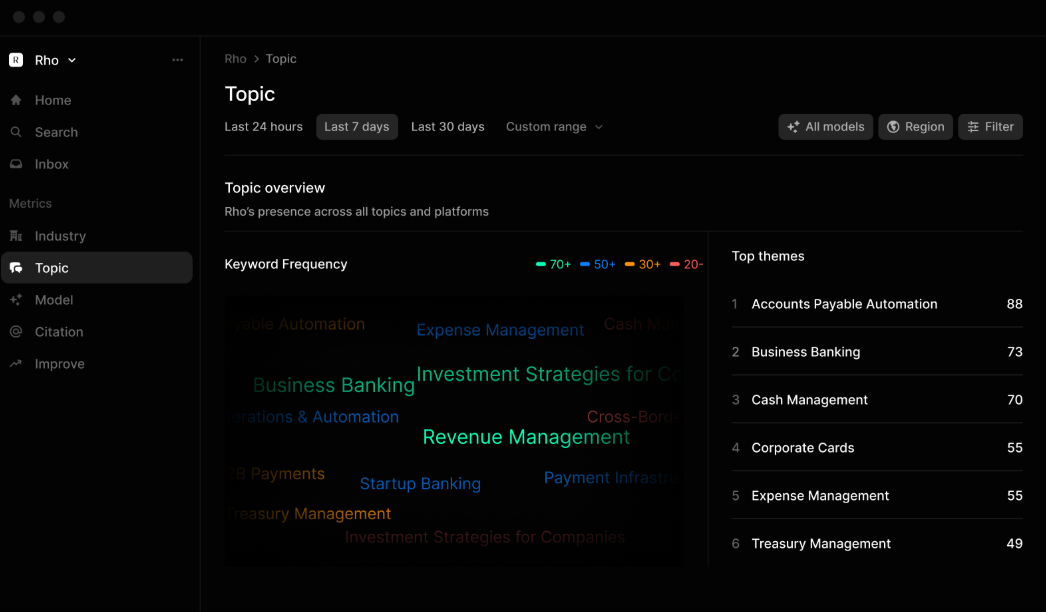
Runs structured prompts across AI platforms and tracks citations, sentiment, ranking and competitive presence, per Profound's pricing page. Enterprise includes ongoing daily tracking.
First-party? No. Proxy tracker running prompts.
Chris's verdict
Overkill for sub-£10K MRR stores. The right tool if you're Ramp, DocuSign, or Charlotte Tilbury.
When to pick it: If you're a global brand and multi-engine coverage across Claude, Perplexity, Gemini, and Copilot is core to your GTM. Not before.
Weakness: Price. Multi-engine tracking for brands is Enterprise-only, on custom pricing. Also, none of it is first-party.
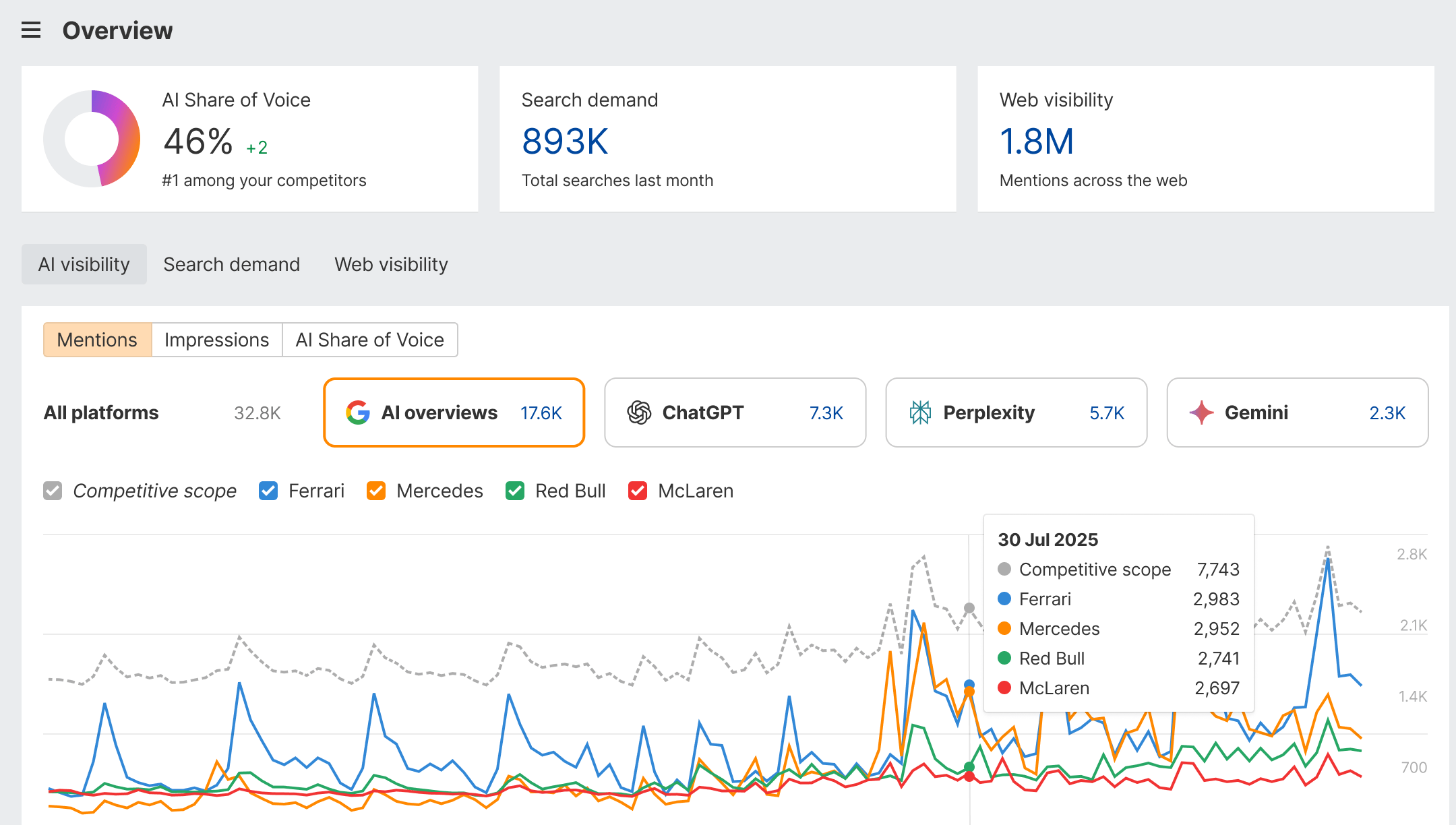
Tool 5: Ahrefs Brand Radar
Pricing 2026
On Ahrefs' Brand Radar page, the AI Visibility Index starts at $199/month per platform, or $699/month for all models. Custom Prompts start at $50/month for 2,500 checks (one prompt on one platform in one location is one check). A UK visitor sees Ahrefs Lite from £99/month and Brand Radar from £159/month (checked 30 September 2026).
Engines covered
Index: Google AI Overviews, Google AI Mode, ChatGPT, Perplexity, Gemini and Microsoft Copilot. Custom Prompts add Claude.
Feature set
Runs 448 million search-backed prompts through AI platforms and stores every response. Early 2026 update added brand-mention tracking within Google search results for YouTube, TikTok, and Reddit.
First-party? No. Proxy tracker.
Chris's verdict
Solid if you already run Ahrefs. Not solid enough to buy Ahrefs for.
When to pick it: Only if you already pay for Ahrefs and want AI mention data bolted onto the same dashboard.
Weakness: Ahrefs says its question sets are re-tested monthly on a 90-day reporting window, and that the index may have limited coverage for brands with little or no search volume. For a small or new brand, Custom Prompts are the better fit. See our fuller breakdown in AI visibility tracking.
Category 2: Content optimisers (shaping the next draft)
Content optimisers shape a draft toward AI-friendliness. They don't measure citations. Confusing optimisers with citation trackers is the single most common tools-listicle failure mode in this market. The right frame: optimisers are the chisel that shapes the next output, not the compass that shows where you already are.
Content optimisers shape a draft toward AI-friendliness. They don't measure citations. Confusing this category with citation tracking is the most common tools-listicle failure mode. The right frame: this is the chisel, not the compass.
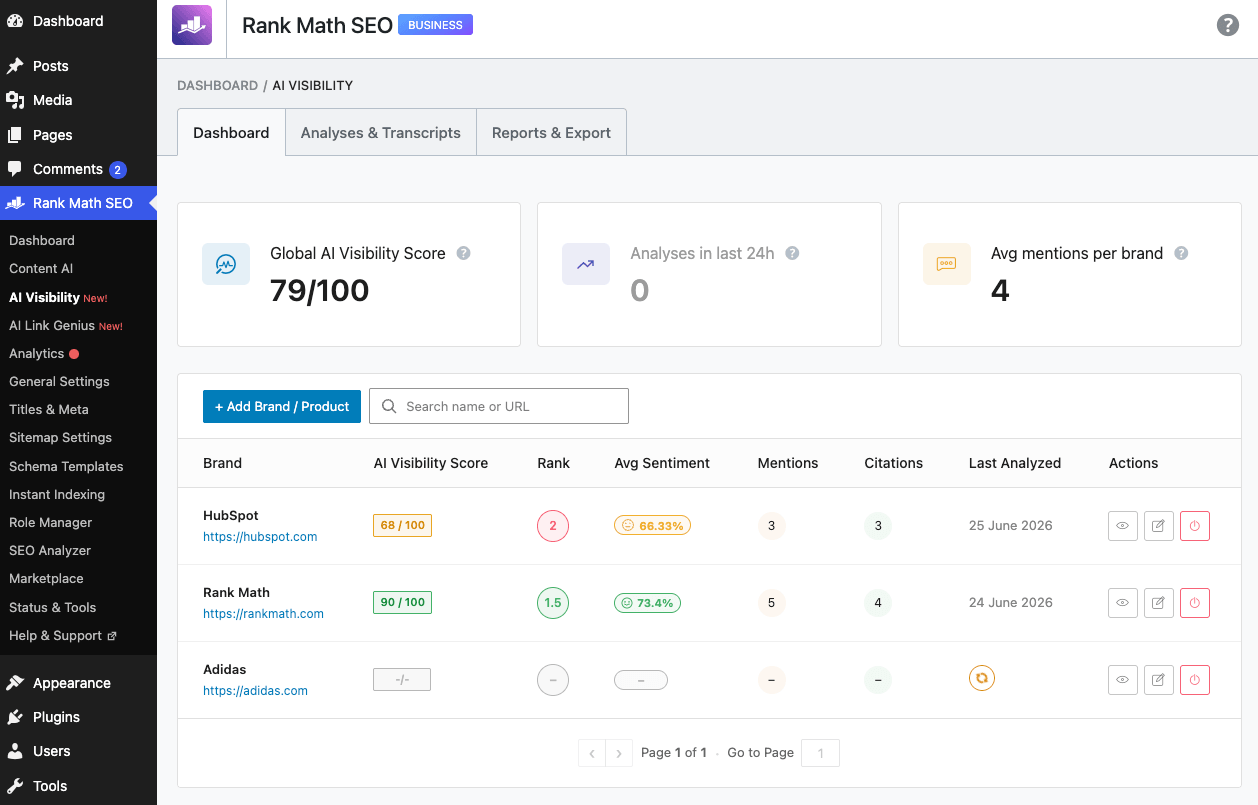
Tool 6: Rank Math AI Visibility (WordPress plugin)
Pricing 2026
Free tier includes unlimited keyword optimisation and 18 pre-defined schema types. Premium starts at $59/year Starter, ranging up to $499/year. Starter includes 1,000-keyword rank tracking and 7,500 Content AI credits.
Feature set (2026 additions)
llms.txt support, an AI search traffic tracker that monitors how AI-powered search engines reference your content, 40+ AI SEO tools, RankBot AI assistant, AI Image Alt Text generation, 16+ schema types. Trusted by 4+ million WordPress websites.
First-party? N/A. This is content-preparation tooling, not a citation tracker.
Chris's verdict
The best free-tier value in WordPress-native AI SEO in 2026.
When to pick it: Your site is on WordPress. The free tier covers most of what a solo founder or small team needs. Upgrade if you cross 1,000 tracked keywords.
Weakness: WordPress only. If your stack is Webflow, Shopify, Framer, or headless, Rank Math isn't an option and the choice defaults to Surfer.
Tool 7: Surfer SEO (AI Mode)
.avif)
Pricing 2026
Feature set
Content Editor with live guidelines, Content Audit that monitors performance and suggests refresh candidates, Workspaces, AI Search Guidelines, Mention Gap and Sentiment Analysis in AI Tracker, Gemini support, plus Pre-Publish Review and Auto-Optimize covering entities, facts, and internal linking.
Engines covered (AI Tracker module)
ChatGPT, Perplexity, Google AI answers, Gemini.
First-party? No.
Chris's verdict
The most complete content-optimiser-plus-visibility hybrid in 2026. If you write a lot of long-form content across multiple sites, Surfer earns its price.
When to pick it: Non-WordPress stacks and teams shipping 8-plus long-form posts a month. Below that volume the Essential tier at $99/month is hard to justify.
Weakness: Overkill if you publish two posts a month. Essential alone is $99/month.
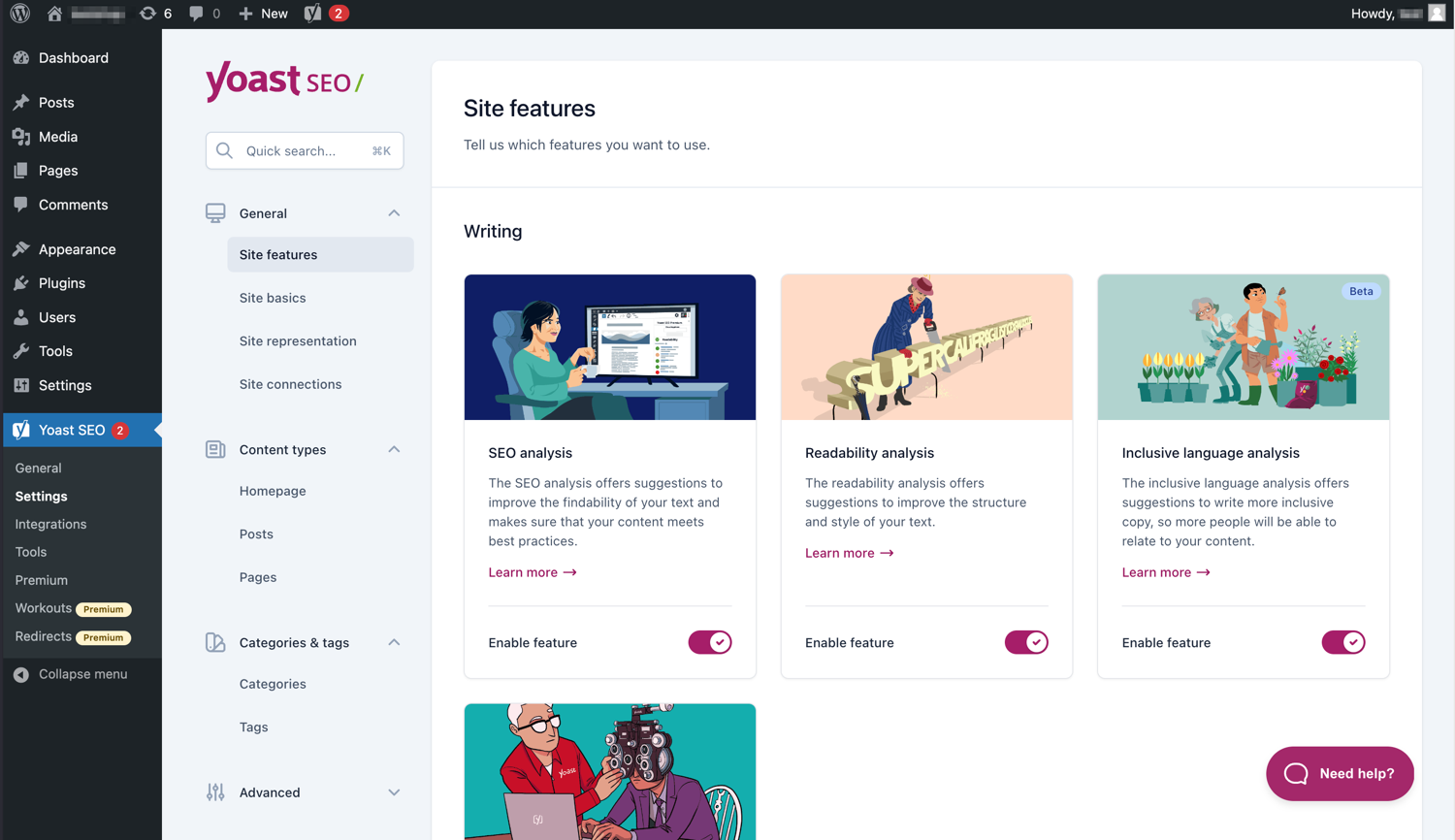
Tool 8: Yoast AI
Pricing 2026
Free version is comprehensive. Yoast SEO Premium: 118.80 EUR/USD/GBP per year. Yoast SEO AI+: 358.80 EUR/USD/GBP per year.
Feature set
Yoast AI Generate (SEO-friendly titles and meta descriptions), Yoast AI Optimize (keyphrase placement), Yoast AI Summarize (content summaries). The AI+ tier adds AI Brand Insights, a browser-based dashboard that runs weekly analysis across ChatGPT, Gemini, and Perplexity, tracking brand mentions, sentiment, citation sources, and competitor ranking.
Engines covered (AI+ tier only)
ChatGPT, Gemini, Perplexity.
First-party? No.
Chris's verdict
Fine if you already use Yoast. Not a reason to switch from Rank Math.
When to pick it: You've run Yoast for years and don't want the switching cost. Otherwise Rank Math ships more in its free tier at a lower Premium price.
Weakness: Rank Math's free tier is materially richer.
Category 3: Prompt-based visibility graders (share, not rank)
Prompt-based graders answer a simpler question: on a large sample of prompts, how often does the engine mention us? The right frame is share, not rank, because rank on a single prompt is nearly meaningless. Ask ChatGPT the same brand-recommendation question 100 times and you'll get 100 different lists.
Prompt-based graders answer "on a large sample of prompts, how often does the engine mention us?" The right frame is share, not rank, because rank on a single prompt is nearly meaningless. The SparkToro study of 2,961 prompt tests across ChatGPT, Claude, and Google AI found that when you ask ChatGPT to recommend brands in a category 100 times, you have less than a 1-in-100 chance of seeing the same list twice. Same prompt, same day, different answer.
The category exists because the paid tool sends a weekly email you delete unread while the first-party dashboard shows what the paid tool is guessing at. Graders are the map. Useful for terrain sense. Not the coordinates.
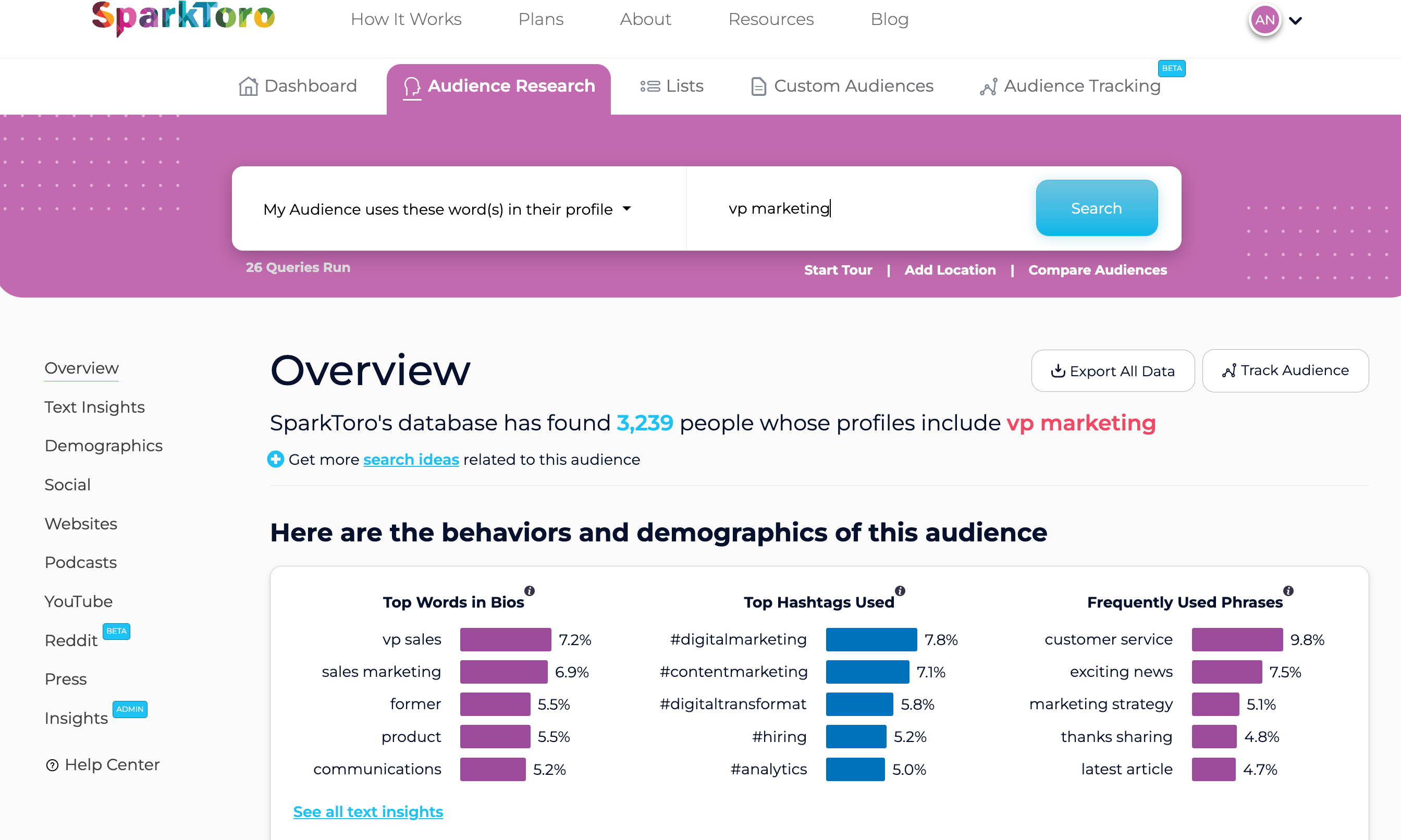
Tool 9: SparkToro / Gumshoe
Pricing 2026
A free sample audit, then Starter at $99/month per project (monthly visibility, weekly monitoring) or Pro at $299/month (daily monitoring), checked 30 September 2026.
Feature set
Gumshoe tracks 11 models and draws 6 of them per audit; its homepage names ChatGPT, Claude, Gemini and Perplexity among them. Shows share of AI mentions relative to up to 30 competitors, with breakdowns per AI model. Builds realistic buyer personas and runs AI conversations through those personas.
Engines covered
11 tracked, 6 per audit, including ChatGPT, Claude, Gemini and Perplexity.
First-party? No. Runs prompts against models.
Founder pedigree
Todd Sawicki and Patrick O'Donnell, founded 2025 at Pioneer Square Labs. O'Donnell previously built Urbanspoon (acquired by IAC) and MightyAI (acquired by Uber). Over 7,500 brands and agencies use it.
Chris's verdict
The SparkToro study gave the whole industry the "share, not rank" frame. Gumshoe is the operational tool built off that research.
When to pick it: You're doing brand-and-category work and need to prove share of voice inside AI answers to a marketing director who trusts Rand Fishkin. Persona-driven testing is genuinely different from prompt-library testing.
Weakness: Pay-as-you-go is opaque until you scale it. And it's still a proxy.
Tool 10: HubSpot AI Search Grader (AEO Grader)
Pricing 2026
Free, one-time check; you complete a short form to see the full results. HubSpot also sells a separate paid tracker, HubSpot AEO, at $50/month.
Feature set
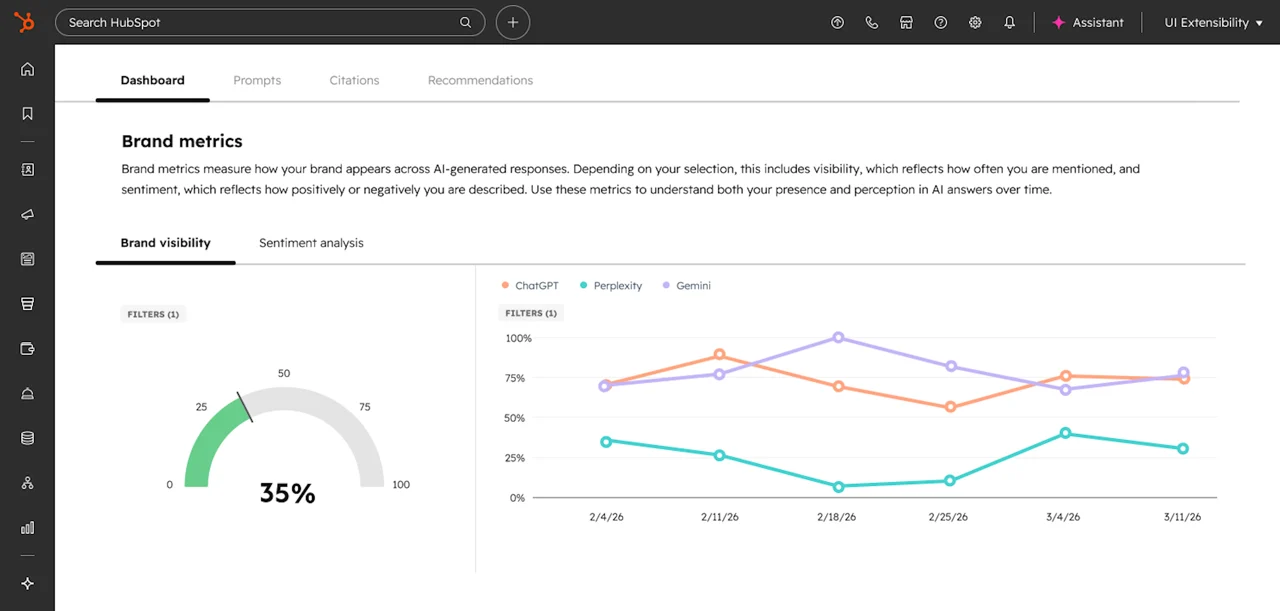
Enter a brand name, location, industry, and products. Analysis runs across GPT-5.4 mini (OpenAI), Perplexity, and Gemini. Returns visibility score, sentiment, competitive positioning, sample recommendations. Scores five dimensions: sentiment, presence quality, brand recognition, AI share of voice and market competition. Results are ready in under two minutes.
Engines covered
ChatGPT (GPT-5.4 mini), Perplexity, Gemini.
First-party? No.
Chris's verdict
Marketing, not measurement. Zero cost, so no downside to running it once. It's a lead-generation front door for HubSpot's paid products, not a diagnostic tool you build a program around.
When to pick it: Confidence check on a small brand before you spend money on a paid tool. Run it once. Do not build a program around it.
Weakness: One-time snapshot. No trend line. No queries you control. No prompt volume you can inspect. See how to rank in Google AI Overviews for the diagnostic follow-up.
Tool 11: Peec.ai
Pricing 2026
Starter €85/month on monthly billing (50 prompts, 3 models), with 15% off for annual billing.
Feature set
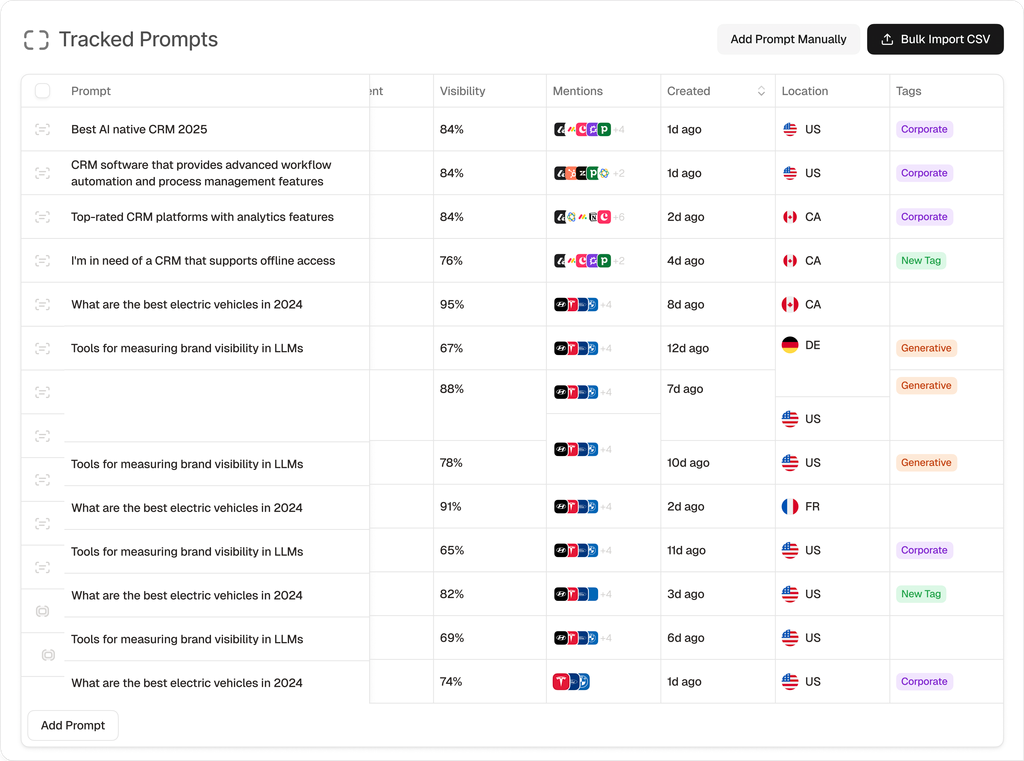
Filter by engine, geography, language, and prompt cluster. Daily data captured through live browser sessions for higher fidelity. Analyses how AI models frame your brand relative to competitors, not just whether you are mentioned.
Engines covered
Self-serve plans choose 3 of ChatGPT, Google AI Mode, Google AI Overviews, Microsoft Copilot, Gemini and Naver AI. Perplexity is a paid add-on model (€25/month on Starter).
First-party? No.
Chris's verdict
The mid-market pick with genuine granularity. Choose Peec if you're early in the GEO journey and need optimisation guidance, not just measurement.
When to pick it: Small-to-mid brands running GEO campaigns across multiple engines and needing daily data. Peec's live browser-session capture is closer to buyer reality than fixed prompt libraries.
Weakness: Still a proxy. It's not first-party. Bing WMT still wins the anchor slot.
Category 4: Developer and technical GEO tools
Developer tools are the workshop. The compass, chisel, and map get built here. If you don't need any of it, don't use any of it. If you do, the three tools in this category solve problems the other three categories can't touch: crawler-parseable content, industry benchmark datasets, and durable entity-graph presence.
These are the workshop. The compass, chisel, and map get built here. If you don't need any of it, don't use any of it. If you do, the tools in this category solve problems the other three categories can't.
Tool 12: llms.txt validators and generators (GitHub OSS)
Pricing 2026
Free. All are open source under permissive licences.
Actively maintained projects (verified 2026)
Hosted validators: Hostinger's llms.txt Validator at llmstxtvalidator.org is the most visible hosted tool.
Engines covered
N/A. Preparation tooling.
Chris's verdict
Solves a specific problem for developers publishing content that AI crawlers need to parse cleanly. Not a "run this once a week" tool. See our llms.txt explained piece for the setup guide.
When to pick it: Your site is docs-heavy or you publish technical content that AI crawlers need to parse cleanly. The geo seo github autocomplete query points to exactly this audience.
Weakness: llms.txt as a standard is still emerging in 2026. It matters most for docs-heavy sites and technical brands. For a CRO agency blog, the impact is marginal.
Tool 13: Semrush AI Visibility Toolkit (and AI Visibility Index)
Pricing 2026
AI Visibility Toolkit at $99/month per user, no free trial. A UK visitor sees £80.22/month per domain on the pricing page (checked 30 September 2026).
Feature set
A database of over 317 million prompts and responses on ChatGPT, Gemini, Google AI Overviews and AI Mode. The 2026 AI Visibility Index analyses 126 million U.S. AI search prompts from January through April 2026 across 22 industries and four AI platforms, available publicly at ai-visibility-index.semrush.com.
Engines covered
Four major AI platforms per the toolkit documentation.
First-party? No.
Chris's verdict
If you already run Semrush, the toolkit is a defensible add-on. If you don't, Peec at €85/month is a cheaper entry.
When to pick it: You already pay for Semrush and want AI visibility data inside the same workspace. See what is AI SEO for the framing.
Weakness: $99/month floor for a prompt-based proxy.
Tool 14: Wikidata and entity-graph tooling
Pricing 2026
Free (Wikidata itself). OpenRefine free. LLM-assisted edits cost only model tokens.
Feature set
- Manual editing via wikidata.org.
- OpenRefine's Wikidata reconciliation matches local rows to existing items or proposes new ones, fetching existing claims to avoid duplicates.
- wikidata.reconci.link is the OpenRefine-Wikidata interface.
- Claude and ChatGPT in the loop: extract entities from source documents, then validate against Wikidata-aligned schemas before adding.
Engines covered: All. Wikidata is used by every major AI system (ChatGPT, Gemini, Copilot, Apple Intelligence) as a "truth node" to anchor responses in verifiable facts.
First-party? N/A. Wikidata is a public open-data source you contribute to.
Chris's verdict
The most under-used AI SEO lever in 2026. When ChatGPT or Claude provides information about companies in your industry, they draw heavily from Wikidata as a reliable source. Also, unforgiving. See entity SEO and brand mentions for the practical playbook.
When to pick it: You want durable entity-graph presence and are willing to source every claim you add. Not a fast lever. A slow, defensive one.
Weakness: By June 2026, seven of GoGoChimp's eight Wikidata Q-items had been deleted. Only one item (The 347 Method) survived. Wikidata's notability guidelines are enforced by human reviewers. Do not treat it as a link farm.
The three-tool stack most brands actually need
You don't need 14 tools. You need one tracker, one optimiser, and possibly one grader for a confidence check. Pick one from each of the three categories that measure something, ignore the fourth until you have a technical problem it solves, and 90% of the AI SEO tool spend the market pushes at you falls away.
You don't need 14 tools. You need one tracker, one optimiser, and possibly one grader. Pick one from each of the three categories that measure something and ignore the fourth until you have a technical problem it solves. Everything else is noise.
Here's the receipt. In our Google Search Console data pulled in early July 2026, our copywriting frameworks page ranked on page 1 (average position 8.7) for "emotional copywriting frameworks for facebook ads ecommerce". 698 impressions. Zero clicks. That's not a ranking failure. It looks like an AI Overview clawback: the AI answer most likely absorbed the query and hid the source. Meanwhile Copilot cited the same page 96 times in the 90 days to 1 July 2026. If you're not looking at first-party AI citation data, you're only seeing half the story. And the half you're missing is the half that's still delivering the visibility.
Here is the opinionated stack, by business size:
Under £1M ARR: three free tools, one afternoon of setup
Tracker: Bing Webmaster Tools AI Performance report.
Optimiser: Rank Math AI SEO free tier (WordPress) or the free version of Surfer's audit tool (everyone else).
Grader: Rubric for a full-site audit that scores every page against six engines and turns the fixes into a 90-day roadmap, or HubSpot AI Search Grader for a one-off brand-visibility check.
Setup cost: £0. Setup time: one afternoon. This is the stack that surfaced our 37.5:1 Bing-to-Google ratio (April to July 2026). It's the stack that tells you which of your pages are already citation assets and which are dead weight. See how to get cited by ChatGPT for the content moves that follow.
£1M to £10M ARR: one paid tracker added
Tracker: Bing WMT plus Peec.ai (€85/month) or Ahrefs Brand Radar if you already run Ahrefs.
Optimiser: Surfer Standard ($99/month, billed yearly).
Grader: Gumshoe Starter ($99/month per project) for share-of-voice work when the marketing director asks.
Setup cost: roughly £180-£300/month. Time: half a day to configure prompts.
£10M+ ARR: multi-engine coverage becomes defensible
Tracker: Bing WMT plus Profound Enterprise (custom pricing).
Optimiser: Surfer Pro ($182/month, billed yearly).
Grader: SparkToro / Gumshoe with an ongoing prompt cluster.
Setup cost: Profound quotes Enterprise individually, so budget after a sales call, plus configuration time.
Zero-tool brands starting today
Start with Bing WMT. Add nothing else for 90 days. Watch your citation trend line. When you know what you're actually being cited for, you'll know which of the other 13 tools you need. If Copilot cites nothing, no paid tracker will save you. Content moves first. Tool moves second. See how to optimise for AI search for what to publish while the tracker fills up.
Free AI SEO tools: what you can get for zero pounds in 2026
Six AI SEO tools ship free in 2026: Bing Webmaster Tools AI Performance report (first-party Copilot citation data), Microsoft Clarity Citations (first-party, built on the same Bing signals), Google Search Console's generative AI performance report (impressions on AI Overviews and AI Mode), HubSpot AI Search Grader (one-time diagnostic), Rank Math AI SEO free tier (WordPress on-page), and Yoast SEO free tier. Bing WMT is the anchor. Everything else is supporting.
The trap is treating free as sufficient. Under 1M ARR, three free tools plus one afternoon of setup is enough. Above 1M ARR, paid tools start earning their floor. Above 10M, multi-engine coverage becomes defensible. The right question is not whether the free stack works, it's whether it works for your revenue tier.
What's coming in 2027
The paid single-brand citation tracker market is about to compress. Bing already shipped free first-party citation data in February 2026. Google shipped a partial version in June 2026. OpenAI and Anthropic will follow. By mid-2027, every major answer engine will offer a first-party citation dashboard equivalent to Bing WMT.
Semrush's own 2026 index found 45% of marketing leaders can't measure their AI visibility and only 9% have cross-platform tools. That gap forces the platforms' hand. Bing already shipped free first-party citation data in February 2026. Google shipped a partial version in June 2026. OpenAI and Anthropic will follow.
The prediction: by mid-2027, every major answer engine will offer a first-party citation dashboard equivalent to Bing WMT. Once that happens, the paid proxy tracker market compresses fast. Profound and Ahrefs Brand Radar will pivot to competitor tracking and aggregated benchmarks (the workflow layer proxies can still own). The single-brand citation tracker becomes a commodity, delivered by the platform itself.
Three categories survive intact. Content optimisers stay because they shape the draft, not the measurement. Prompt-based graders stay for share-of-voice work across dozens of persona-driven queries. Developer tools stay because entity graphs and llms.txt still need building. Citation tracking as a paid category compresses.
Buy accordingly. See generative engine optimisation for the strategic frame this stack sits inside.
FAQ
What is the best AI SEO tool in 2026?
It depends on the job. For citation tracking, Bing Webmaster Tools AI Performance report: free, first-party, and shows which of your pages Microsoft Copilot cites in AI answers, by page and grounding query (Bing says the data is a sample, not a complete log). For full-site AI SEO audit and fix prioritisation, Rubric: crawls your whole site, scores every page on 44 checks weighted for six engines, ranks the fixes in its Action Plan and splits them into a 90-day roadmap, free for up to 500 pages with a free account. For content optimisation, Surfer AI Mode. Two more free first-party feeds now sit beside it: Microsoft Clarity Citations (generally available since 13 May 2026) and Google Search Console's generative AI report (impressions only, open to all websites since 31 August 2026). Disclosure: I built Rubric.
Are there any free AI SEO tools?
Yes. Bing Webmaster Tools AI Performance report, Microsoft Clarity Citations, Google Search Console's Search Generative AI performance report, HubSpot's AI Search Grader, Rank Math AI SEO's free tier, and Yoast's free tier. Bing WMT is the anchor. The others are supporting tools. All six ship for £0.
What are the best free AI SEO monitoring tools in 2026?
Bing Webmaster Tools AI Performance for first-party Copilot citations, Microsoft Clarity Citations (free, built on the same Bing signals), Google Search Console for AI Overviews and AI Mode impressions, HubSpot's AI Search Grader for a one-off brand-visibility read, and Rubric's free audit for on-page citability (it checks pages, it doesn't track citations). Our guide to the best free AI SEO monitoring tools compares them with 10 paid trackers.
Is Bing Webmaster Tools free for AI citation tracking?
Yes. Verify your site in Bing Webmaster Tools, wait 24-48 hours, and the AI Performance report becomes available. It launched in public preview on 10 February 2026 and shows total Copilot citations, top cited pages, top grounding queries, citation share, and daily trend.
Do I need a paid AI SEO tool if I use Bing WMT and GSC?
Not for the first 90 days. Run the free stack, collect a baseline, and see what your Copilot citation footprint looks like. If Copilot is already citing you, you'll know which pages and queries to double down on. A paid tool solves a scale problem. If you don't yet have the scale problem, you don't need the paid tool. See what is AI SEO for the framing.
Which AI SEO tool tracks Perplexity citations?
Profound (Enterprise, custom pricing), Ahrefs Brand Radar ($199/month per index), Peec.ai (€85/month, with Perplexity as a paid add-on model) and Gumshoe (from $99/month per project). Note: none of these are first-party for Perplexity. All run prompt libraries and infer citation frequency. See perplexity SEO for engine-specific guidance.
Are there AI SEO plugins for WordPress?
Yes. Rank Math AI SEO and Yoast SEO are the two main WordPress-native options. Rank Math's free tier ships more features than Yoast's free tier, and Rank Math Premium starts at $59/year versus Yoast Premium at $118.80/year. For most WordPress sites in 2026, Rank Math AI SEO is the default recommendation.
How does Profound compare to Ahrefs Brand Radar?
Profound tracks up to 9 answer engines at Enterprise level, on custom pricing; its free trial covers ChatGPT, Gemini and Google AI Overviews. Ahrefs Brand Radar's AI Visibility Index runs 448 million prompts across six AI platforms, and its Custom Prompts add Claude. Pick Profound for a tailored enterprise programme, Brand Radar for an Ahrefs-native workflow (vendor pages, checked 30 September 2026).
Can I optimise for AI search without any tools?
Yes, and it's what most brands should do first. Publish "best-of" listicles with semantic HTML tables. Add FAQ schema. Include statistics with hyperlinked sources. Earn press mentions and Reddit citations. Muck Rack's May 2026 study of 25 million cited links found earned media accounts for 84% of AI citations. No tool generates earned media. The tactical playbook lives inside generative engine optimisation; the workflow lives at how to optimise for AI search.
Is Semrush good for AI SEO?
If you already pay for Semrush, the AI Visibility Toolkit at $99/month per user is a defensible add-on. If you don't, Peec.ai (€85/month) or Ahrefs Brand Radar (if you're in Ahrefs) are cheaper entry points. Semrush's 2026 AI Visibility Index is publicly available even without a paid seat and useful as an industry benchmark.
What is HubSpot's AI Search Grader?
A free one-time diagnostic that analyses your brand across ChatGPT (GPT-5.4 mini), Perplexity, and Gemini. Returns a visibility score, sentiment reading, competitive positioning, and sample recommendations across five dimensions. Results are ready in under two minutes, after a short form. Useful as a starter diagnostic. Not a program you build on.
Is there a free AI SEO tool for local businesses?
Yes. Bing Webmaster Tools plus Bing Places (both free) covers local Copilot citation tracking for a Glasgow, Edinburgh, or Manchester business. Bing Places feeds the Bing Map Pack and Microsoft Copilot's grounding for local queries. Google Business Profile plus Google Search Console does the equivalent for AI Overviews on local queries. See Microsoft Copilot SEO for the practical setup.
Which AI SEO tool covers Claude and Grok?
For Claude: Ahrefs Brand Radar (through Custom Prompts), Profound Enterprise and Gumshoe, whose homepage names Claude among its tracked models. For Grok: Profound's pricing page doesn't list it and Ahrefs doesn't show it in visible copy; trackers whose own pricing pages name Grok include Rankscale, LLMrefs, Trakkr, AthenaHQ (Starter) and Scrunch (Enterprise). Checked on vendor pages, 30 September 2026. See Claude and Gemini SEO for the engine-specific play.
Pick one tracker. Pick one optimiser. Ignore everything else for 90 days.
That's the recommendation. If you're above £10K/month in ad spend into a site converting under 2%, the free AI audit shows which category you're missing and which of the 14 tools is worth the money for your stack. Not all of them are. Most of them aren't.
References
- Microsoft Bing Blogs, "Introducing AI Performance in Bing Webmaster Tools Public Preview" (10 Feb 2026)
- Microsoft Bing Blogs, "New AI Visibility Insights in Bing Webmaster Tools" (June 2026)
- Search Engine Land, "Bing Webmaster Tools officially adds AI Performance report"
- Bing Webmaster Tools AI Performance help page
- Google Search Central Blog, "Introducing Search Generative AI performance reports in Search Console" (3 June 2026)
- PikaSEO, "Google Search Console Finally Shows Your AI Overviews & AI Mode Impressions"
- Profound pricing page
- Microsoft Clarity, "Citations now generally available" (13 May 2026)
- Google Search Console Help, generative AI performance report
- Ahrefs Brand Radar product page
- Ahrefs pricing
- Peec AI pricing
- Semrush knowledge base, "Semrush AI visibility data"
- Semrush, AI Overview URL volatility study (November 2024)
- Ahrefs, AI Overview change study (November 2025)
- HubSpot AI Search Grader
- HubSpot AEO
- Gumshoe
- Profound blog, "Best Generative Engine Optimization Tools"
- Search Influence, "AI SEO Tracking Tools 2026 Analysis"
- Ekamoira, "Ahrefs for AI Visibility: Brand Radar Review"
- Rank Math WordPress plugin page
- Harshil Barot, "Rank Math SEO Plugin Review 2026"
- Surfer SEO pricing
- AI CMO, "Surfer SEO Review 2026"
- Yoast SEO Premium
- Yoast SEO AI+
- BlockSentient, "Yoast SEO 2026 Review"
- GigaPress, "Best AI-Powered SEO Plugins for WordPress in 2026"
- Gumshoe.ai
- Gumshoe about page
- SparkToro, "AIs are highly inconsistent when recommending brands or products"
- Search Engine Journal, "AI Recommendations Change With Nearly Every Query"
- HubSpot AEO Grader
- Analyze.ai, "Peec AI vs Otterly AI"
- GitHub topic: llms-txt
- thedaviddias/llms-txt-hub
- raphaelstolt/llms-txt-php
- llmstxtvalidator.org
- llms-txt.io
- Semrush AI Visibility Toolkit pricing
- Semrush knowledge base, "AI Visibility Toolkit"
- Semrush news, "126 Million AI Prompts Analysis"
- Semrush AI Visibility Index
- Profound blog, "Semrush AI Visibility Toolkit Review"
- Trakkr, "Semrush Review 2026"
- OpenRefine Wikidata reconciliation docs
- wikidata.reconci.link
- Digital Applied, "Entity SEO & Knowledge Graph Optimization Guide 2026"
- Over The Top SEO, "Wikidata for SEO"
- Muck Rack, "What Is AI Reading?" May 2026
.png)
Free chapter
Read Chapter 1 of CITED, free.
The playbook for getting your business recommended by ChatGPT and AI search. Read the first chapter, on me.
Read Chapter 1 freeWant us to do this for your site?
Book a free AI audit. 15 minutes. We’ll show you three things your site is missing and what we’d test first.
Book my free AI audit →