Answer Engine Optimisation for Law Firms: How Legal Practices Get Cited by AI (2026 Guide)

If your firm's first client-facing sentence in ChatGPT reads "I don't have specific information about that law firm," you've already lost the case. Not the litigation. The one before the litigation. The one where the prospective client picked whose website to visit first.
Legal client acquisition is close to entirely search-driven. Thomson Reuters' 2025 State of the US Legal Market documents online research as the dominant first step in hiring decisions across every practice area they measured. The American Bar Association's Legal Technology Resource Center reports similar numbers. What changed in 2026 isn't that legal buyers search. It's that a growing share of them search inside an AI answer surface, and the answer surface names one firm, sometimes two, and skips the rest.
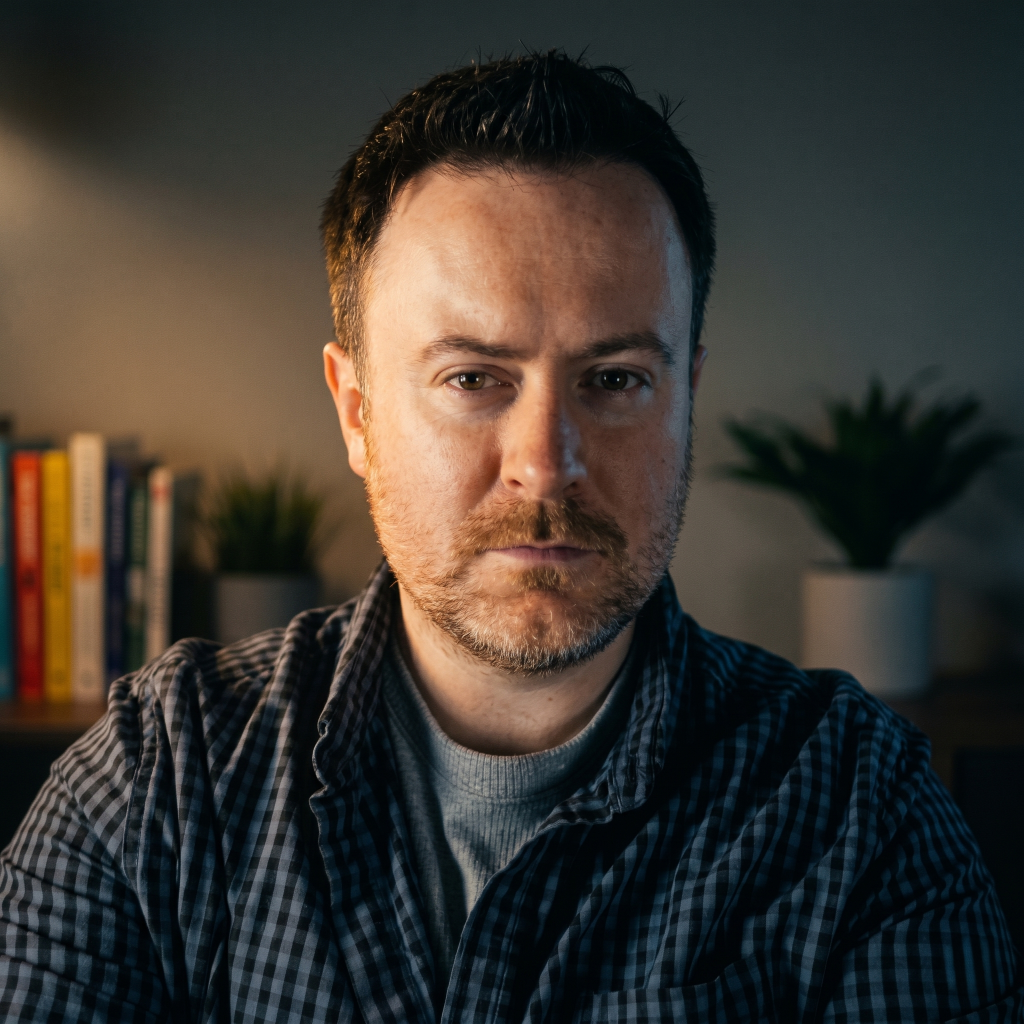
I've been running conversion work for 13 years. I do not run law firm accounts. That's the honest disclosure this article opens with, and I'll come back to it in a moment. But what I do run is a first-party citation-tracking pipeline that logs which AI search engines cite which pages of my own website, on which queries, at what frequency.
Over the last 90 days our footprint carried 5,967 Microsoft Copilot citations across 15 pages (Bing Webmaster Tools AI Performance report, verified 2026-07-11). Three listicle pillars earned 87.25% of that surface. The mechanics that generated those numbers apply to legal directory pages, attorney bios and practice-area content with almost no translation loss. That's why this article exists.
Table of contents
- Who this article is actually for
- Why AEO matters for legal practices in 2026
- The four AI engines legal clients use (and how each behaves)
- Practice-area comparison: where citation share concentrates by legal specialty
- Legal directories that AI engines actually cite
- E-E-A-T for legal AEO: bar credentials, verified reviews, case results
- FAQ-heavy content structure for legal buyers
- Google Business Profile and Bing Places for local law-firm citation
- Common legal AEO mistakes
- Compliance considerations
- Predictions for legal AI search 2026-2027
- FAQ
- Where to go next
- References
Who this article is actually for
I run a Glasgow-based conversion rate optimisation agency. GoGoChimp works with ecommerce brands, SaaS companies and nonprofits. We do not represent law firms directly. So who is this article for?
Three groups.
Legal marketers
In-house marketing leads at mid-to-large firms and CMOs at boutique practices who need to translate what's happening in AI search into a plan the partners will approve. You know the substance. You need the vocabulary and the receipts.
Legal-tech and legal-adjacent SaaS marketers
If you sell case-management software, legal research tools, attorney-directory listings, e-discovery, or intake automation to law firms, your buyers use the same AI search surfaces to research vendors. What works for their client-acquisition AEO also shapes what works for your account-based marketing AEO. The tactics translate.
Curious lawyers
Solo attorneys and boutique partners who've noticed that Google clicks aren't what they were in 2022 and want to understand what's happening under the hood before they buy an "AI SEO for lawyers" package from someone. The vendors sell shortcuts. I'll walk you through the mechanism so you can decide whether the shortcut is real.
Read this and take what applies
Don't hire GoGoChimp to run your law firm's AEO. Hire a legal marketing specialist. But the mechanism below is the mechanism, and the citation-tracking data is the citation-tracking data, whether you sell CRO or family law.
Why AEO matters for legal practices in 2026
Legal client acquisition has always been asymmetric. A personal injury claimant hires one firm, not three. A family-law client stays with the first solicitor whose advice sounds right. A corporate GC shortlists three firms and picks one. The buyer's search is not comparison shopping in the ecommerce sense. It's filtration to a single answer.
That maps almost perfectly to how AI answer engines work.
When a prospective client types "best personal injury lawyer near me" or "should I hire a solicitor for wrongful dismissal" into ChatGPT or Google AI Overviews, the engine's job is to name one to three firms. Not ten. Not a page of blue links. A short list, sometimes a single recommendation, sometimes with a disclaimer. The firms named earn the client. The firms not named don't.
Two demand-side numbers make the point.
Google confirmed at I/O 2026 that AI Mode has crossed one billion monthly users, with queries more than doubling every quarter since launch. Authoritas' 2025 dataset found AI Overviews already fire on 12.2% of news-keyword searches, with legal being one of the sectors where AIO prevalence is climbing fastest. When an AI Overview appears, publisher click-through rate drops 47.5% on desktop (Press Gazette / Authoritas, 2025). The click didn't disappear. It got absorbed into the answer.
For a personal-injury firm running Google Ads at £40 per click, the maths are brutal. If AI Overviews absorb half of the top-of-funnel intent on "personal injury lawyer [city]" queries and the firm isn't cited inside the AIO, that firm is now paying £40 for the visitor who scrolled past the AIO, not £40 for the visitor who was going to click anyway. The economics of PPC-only legal marketing were already tight. AI answer surfaces make them worse.
The commercial upside for firms that do get cited is symmetric. Being cited inside an AI Overview lifts downstream organic click-through by 35% (Seer, 2026). Cited brands earn 120% more organic clicks per impression than uncited ones. The 35% lift and the 120% per-impression multiplier land inside the same surface currently eating publisher clicks, so they show up as recovered revenue rather than as brand impressions.
The two-sentence version. Legal buyers already searched. Now they search inside an AI answer, and the answer names one firm. The firms that engineered themselves into that answer earn the client. Everyone else is invisible.
Across GoGoChimp's own 90-day Bing Webmaster Tools reading verified 2026-07-11, three listicle pillars earned 87.25% of a 5,967-citation surface. Concentration at the top is the story, not the tail. Legal AEO follows the same pattern. Two or three named firms in a directory answer absorb almost all the citation value; the fourth-through-tenth ranked firms are cited rarely and cited weakly.
The four AI engines legal clients use (and how each behaves)
Four generative engines carry essentially all of the legal-search citation volume that matters commercially in 2026. Each behaves differently.
Google AI Overviews and AI Mode
Google is the largest volume opportunity by an order of magnitude. AI Overviews already fire on 12.2% of news-keyword searches and considerably more on commercial and comparison queries. Google's own I/O 2026 disclosure put AI Mode use at one billion monthly users.
The AIO citation rate is around 34% of responses (Profound, 2026). Dominant sources: Reddit at 21% of top-10 source share, YouTube at 18.8%. Google's own indexing signals (backlink profile, on-page E-E-A-T, Helpful Content Update signals) still weight AIO retrieval more heavily than they weight retrieval on the other engines.
For legal specifically, Google AI Overviews lean into named legal directories (Justia, Avvo, FindLaw, Martindale-Hubbell), state bar association pages, and law firm websites with strong E-E-A-T signals. The retriever pattern is: authoritative directory profile, plus firm website with named attorney bios, plus (increasingly) verified client reviews from Google Business Profile.
Practice areas where Google AIO dominates
personal injury (high-volume search intent, directory-heavy retrieval), family law (research-intent queries: "should I file for divorce", "what are grounds for custody"), employment law (self-service research before hiring), estate planning (definitional queries).
Microsoft Copilot (in Bing and native)
Copilot is the engine with the best first-party measurement surface via Bing Webmaster Tools' AI Performance report. Free, first-party, confound-free.
Copilot's retrieval bias rewards semantic HTML comparison tables, best-of listicles with 4-15 items and a dated title, and third-party citations inside the body prose. For legal, that translates to "best personal injury lawyers [city] 2026", "top family solicitors UK", and "leading employment law firms [region]" style listicles being disproportionately cited.
On our own footprint, the query "best Shopify CRO agencies UK" earned a 62.75% Copilot citation share (Bing WMT verified 2026-07-11). That's the single most dominant grounding query in our report. The pattern that produces that share (best-of listicle plus HTML comparison table plus third-party citations plus dated methodology) is exactly the pattern that would produce a comparable share on "best personal injury lawyers [UK city]" or "top family law firms London".
Practice areas where Copilot dominates
commercial and corporate (B2B research intent aligns with Copilot's buyer-heavy bias), IP and patent (technical queries where Bing's structured data lift is stronger), immigration (comparison-heavy research), employment law (both consumer and B2B intent).
Perplexity
Perplexity cites sources in 97% of responses (Profound, 2026). That inverts the ChatGPT maths. Winning a Perplexity citation surfaces on almost every answer.
Perplexity's dominant source category is Reddit at 46.7% of top-10 source share. For legal queries, Perplexity leans on r/legaladvice, r/law, r/lawschool, r/personalinjury, r/legaladviceuk, and the general legal Reddit ecosystem. It also weights review corpora heavily (Google Business Profile reviews, Yelp, Avvo Client Reviews, Trustpilot).
Winning Perplexity means winning at Reddit. That's not a metaphor. Firms and attorneys that participate in legal subreddits (using real professional identities, disclosing that they're attorneys, giving genuinely useful answers, not soliciting) earn citation-graph presence in ways that anonymous-content-only firms don't. The compliance risks are real; firms should coordinate this with their bar-association marketing guidance before rolling it out.
Practice areas where Perplexity dominates
consumer legal (personal injury, family, employment, criminal defence), where the buyer's research pattern is heavily forum-based; immigration (Reddit's r/immigration communities are heavily consulted); estate planning (asked as a series of natural-language questions).
ChatGPT
ChatGPT has the lowest citation rate of the top four: 16% of responses cite sources (Profound, 2026). But when a citation does surface, it draws from a heavily Wikipedia-weighted corpus. Wikipedia is 47.9% of ChatGPT's top-10 source share and appears in 1 of every 6 ChatGPT conversations.
For legal queries, ChatGPT leans on: - Wikipedia entries on legal topics (personal injury law, family law, statutes) - Mainstream news coverage (Bloomberg Law, Law360, the ABA Journal, the Law Society Gazette) - Government legal resources (courts.gov.uk, uscourts.gov, state bar association pages) - Long-form firm content that has earned inbound links from those authorities
Winning ChatGPT means winning at the corpus level, not the page level. Wikipedia coverage is the highest-lift tactic where notability allows. Mainstream news pickups are second-highest. The intake for ChatGPT-cited legal content is slow and cumulative. Firms optimising only for ChatGPT will underinvest in the faster surfaces.
Practice areas where ChatGPT is stronger relatively
definitional queries ("what is medical malpractice", "how does probate work"), high-profile commercial and corporate matters where mainstream news coverage exists, and legal-history or precedent-heavy queries.
Practice-area comparison: where citation share concentrates by legal specialty
This is the load-bearing table for the article. Seven practice areas, four columns each on how AI search behaves for that specialty and what to prioritise. Everything below is derived from what we've observed in our own Bing WMT footprint plus Profound's cross-engine source-share research, Muck Rack's May 2026 25-million-link earned-media analysis, and analogous B2B consumer buyer-intent patterns.

| Practice area | Buyer intent | Dominant engine | Content type that wins | Directory to prioritise |
|---|---|---|---|---|
| Personal injury | Emergency, high emotion, near-me | Google AI Overviews + Perplexity | Local landing page + verified reviews + case results (compliance permitting) | Avvo, Justia, FindLaw, Google Business Profile |
| Family law | Research-heavy, multiple sessions before contact | Perplexity + Google AI Overviews | FAQ-heavy explainer + attorney bio depth + reviews | Avvo, Justia, Chambers UK, Law Society Find a Solicitor |
| Corporate / commercial | B2B, GC-led shortlisting, RFP | Microsoft Copilot + ChatGPT | Practice-area pillar + team pages + Chambers / Legal 500 endorsements | Chambers, Legal 500, Martindale-Hubbell |
| Immigration | High research intent, multilingual, forum-heavy | Perplexity + Google AI Overviews | Language-specific content + FAQ + verified reviews + Reddit presence | Avvo, ILW.com, AILA (attorney directory), Google Business Profile |
| Criminal defence | Urgent, private, local | Google AI Overviews + Perplexity | Local landing page + attorney credentials + case-result disclosure (rules permitting) | Avvo, Super Lawyers, FindLaw, Google Business Profile |
| IP / patent | Technical, B2B, referral-heavy | Microsoft Copilot + ChatGPT | Technical pillar content + attorney publications + Chambers / IAM rankings | IAM Patent 1000, Chambers, Martindale-Hubbell |
| Employment law | Mixed consumer + B2B, self-service research | Perplexity + Microsoft Copilot | FAQ pillar + case outcomes + practitioner bios + reviews | Avvo, Chambers UK, Legal 500, Law Society |
The pattern that repeats across every row: pick the engine your buyer intent maps to, pick the directory the engine already cites, and build the content shape that engine's retrieval layer rewards. Optimising for one is not free coverage of the others (see the cross-engine section in the FAQ below).
Legal directories that AI engines actually cite
Directories do the heaviest lifting in legal AEO. Not blog content. Not the firm's homepage. Directory profiles.
Why: AI retrievers weight third-party trust signals at up to 75x the citation likelihood of first-party content alone (Muck Rack + Seer, 2026). A directory profile is by definition a third-party validation. It carries the trust signal a firm's own site can't manufacture.
Priority directories, ranked by AI-search citation frequency across US and UK legal queries.
US legal directories
Avvo. (avvo.com) Owned by Internet Brands (also owns Martindale-Hubbell and Nolo). The Avvo Rating system and client review corpus are cited heavily across Google AI Overviews and Perplexity. Claim the profile, complete every field, encourage compliant client reviews, and keep the licence and bar information current.
Justia. (justia.com) Free directory with unusually strong AI-search citation share, particularly in Google AI Overviews. Justia's legal information pages are also cited heavily in ChatGPT retrievals for definitional queries. Attorney profiles include practice area, jurisdiction, and biographical information.
Martindale-Hubbell. (martindale.com) The oldest US legal directory. Peer Review Ratings (AV Preeminent, BV Distinguished, Rating) carry meaningful weight in ChatGPT and Copilot retrieval on corporate and commercial queries. The Client Review system parallels Avvo's on consumer-facing practice areas.
FindLaw. (findlaw.com) Owned by Thomson Reuters. Strong Google organic authority translates to strong AIO citation share. FindLaw's legal content pages are cited across ChatGPT and Google AI Overviews for definitional queries; the lawyer directory is cited for local recommendation queries.
Super Lawyers
(superlawyers.com) Also Thomson Reuters. Peer-nominated ranking with high perceived credibility. Selection carries weight in AI answer surfaces for consumer-facing practice areas (personal injury, family, criminal defence).
Nolo. (nolo.com) Owned by Internet Brands. Long-form legal content library plus attorney directory. Nolo's information pages are cited in ChatGPT retrieval for definitional consumer legal queries.
UK legal directories
Law Society of England and Wales. Find a Solicitor
(solicitors.lawsociety.org.uk) The regulatory directory of solicitors and firms in England and Wales. Referenced by Google AI Overviews and (increasingly) Copilot on UK legal queries. Verify the firm's SRA registration and Law Society membership are current.
Solicitors Regulation Authority (SRA) register
(sra.org.uk/consumers/register/) The regulator's own public register. Cited by AI engines as ground truth for UK solicitor verification. The SRA also publishes Advertising and Marketing Guidance that governs how firms can market themselves, read it before you publish testimonials or case-outcome content.
Chambers. (chambers.com) The dominant UK and increasingly global legal rankings publication. Chambers UK and Chambers Global rankings carry heavy weight in AI retrieval for corporate, commercial and B2B legal queries.
Legal 500
(legal500.com) Companion ranking to Chambers. Tier rankings, next-generation lawyer listings, and practice-area coverage. Cited across ChatGPT and Copilot on B2B legal queries.
The Law Society of Scotland
(lawscot.org.uk) Regulator and professional body for Scottish solicitors. Its Find a Solicitor tool is cited on Scotland-specific queries.
IAM Patent 1000
(iam-media.com/rankings) IP-specific ranking. Cited on patent and IP queries.
Directory hygiene rules (apply to all)
Three rules for every directory profile.
Consistency. Firm name, address, phone number, website URL, bar admissions and practice areas must match across every directory. Inconsistent NAP (name, address, phone) data confuses the AI retriever's entity-graph reconciliation and dilutes citation weight.
Completeness. Every optional field filled. Attorney photograph, biographical detail, practice-area descriptions, education, bar admissions, memberships, publications, speaking engagements. Empty fields lower the profile's perceived depth and reduce retrieval weight.
Currency. Update the profile quarterly at minimum. Add new speaking engagements, publications, case outcomes (compliance permitting), and awards. AI retrievers weight recency; profiles that haven't been updated in three years get de-weighted in favour of profiles updated in the last 60 days.
E-E-A-T for legal AEO: bar credentials, verified reviews, case results
Google's E-E-A-T framework (Experience, Expertise, Authoritativeness, Trustworthiness) matters more for legal content than for almost any other vertical. Legal is a Google-designated Your Money or Your Life (YMYL) category, which means the quality bar for content is higher and the trust signals matter more (Google Search Quality Rater Guidelines, 2025).
AI answer engines have inherited the E-E-A-T framework at the retrieval layer. When a legal query surfaces, the retriever preferentially cites content that carries the trust signals E-E-A-T scores highly. That's not a stylistic preference. It's how the retrieval trust score works.
Four E-E-A-T signal categories load-bearing for legal AEO.
Named attorney bios with credentials
Every attorney at the firm should have a dedicated bio page. Not a card on the team page. A URL. The bio page carries: full name, credential (Esq., Solicitor, KC, etc.), jurisdiction admissions with dates, education, practice areas, notable cases (compliance permitting), publications, speaking engagements, professional memberships, and a real professional photograph.
The bio page should carry Person schema with sameAs links to the attorney's LinkedIn, bar directory profile, Avvo profile, Justia profile, and any relevant academic profiles. When the AI retriever asks "who is this attorney", the answer should reconcile across at least six independent surfaces.
Firms that ship one shared "Meet the Team" page with 20 photo cards and no individual URLs are invisible at the individual-attorney citation layer. That's a common cost-saving choice with a real AEO cost.
Verified client reviews
Reviews carry outsized weight for two reasons. First, they're third-party trust signals (75x citation-likelihood lift per the Muck Rack + Seer research). Second, AI retrievers preferentially lift review content into answers because reviews are pre-decomposed into the language buyers use.
The review corpora AI engines cite for legal queries: - Google Business Profile reviews - Avvo Client Reviews - Martindale-Hubbell Client Reviews - Yelp (US, consumer-facing practice areas) - Trustpilot (UK and Europe) - Facebook Page reviews (declining, but still surfaced) - Firm-website testimonial pages (weakest of the categories, treated as first-party, not third-party)
The review-generation programme is where most law firms leave AEO ground on the table. Systematic post-matter review requests (compliant with bar rules), verified-review platforms (Reviews.io, BrightLocal, Trustpilot Business), and Schema.org Review markup on the firm's testimonial pages are the three levers.
Case results (with strict compliance rails)
Case results carry citation weight when they're specific, verifiable and framed inside bar-association rules. A firm's page that says "we recovered $2.4M for a client injured in a workplace accident in Ohio" (with the appropriate no-guarantee-of-results disclaimer) is cited by AI retrievers because it's a specific outcome with named-jurisdiction context. A firm's page that says "we get great results for our clients" is not cited by anyone.
The compliance rails are covered in the compliance section below. Read them before shipping case-results content.
Named-author byline on firm content
Every substantive piece of firm content (practice-area pillar, blog post, thought-leadership piece) should carry a named-attorney byline linked to the attorney's bio page. Anonymous "posted by the firm" content is treated as low-trust by AI retrievers and by Google's Helpful Content Update signals.
The March 2024 Google core update targeted anonymous, scaled AI content directly. 129 of 130 sites in the Lily Ray Helpful Content Update cohort never recovered. Named-attorney bylines are the load-bearing E-E-A-T signal that distinguishes legitimate legal content from scaled AI content.
FAQ-heavy content structure for legal buyers
Legal buyers ask questions in natural language. Not "personal injury lawyer statistics" but "if I slip and fall in a supermarket, can I sue the supermarket". Not "family law queries" but "can my ex stop me seeing my kids if I move out of the family home". Not "employment lawyer benchmarks" but "how do I know if I've been unfairly dismissed under UK law".
AI retrievers preferentially lift FAQ content because it's already decomposed into query-answer pairs. That's why FAQ blocks with FAQPage schema are the single highest-ROI structural pattern in AEO.
Three FAQ patterns for legal AEO.
Practice-area FAQ pillar
Every practice area gets a dedicated pillar page with a 15-30 question FAQ block. Questions phrased as the buyer would type them. Answers 40-80 words each, self-contained, cited to statute or precedent where appropriate. Wrap the whole block in FAQPage schema.
Example structure for a personal injury pillar: - "How much can I claim for a whiplash injury in [jurisdiction]?" - "How long do I have to file a personal injury claim?" - "Do I need a lawyer for a small personal injury claim?" - "How much does a personal injury lawyer cost?" - "What happens if the insurance company denies my claim?" - "Can I still claim if the accident was partly my fault?"
Each question is a query the AI retriever will match. Each 40-80 word answer is a passage the retriever will lift.
Individual attorney bio FAQ
Attorney bio pages benefit from a small FAQ block (5-8 questions) focused on the attorney's specific experience, jurisdiction, and process. "How long has [Attorney Name] been practising [practice area]?" "What jurisdictions does [Attorney Name] practise in?" "What types of [practice area] cases does [Attorney Name] take?" "How can I schedule a consultation with [Attorney Name]?"
This structure feeds the attorney's personal citation graph and helps AI retrievers surface the specific attorney rather than the firm generically.
Location-specific FAQ
Firms with multiple offices should ship a location-specific FAQ on each office landing page. "What kinds of cases does [Firm Name] [City] office handle?" "Where is [Firm Name]'s [City] office located?" "Does [Firm Name] [City] offer free consultations?" This structure earns local citation share on "lawyer [near me]" and "[practice area] lawyer [city]" queries.
Every FAQ block should ship with FAQPage schema JSON-LD. Without schema, the AI retriever has to infer that the block is a FAQ; with schema, it knows. Retrieval trust is higher on the schema-marked version.
Google Business Profile and Bing Places for local law-firm citation
Local law-firm citation runs on a different citation surface from national-brand citation. The load-bearing profiles: Google Business Profile, Bing Places, Apple Business Connect, and the local citation directories that feed the local-search retrieval layer.
Google Business Profile
(business.google.com) The single most important local citation surface for law firms. Complete every field, including practice areas as service categories, hours (including "by appointment only" for firms without walk-in availability), photographs of the office exterior and reception, and the attorney biographies where the profile permits. Add posts weekly. Respond to every review, positive and negative, in a manner consistent with bar-association guidance on public communication about matters.
Firms that treat GBP as "set up once and forget" are invisible on "lawyer near me" AI Overview citations.
Bing Places
(bingplaces.com) Covers the Bing Map Pack plus Microsoft Copilot AI answers plus ChatGPT-via-Bing grounding on local queries. Claim, verify, and complete the listing. NAP data must match Google Business Profile and every directory profile exactly.
Apple Business Connect
(businessconnect.apple.com) Covers Apple Maps, Siri, and Spotlight local retrieval. Claim, verify, complete. Smaller citation share than Google or Bing but growing.
Legal-specific local citation directories
Justia, Avvo, FindLaw, Super Lawyers all have location-specific pages. Ensure the firm appears with consistent NAP data on each.
Local news mentions
Firms that appear in local news coverage (community sponsorships, pro bono initiatives, notable case commentary, university guest lectures) earn local citation share on AI retrievers. The mechanism is that AI retrievers weight recent, local, third-party editorial mentions heavily for local intent queries.
Our own local grounding example: GoGoChimp's Bing Places listing (8 Cheviot Drive, Newton Mearns, Glasgow G77 5AS, 0141 463 6875) is what anchors Microsoft Copilot's local grounding when it fields a Glasgow CRO query. The same mechanism applies to any local law firm's Bing Places listing on legal queries in its jurisdiction.
Common legal AEO mistakes
Eight to strip on sight.
Mistake 1: unnamed attorneys
"Our team of experienced attorneys" without a single named partner or associate is invisible to AI retrievers. Named-attorney bylines with Person schema are the load-bearing E-E-A-T signal.
Mistake 2: generic practice-area pages
A 300-word practice-area page that reads "at [Firm Name], we understand that personal injury cases are difficult" is generic to the point of retrieval invisibility. Practice-area content needs specific attorney names, specific case types, specific jurisdiction detail, and specific FAQ blocks.
Mistake 3: no reviews
A firm with zero verified reviews on Google Business Profile, Avvo, Trustpilot or any other third-party corpus is missing the 75x citation lift third-party trust signals carry. Review generation is not optional.
Mistake 4: no case results
Firms often omit case results out of over-cautious compliance interpretation. The ABA and SRA rules allow case results with appropriate disclaimers. Firms that omit them entirely surrender the citation ground to firms that publish them with the correct rails.
Mistake 5: thin About page
The firm's About page is the entity-graph anchor for the firm as an organisation. Thin About pages (100-200 words, no history, no partnership structure, no office locations) confuse AI retrievers on organisational entity questions.
Mistake 6: no FAQ blocks
FAQ blocks are the highest-ROI structural pattern in AEO. Firms without FAQ pillars on their practice-area pages are leaving the single biggest structural lever on the table.
Mistake 7: inconsistent directory NAP
Firm name, address, phone number, website URL and bar admissions inconsistent across directories confuses the AI retriever's entity-graph reconciliation. Every directory profile must match every other directory profile exactly.
Mistake 8: treating AEO as an SEO agency's problem
Legal AEO sits at the intersection of legal marketing, bar-association compliance, directory management, review generation, and content strategy. Firms that hand it to a general-purpose SEO agency without legal expertise generate compliance risk faster than they generate citations.
Compliance considerations
Legal AEO has to run inside bar-association rules on attorney advertising. This section is not legal advice. Every firm should review its jurisdiction's specific rules with its compliance counsel or bar-association resources before shipping any of the tactics in this article. What follows is orientation, not policy.
US: ABA Model Rules 7.1-7.5
The ABA Model Rules of Professional Conduct 7.1 to 7.5 govern attorney advertising. Individual states adopt variations. Load-bearing constraints for AEO:
- Rule 7.1: Communications concerning a lawyer's services must not be false or misleading. Case results content must include appropriate disclaimers making clear that past results do not guarantee future outcomes. "We won $2M for our client" without qualification can be misleading; "we recovered $2M for a client in a specific matter; case results depend on the specific facts of each matter, and past results do not guarantee future outcomes" is the compliant framing.
- Rule 7.2: Communications about legal services. Includes rules on advertising formats, permissible referrals, and disclosure requirements.
- Rule 7.3: Solicitation of clients. Restricts direct solicitation of specific individuals; this affects how firms can respond to AI-search-generated leads.
- Rule 7.4: Communication of fields of practice. Restricts how firms can hold themselves out as specialists or experts. "Specialist" claims may require certification in some jurisdictions.
- Rule 7.5: Firm names and letterheads. Governs firm naming, letterhead content, and the presentation of practice areas.
State-specific rules often go further. California, New York, Texas, and Florida all have advertising rules that impose additional constraints. Review the state bar's specific guidance before publishing any AEO content that includes case results, testimonials, endorsements or specialisation claims.
UK: SRA Advertising and Marketing Guidance
The Solicitors Regulation Authority Advertising and Marketing Guidance governs UK solicitor advertising. Load-bearing constraints:
- Firms must not present themselves in misleading ways.
- Testimonials must be genuine and verifiable.
- Claims about specialisation must be supportable.
- Comparative advertising against other firms carries specific rules under the UK Competition Act.
The Solicitors Code of Conduct 2019 also applies, particularly the requirements around integrity, honesty and public trust.
Verified-review compliance
Verified-review programmes must comply with: - Bar-association rules on testimonials (both US and UK) - Platform-specific review policies (Google, Avvo, Trustpilot) - Consumer protection regulation (US FTC endorsement guidance; UK CMA guidance) - Data protection (GDPR in the UK/EU; state consumer privacy laws in the US)
The safe pattern: firms request reviews from every client after matter completion using a compliant workflow, offer no compensation for reviews, and disclose any material connection where one exists.
AI-generated content disclosure
Some jurisdictions are moving toward requiring disclosure when marketing content is AI-generated. The ABA Formal Opinion 512 (July 2024) addresses the use of generative AI tools in law practice. Firms shipping AI-assisted content should have a documented review process where a named attorney reviews and approves every piece before publication.
Compliance is not the friction that ruins AEO. Compliance is the trust rail that gives legitimate firms the citation weight that shortcut-taking firms don't earn.
Predictions for legal AI search 2026-2027
Five dated forecasts, judged on evidence not confidence.
Prediction 1: Legal directories consolidate their AI citation dominance
Directories are already earning outsized citation share on legal queries. Expect Avvo, Justia, Chambers, Legal 500 and the state bar directories to widen their moat as AI retrievers formalise trust-signal weighting. Firms that treat directory presence as optional will be squeezed out of the citation surface entirely by end-of-2027.
Prediction 2: Verified-review platforms become table-stakes for consumer-facing legal
Google Business Profile reviews and Trustpilot/Yelp/Avvo Client Reviews are already load-bearing. Expect the citation weight on verified-review corpora to increase further as AI engines formalise their handling of third-party trust signals. Firms without a systematic review-generation programme will be invisible on "best [practice area] lawyer [city]" queries.
Prediction 3: State bar associations issue formal guidance on AEO by end-of-2027. Multiple US state bars are already drafting guidance on generative AI in legal practice. The next wave will address marketing use of generative AI, verified-review platforms, and case-results content in AI search. Firms that get ahead of the guidance (documented review workflows, compliant review-generation programmes, transparent AI-assistance disclosure) will be structurally advantaged.
Prediction 4: Chambers and Legal 500 launch AEO-specific ranking criteria
The legal ranking publications will start weighting AI-search visibility as a component of firm rankings. Expect Chambers and Legal 500 methodology updates that account for how frequently a firm is cited across generative AI engines on relevant practice-area queries.
Prediction 5: Local law-firm marketing shifts from paid search to AI citation grounding. Personal injury and family law firms currently spend the majority of their marketing budget on Google Ads. As AI Overviews absorb more top-of-funnel intent, expect the ROI on paid search to compress and firms to shift budget toward local citation grounding (Google Business Profile optimisation, directory management, review generation, and local editorial mentions).
The firms that make the shift early will have compounding advantage over the firms that wait until the paid-search economics break.
FAQ
What is Answer Engine Optimisation for law firms?
Answer Engine Optimisation (AEO) for law firms is the practice of structuring firm websites, attorney bios, case results, directory profiles and reviews so that generative AI engines (ChatGPT, Perplexity, Copilot, Google AI Overviews) cite the firm when a prospective client asks "should I hire a lawyer for X". AEO is a subset of the wider Generative Engine Optimisation (GEO) discipline covered in our GEO pillar.
Which AI engines matter most for legal client acquisition?
Google AI Overviews (largest volume, one billion monthly AI Mode users per Google I/O 2026), Microsoft Copilot (best first-party measurement via Bing Webmaster Tools), Perplexity (97% citation rate, Reddit-anchored corpus), and ChatGPT (16% citation rate, Wikipedia-weighted). Each has different retrieval behaviours; optimising for one is not free coverage of the others.
How do I measure my law firm's AI search visibility?
Start with Bing Webmaster Tools' AI Performance report (free, first-party Copilot data). Add a third-party citation tracker like Profound for cross-engine coverage. Monitor Google Business Profile insights, directory profile analytics (Avvo, Justia, Chambers Digital), and referral traffic from AI engines in Google Analytics 4 (chatgpt.com, perplexity.ai, copilot.microsoft.com).
How much do legal directories cost annually?
Ranges vary widely. Avvo Advantage is roughly $30-$500/month depending on practice area and location. FindLaw Attorney profiles $150-$1,500/month. Justia is free for basic profiles with paid enhancements. Martindale-Hubbell $2,000-$20,000/year. Chambers rankings are free to submit for; the ranking process is editorial. Legal 500 rankings similarly editorial. Costs are competitor-published rates; verify current pricing before committing.
Are AI-generated case results allowed under bar advertising rules?
Case results content is allowed under ABA Model Rule 7.1 and SRA guidance when accompanied by appropriate disclaimers making clear that past results do not guarantee future outcomes. AI-assisted drafting of case results content should be reviewed by a named attorney before publication. See the compliance section above for the specific rules; consult your jurisdiction's bar association for jurisdiction-specific requirements.
How long does legal AEO take to work?
Faster than SEO. AI search retrieval indexes content within days to weeks versus months for a traditional Google ranking cycle. First AI citations on a well-structured practice-area pillar with FAQ, comparison table, and full schema stack often appear inside 30-60 days. Directory-profile citations can appear inside 7-14 days of profile completion.
What percentage of legal AI citations come from earned media?
Industry benchmark across all verticals is 84%, and third-party trust signals lift AI citation likelihood by roughly 75x (Muck Rack + Seer, 2026). For legal specifically, "earned media" includes editorial legal press coverage (Law360, Bloomberg Law, Law Society Gazette), local news mentions, and directory-based peer endorsements. Firms without earned-media presence lean disproportionately on first-party content and directory profiles.
Update, September 2026: the 84% earned-media figure holds at awareness stage but flips at evaluation. Writesonic’s sweep across roughly 150,000 citations puts third-party sources at around 96% of AI citations at the top of the funnel (Writesonic AI search visibility analysis, 2026). Ten Speed / Nelson Brassell’s 7,387-citation study across 170-220 B2B evaluation-stage prompts, measured through Peec AI, inverts this: 88.3% of citations at evaluation come from brand-controllable sources, with product pages the #1 cited type at 24.1%, articles at 17.4%, comparison content at 13.3%, and listicles at 13.2% (Ten Speed / Nelson Brassell, 2026, KB 2026-09-03). Always name the funnel stage when citing these numbers: awareness pulls third-party, evaluation pulls owned.
Should I hire a general SEO agency or a legal-specialist marketing firm for AEO? Legal-specialist. Legal AEO sits at the intersection of directory management, verified-review compliance, bar-association attorney advertising rules, and citation-tracking. General SEO agencies without legal expertise generate compliance risk faster than they generate citations. Firms in the market for AEO help should verify the vendor's legal-specific experience and compliance review process before engaging.
Do smaller firms have any AEO advantage over BigLaw?
Yes. Directory-based AEO compounds faster for smaller firms because the competitive field on hyper-local and hyper-specific practice-area queries is thinner. A boutique family-law firm in Manchester competing on "best family lawyer Manchester" faces a handful of competitors; the same firm competing on "best family lawyer UK" competes against every UK family-law firm. Local, jurisdiction-specific and practice-area-specific AEO is where smaller firms can outperform BigLaw on the citation surface.
How do I handle negative reviews compliantly?
Respond publicly to negative reviews in a manner consistent with bar-association guidance on public communication about matters (do not confirm or deny specific matter details; do not violate confidentiality; do not disparage the reviewer). A generic acknowledgement and offer to discuss offline is often the safest pattern. Under no circumstances should the firm attempt to have compliant negative reviews removed through non-standard channels. Consult the review platform's policy and bar-association guidance.
Does the SRA prohibit UK law firms from advertising in AI search results specifically? No. UK solicitors are permitted to advertise their services subject to the SRA Standards and Regulations, the Advertising and Marketing Guidance, and the Solicitors Code of Conduct 2019. Firms must ensure that their advertising is not misleading, that testimonials are genuine, and that comparative advertising complies with UK Competition Act provisions.
AI search citation is not itself a form of advertising the SRA regulates separately; the underlying content the AI engine cites is regulated.
What's the biggest single AEO move a law firm can make today? Claim, complete and maintain the firm's Google Business Profile, plus every relevant legal directory profile (Avvo, Justia, Martindale-Hubbell in the US; Law Society Find a Solicitor, Chambers, Legal 500 in the UK), with consistent NAP data and complete profile fields. That's the single move that lifts citation share across every AI engine simultaneously.
How does legal AEO differ from ecommerce or SaaS AEO?
Two structural differences. First, directory grounding does a larger share of the citation work in legal than in most other verticals; blog content matters less relative to directory profiles. Second, compliance rails (bar advertising rules) impose constraints on testimonials, case results and specialisation claims that don't apply to most ecommerce or SaaS content. The underlying mechanism (structured content, third-party trust signals, entity-graph coverage) is the same.
Where to go next
If you run marketing at a law firm, or you sell to law firms, the first move is diagnostic, not tactical. Type your firm name into ChatGPT, Perplexity, Copilot, and Google AI Mode. Ask the same practice-area questions your prospective clients would ask. See what the engines say. See whose firm they cite.
Then check your directory profiles. Every one of Avvo, Justia, Martindale-Hubbell, FindLaw, Chambers, Legal 500, Law Society Find a Solicitor (UK) and the state bar equivalents. Are they claimed? Complete? Consistent? Current?
Then look at your review corpus. How many verified Google Business Profile reviews does the firm have? Avvo Client Reviews? Trustpilot? What's the response rate to reviews?
Those three diagnostics tell you where the highest-leverage AEO work is.
For the wider AI-search mechanism the tactics in this article sit inside, see our Generative Engine Optimisation pillar and the companion Answer Engine Optimisation guide. Both cover the underlying retrieval mechanics without the legal-specific compliance overlay.
If you want the CRO-lens application (how do you convert the AI-referred traffic once it lands on your firm's site), our AI CRO pillar is where that mechanism is documented, and it's what we do at GoGoChimp. AI search is how the visitor finds you. AI CRO is how you convert the visitor.
We don't work with law firms directly. Legal marketing is a specialist discipline. But the mechanism is the mechanism, and the citation-tracking is the citation-tracking, whether you sell CRO or family law. Take what applies.
How do I check my firm’s site?
Rubric grades every service and case-study page on your firm’s site against the six engines separately and shows which of your practice-area pages sit near the citation line. Full disclosure: I built it.
References
- American Bar Association. (2025). Model Rules of Professional Conduct. https://www.americanbar.org/groups/professional_responsibility/publications/model_rules_of_professional_conduct/
- American Bar Association. (2024). ABA Formal Opinion 512: Generative Artificial Intelligence Tools. https://www.americanbar.org/content/dam/aba/administrative/professional_responsibility/ethics-opinions/aba-formal-opinion-512.pdf
- American Bar Association Legal Technology Resource Center. (2025). Legal Technology Resource Center Reports. https://www.americanbar.org/groups/law_practice/resources/tech-report/
- Authoritas. (2025). The State of AI Overviews: User Intent Research (December 2024). https://www.authoritas.com/seo-ai-research-whitepapers/the-state-of-aios-user-intent-research-dec-2024
- Averi. (2026). ChatGPT vs. Perplexity vs. Google AI Mode: The B2B SaaS Citation Benchmarks Report. https://www.averi.ai/how-to/chatgpt-vs.-perplexity-vs.-google-ai-mode-the-b2b-saas-citation-benchmarks-report-%282026%29
- GoGoChimp. (2026). Bing Webmaster Tools AI Performance Report (verified 2026-07-11, 90-day window). Internal data. https://www.gogochimp.com
- Google. (2026). Google Search's I/O 2026 updates. https://blog.google/products-and-platforms/products/search/search-io-2026/
- Google Search Central. (2025). AI features and your website. https://developers.google.com/search/docs/appearance/ai-features
- Google Search Quality Rater Guidelines. (2025). https://services.google.com/fh/files/misc/hsw-sqrg.pdf
- Law Society of England and Wales. (2026). Find a Solicitor. https://solicitors.lawsociety.org.uk/
- Muck Rack. (2026). What Is AI Reading? May 2026 Edition (25 million-link analysis). https://muckrack.com/blog/what-is-ai-reading-may-2026
- Press Gazette / Authoritas. (2025). Google AI Overviews Publishers Report Clickthroughs. https://pressgazette.co.uk/media-audience-and-business-data/google-ai-overviews-publishers-report-clickthroughs-authoritas-report/
- Profound. (2026). AI Platform Citation Patterns 2025-2026. https://www.tryprofound.com/blog/ai-platform-citation-patterns
- Seer Interactive. (2026). AIO Impact on Google CTR: 2026 Update. https://www.seerinteractive.com/insights/aio-impact-on-google-ctr-2026-update
- Shepard, C. / Zyppy Signal. (2026). AI Citation Ranking Factors Analysis. https://signal.zyppy.com/p/ai-citation-ranking-factors
- Solicitors Regulation Authority. (2026). Register of Solicitors. https://www.sra.org.uk/consumers/register/
- Solicitors Regulation Authority. (2026). Advertising and Marketing Guidance. https://www.sra.org.uk/solicitors/guidance/advertising/
- Solicitors Regulation Authority. (2019). Solicitors Code of Conduct. https://www.sra.org.uk/solicitors/standards-regulations/
- Thomson Reuters. (2025). 2025 Report on the State of the US Legal Market. https://www.thomsonreuters.com/en-us/posts/legal/2025-report-state-of-us-legal-market/
.png)
Free chapter
Read Chapter 1 of CITED, free.
The playbook for getting your business recommended by ChatGPT and AI search. Read the first chapter, on me.
Read Chapter 1 freeWant us to do this for your site?
Book a free AI audit. 15 minutes. We’ll show you three things your site is missing and what we’d test first.
Book my free AI audit →