2026 Sales Funnel Template: The 6-Stage Tripwire Funnel That Compounds
AI CRO

If you're spending more than £6,000 a month on paid ads, running three half-built funnels at once, and watching ROAS slide while your CAC creeps north of £80, this guide is the build order I'd give you on a paid call.
A 2026 sales funnel template turns cold ad traffic into paying customers in seven days by routing strangers through a free lead magnet, a £1 to £7 tripwire offer, a core product, a profit maximiser and an email-plus-retargeting return path, all measured against the 99% statistical-significance bar.
Why most sales funnels fail (the one-funnel-stupid rule)
Back in 2016 I wrote a guide called The Ultimate Sales Funnel Template, and the chapter title that aged best was "Build ONE Funnel Stupid." Ten years later, every founder I talk to is still trying to run six funnels at once.
The pattern is the same every time. A founder books a call. They show me three half-built funnels in ClickFunnels, a Klaviyo flow they paid an agency £4,000 to set up and then never turned on, a TikTok Shop they ran for six weeks, a Meta ads account with twelve campaigns, and a Shopify store with eleven landing pages built by three different freelancers. None of it talks to any of the rest of it.
Across 13 years of GoGoChimp engagements, the single highest-return call I make in the first week is to switch off five funnels and run one. Every founder I've ever made richer was running one funnel by month two.
The narrow illusion is that by having a website you'll inevitably make a boat load of cash. It feeds off the frenzied principle born from the American Dream: a near-infinite number of ways to become rich from working at home, sat behind the screen of a laptop computer. It is held aloft by the champions of our industry, that the myth is shortly within our grasp.
Ignore it. It is smoke and mirrors.
You'll need to do more than show up with a website. Getting leads, sales or enquiries is incredibly difficult and you should outsource at your peril. Focus on building one funnel. Ignore the bull-shit distractions and devote all your time and resources to it. The goal is ONE FUNNEL. Once you've built that funnel, you'll add another, and another.
Running traffic might be exciting. Page views may look nice on paper. Only traffic flowing into an ironclad sales funnel will make you more money.
This is the stuff you wish they taught you in business school.
The framework in this guide is what I run at GoGoChimp, and it's built on a simple truth from legendary marketer Jay Abraham: there are only three ways to grow a business. Increase the number of customers. Increase the average transaction value per customer. Increase the number of transactions per customer. Most businesses pick one and ignore the other two. The tripwire funnel attacks all three in sequence, which is why it compounds.
For a deeper view of how I sequence the CRO-expert judgement layer that sits on top of every funnel I build, read our OperatorAI methodology page. OperatorAI (GoGoChimp's CRO methodology, distinct from OpenAI's Operator agent product) is how we deliver the framework in this guide. The 347 Method proved the approach. OperatorAI is how we deliver it.
The 6 stages of the 2026 tripwire funnel
Your sales funnel runs paid traffic to a landing page that makes a small, irresistible offer. Some prospects take it, some don't. The ones who do are made a second offer. The ones who don't get retargeted back to the first. It looks like this.

You run a defined volume of cold traffic to the top of the funnel. A percentage opts in to the lead magnet. A percentage of those purchases the tripwire. A percentage of those upgrades to the core offer. A percentage of those takes the upsell, downsell or bump. The rest are pulled back in by email and retargeting until they convert or unsubscribe.
Every prospect who lands on the lead magnet page but never visits the tripwire page tells you they didn't take the lead magnet. Every prospect who visits the tripwire page but never the core offer page tells you they didn't buy the tripwire. The funnel is a sequence of binary signals you can act on.
The six stages are simple to name, brutal to execute well, and they go in this exact order.
Traffic. Paid social, paid search, organic content, email, podcast sponsorships. One source, ninety days, no exceptions.
Lead magnet
A free piece of irresistibly relevant content traded for a contact detail (email is the floor, phone or WhatsApp is the ceiling).
Tripwire. A £1 to £7 offer that converts a prospect into a customer. Profit is not the point. The relationship change is.
Core offer
Your flagship product or service. Tripwire buyers convert here at a multiple of cold-traffic rates.
Profit maximiser
The bump, the upsell, the cross-sell, the subscription, the bundle. Where you actually make your margin.
Return path
Email automation and retargeting that brings them back to buy again, and again, and again.
Don't worry that it looks complicated. Everything's straightforward once you understand it, and it'll come together quickly. We're using a system that slowly builds toward high-volume sales. We're attracting traffic and nurturing its progression through your funnel. The key is if at any point they attempt to leave, we retarget them to get them back into a position to buy.
This applies to businesses that offer premium services too. A service is sold in exactly the same way as a product. The great thing is that it's mostly automated. Once everything's set up, it's a matter of you maintaining it and running fun tests to see what beats what was there before.
The same rule applies whether you sell a £9.99 Shopify product, a £49 SaaS subscription, a £4,000 done-for-you service or a £45,000 enterprise contract. The numbers move. The architecture does not.
Stage 1: Traffic. Pick one source and run it for 90 days
If you know where to look, if you know how to get it and if you can afford it, traffic isn't a problem. Numbers are meaningless on their own. Any traffic your website gets must have the potential to convert to paying customers. The analogy I always use: if you have a local barber shop in Glasgow, how the hell will traffic from Fuji convert to men paying you to cut their hair? This applies to any business, any niche, any product, any service.
What if I told you that every visitor to a web page earns you £10 in profit? Could you get traffic to that page? Of course you could. You could pay up to £10 per visitor and still break even. Once you truly understand customer lifetime value, you can pay more than £10 and still win. Jeff Bezos told his competitors years ago: "Your margin is my opportunity." Amazon sells on the thinnest of margins because acquiring, retaining and reselling to customers is how you become unstoppable.
In 2016 I told every reader to run Meta ads first. In 2026 the menu is wider, and that's mostly bad news for founders who haven't been taught to pick one and ignore the rest.
The realistic 2026 cold-traffic shortlist for a tripwire funnel:
Meta ads (Facebook, Instagram, Threads)
Still the floor for British and US ecommerce. Advantage+ shopping campaigns now do most of the targeting work for you. The creative is the variable that matters.
TikTok ads and TikTok Shop
Cheaper CPMs than Meta, brutally short attention windows. Best for £15 to £40 impulse products and content-led founders who can post weekly.
YouTube Shorts and YouTube in-stream
Underpriced in 2026 because most ecommerce founders haven't yet figured out vertical video at scale. The retargeting audiences are deep.
Google search ads
The closest thing to capturing existing intent. Higher cost per click, far higher conversion rate. Pairs with branded retargeting on YouTube and Meta.
Klaviyo email and SMS
Not a cold-traffic source for new prospects, but the cheapest and highest-margin re-entry channel into the funnel for anyone who has previously interacted.
Organic Reddit, Quora and Indie Hackers
Free if you're willing to do the work. Best for SaaS, B2B and high-consideration purchases.
Influencer and creator partnerships
Particularly on TikTok and YouTube. Treat them as paid traffic with a longer feedback loop.
Pick one. Run it for ninety days. Become a master of a single, steady traffic source. Stay focused. Once mastered, add a second and a third. The biggest single mistake I see Shopify store owners make in 2026 is splitting a £6,000 monthly ad budget across Meta, TikTok, Google Search and Pinterest and wondering why nothing scales.
What you need to know about every traffic source you run is exactly two things: how to measure what the traffic is worth, and how to extract maximum immediate value from it. Everything else is detail. Your traffic strategy begins and ends with driving visitors into your sales funnel, and it begins with a visitor arriving at your lead magnet.
For a longer view of which paid channels carry their weight in 2026, my pillar on conversion rate optimisation agency selection covers how I scope traffic-source fit during the first week of every engagement. The free AI-powered conversion audit is the fastest way to see which of your live traffic sources is actually paying back.
Stage 2: Lead magnet. The irresistible bribe
The main way the tripwire funnel differs from traditional query-based advertising is that we are not sending people directly to an offer page or a product page. We call this step a lead magnet. It is a piece of content (usually written, audio or video) that engages the prospect about a topic relevant to them. Ideally centred on a problem they have, and that you allude to a solution to (which will be your product).
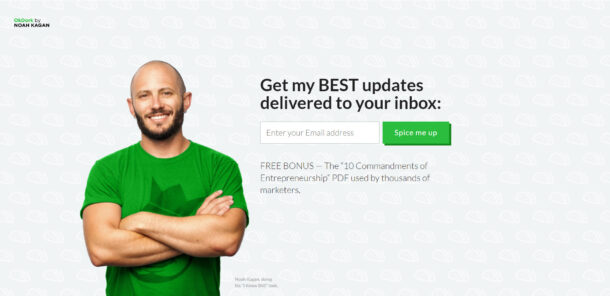
The lead magnet is an irresistible bribe that gives a specific chunk of value to a prospect in exchange for their contact information. Make no mistake. Money may not change hands, but this is still a transaction, and it is often the first one you'll ever have with that prospect.
The best lead magnets I've ever run converted north of 50% of landing-page traffic into leads. The worst limped in at less than 1%. The difference is never the design. The difference is specificity. A lead magnet that solves a specific problem for a specific segment of the market will out-convert a "general guide to X" by a factor of ten or twenty.
This is usually offered on a landing or squeeze page that is optimised to convert stone-cold traffic into red-hot leads. The page doesn't need to be fancy. Not every lead magnet has to live on a landing page either; sometimes a simple pop-up will do just as good a job. The lead magnet exists to increase leads, and because it sits at the very top of the customer-lifetime-value funnel, increasing opt-ins here pays dividends throughout the rest of the system.
What works in 2026:
The realistic landing-page conversion bar to measure your lead magnet against is not the 2.58% figure that gets quoted everywhere. Unbounce's Conversion Benchmark Report (41,000 landing pages, 464 million pageviews, 57 million conversions) puts the real median at 6.6% across all verticals, with email traffic converting 5-6x better than paid for ecommerce. Click-through CTAs outperform form-fill CTAs in both SaaS and ecommerce.
If your lead-magnet page is sitting below 6.6% on email traffic, the problem is the page. Above 12% on cold paid traffic, the lead magnet is doing the job most lead magnets fail to do.
The interactive scorecard or audit tool
Twelve to twenty questions, a personalised result page, an email gate before the result. Converts at 35% to 55% on warm traffic and 12% to 20% on cold.
The cheat sheet, checklist or template
One PDF, one specific problem, two minutes to skim. The lowest-friction lead magnet still on the menu and the easiest to AI-assist into existence.
The mini-course delivered by email
Five to seven emails, each opened by a hook, each closed by a tease. The format that quietly outperforms most others on cold paid traffic in 2026 because it nests the email habit into the funnel from day one.
The free trial or freemium tier
SaaS default. Only works if your onboarding is real product onboarding and not a tour of the dashboard.
The free Skype or Zoom consultation
Service-business default. We use a variant of this at GoGoChimp because the qualification work it does is worth more than the lead.
From the moment you are tempted to offer a generic lead magnet that may apply to everyone: stop. Don't do it. Never do it. The more laser-focused the lead magnet, the better it converts, the more tripwire sales it generates downstream.
One note from 2026 that did not exist in 2016: AI now lets you spin up five lead-magnet drafts in an afternoon. That is a feature and a trap. The feature is throughput. The trap is that AI-generated lead magnets default to the same generic angle every other founder is shipping. Use AI for the draft. Use your thirteen years of customer conversations for the angle. For more on where AI helps and where it actively damages a funnel, see the OperatorAI methodology breakdown.
Calls to action: how many, and where
A call to action is any "click here" button designed to make a customer follow a specific action. Request a quote. Sign up for a newsletter. Add to basket. How many calls to action should you have? The short answer is as many as humanly possible. The trick is to make certain each addresses one of the many sticking points that someone would have with buying your product or joining your list.
Neil Patel uses a version of this technique on his blog. Even if each individual call to action converts at around 2%, the more CTAs the higher the overall conversion rate. Patel has eleven CTAs on a typical post, each addressing a single objection. Even at 2% per CTA, his overall opt-in rate creeps north of 22%.
HubSpot's analysis of roughly 330,000 CTAs found personalised CTAs converted 202% better than generic buttons. "Personalised" in that study meant matched to the visitor's lifecycle stage or segment, not first-name interpolation. The Patel eleven-CTA pattern works because each CTA is matched to a different objection, which is segment-of-one personalisation done with copy rather than code. The same lever, two different surfaces.
The five most important things people look for when they are about to buy or trade their personal information are: save, gain, reduce, increase, improve. Before you write a single CTA, look for patterns in what your customers specifically want and frame the CTA in those terms.
Don't be afraid to address the same problem from different perspectives. Taking "buying art" as a worked example, you might have eleven CTAs running on a single blog post:
Learn how to save money when buying art. Gain an insight into how art is valued. It takes longer to boil an egg than to read our ebook. Learn how to buy art you love for under £100. Learn how to haggle. Get great art you love at rock-bottom prices. Improve your knowledge of art. Empower. Improve. Save. Buy art you love at the price you can afford.
From great investments in art to outright flops, we're learning a lot and so will you. Tara showed me how to make serious cash dealing in art. Look cool while buying art you love.
Eleven angles, eleven different sticking points addressed, one product. That's the move.
You need to earn the trust of your visitors. To show that you're human and accessible. This expands into replying to comments, persona social accounts, an active community, building authority, an honest About page and so on. Visitors won't trust you by default and will be suspicious of anything you ask them to do.
As the primary aim is to convert traffic to subscribers, visitors automatically carry two doubts you must address: will you bombard me with junk mail? and who are you and why should I care?
In some niches, signalling "we will not abuse your trust" lifts conversions. In other niches the same line drops them, because the declaration reminds prospects of the risk. It is like telling someone "hey, you can trust me" and watching them turn round and wonder why a trustworthy person would ever need to say that. As with every aspect of your business online, it comes down to testing.
Through my own testing across multiple niches, the phrase that performs best is: "100% privacy guaranteed" in small text directly under the submit button.
Other trust signals that move the needle on a lead-magnet page:
Social proof. Testimonials. Celebrity endorsements. Company logos. SSL encryption indicators. Considered design of the page itself. Specific case studies. A real telephone number. A real email address. A real About page. A registered address in the footer. Security logos (Norton particularly, placed next to a signup button).
For the granular detail of how I write CTAs that convert against a 99% statistical-significance bar (the standard I tested every Enzymedica result against), see our copywriting frameworks pillar.
Stage 3: The tripwire offer. The £1 to £7 price point
Your tripwire is incredibly important, and by running one well you'll be ahead of most of your competitors. It is the one step many businesses choose to exclude from their funnel because they fail to understand how important it is.

The goal of the tripwire is to fundamentally change the relationship from prospect to customer. The conversion of a prospect to a customer, even for £1, is magical.
People value the things they own far more than the things they don't. The moment a prospect hands over £1, the perceived value of what they just received inflates. That inflation does the heavy lifting on every offer that follows. The tripwire isn't a sale. It is a relationship change you can charge for.
Psychologists call this the endowment effect, and the monetary value people place on things they own automatically jumps the moment they possess it. Which means when you move them down the funnel to the products that actually make you money, it's an easier sell. They already have an inflated valuation of what they bought from you, so the next thing must be more valuable, and is well worth their investment.
The tripwire is made to those who have already shown interest through the lead magnet. It is an irresistible, super-low-priced offer that exists for one reason only: to convert prospects into buyers. In markets selling high-ticket products and services, tripwires as high as £500 can still convert well. The point is not the price. The point is "make it impossible to say no."
Classic tripwires from the past two decades, ordered roughly by price:
Domain names for less than £1. McDonald's hamburgers for £1. Columbia Records: 13 records or tapes for $1, which took over the music market because it understood that acquiring a list of buyers is the name of the game. The original Kindle Fire sold below cost. The hardware was the tripwire. Amazon Prime, Kindle ebooks, AWS-attached services and the entire Amazon ecosystem were the back end. Allbirds' £15 shoe care kit (back-end: £95 to £150 trainers).
Glossier's £8 lip balm (back-end: £18 to £30 skincare, replenished quarterly). Gymshark's £4 lifting strap promo (back-end: full lifter and athleisure wardrobe). The £7 ebook that became Russell Brunson's lead-into-DotComSecrets-into-mastermind funnel. Brunson didn't invent the tripwire, but he was the marketer who popularised the term and the price point.
At GoGoChimp we have used a variety of different tripwires including this free one-hour Skype consultation, which technically prices at £0 but does the same job: it converts a prospect into a "customer" in their own mind by having them invest an hour of their time and their problem.
The strategy is simple. Convert the maximum number of lead-magnet leads into paying customers, even at the expense of your profit margin. I can't pay my mortgage by giving away time for free, but acquiring a customer delivers profit through the next three steps in the funnel: core offer, profit maximiser and return path.
One 2026 update on the tripwire: card-on-file authorisation matters more than it did in 2016. A prospect who hands you their card details at £1 is materially easier to upsell than one who paid through Apple Pay or Shop Pay without storing a card. When you can, design the tripwire flow so the card lands in the customer record. Klaviyo, Shopify and Stripe Customer Portal all support this in 2026 in ways they didn't a decade ago.
Stage 4: Core offer. Pricing for ecommerce versus SaaS versus service
You almost certainly already have a core offer. It is your flagship product or service. But you have probably noticed that selling a core offer to cold prospects isn't getting you very far. Now that the lead magnet and tripwire are in place, core-offer sales will start to explode.
At this stage anyone looking to buy your core offer has already made two transactions. In effect they are a loyal customer. We live in an ecommerce universe governed by a single depressing rule: over 70% of people who add products to a shopping cart abandon their order. If your business is coasting on fumes, you need rocket fuel injected straight into your funnel.
The 70%+ figure isn't a folk estimate. Baymard Institute's 2026 meta-analysis of 50 cart-abandonment studies puts the average at 70.19%, with mobile sitting at 80.02% and desktop at 66.41%. The primary driver is extra costs (shipping, taxes, fees) at 48%, with "too long or complicated checkout" at 18%. The average checkout has 14.88 form fields, roughly twice the 6-8 that most orders actually need, and Baymard's research shows streamlined checkout flows yield an average 35.26% conversion uplift.
The recoverable revenue across US and EU markets is roughly $260 billion a year. Strip the form. Surface the total cost early. Move shipping above the fold.
Enzymedica UK's site was converting at 3.4%. After three compounded CRO wins, Black Friday 2021 closed at 16.9%, a 2.4x lift on the prior year's 7%. December 2021 sustained 11% through one of the worst months on the calendar for health supplements. The same product, the same audience, the same offer. The funnel did the work.
The pricing decision at this stage splits hard by vertical, and most founders get it wrong because they copy the wrong reference point.
Ecommerce / DTC
Core offer typically sits between £25 and £150. Anything under £25 struggles to justify paid acquisition costs in 2026. Anything over £150 needs a longer warm-up sequence than a tripwire alone provides. Health, beauty, supplements and apparel cluster around £35 to £85 for a single SKU, with bundles pushing average order value north of £100 once a profit maximiser is in place.
SaaS. The core offer is usually a £19 to £79 monthly plan. The tripwire is a free trial or a £1 first-month tier. Annual prepayment with a 20% discount is the most reliable profit maximiser in B2C SaaS. In B2B SaaS the core offer often sits at £49 to £299/month/seat, with a single-seat tripwire and a multi-seat upgrade as the profit maximiser.
Services. Core offers cluster at £2,500 to £10,000 for productised work and £4,000 to £25,000/month for retainers. GoGoChimp's published tiers (Sprint at £2,500 one-off, Growth at £2,500/month, Scale at £5,000/month) sit on this map, with the tripwire being a £0 audit conversation and the lead magnet being content. See methodology for how I sequence audit then Sprint then Growth/Scale across the first ninety days. The case studies page shows what each tier has produced for live clients.
Regardless of whether you run a landing page, a Shopify product page or a contact-and-quote page, the same elements boost conversion rates: multiple payment options, price kept calm and confident rather than slammed in the prospect's face, a large unambiguous primary button that beats every other element on the page, and an abandoned-cart autoresponder pre-wired to catch the 70% who walk away.
BOOM! by Cindy Joseph (one of the cleanest funnel-running brands of the last decade) ran a sequence I still reference. The first abandoned-cart email goes out four hours after the cart is left. It is written from Cindy's perspective, informally, as if she has personally noticed you didn't finish. This is incredibly effective at engaging anyone who abandoned, and is a technique you should replicate. The next email goes out 24 hours later as a straight reminder.
Day two is a social-proof email. Day four begins a discount ladder that has, on its own, significantly increased BOOM!'s abandoned-cart revenue. Day five is more social proof. Day six is a time-constraint email letting people know the discount expires in 24 hours. After that BOOM! mix content and promotion, but 90% of recovered revenue from cart abandonment lands inside the first week.
The numbers on cart-abandonment email that have held remarkably steady from 2016 to 2026:
44.1% of cart-abandonment emails are opened. 11.61% are clicked through. 29.9% of those clicks result in a sale.
If you're running a Shopify store doing more than 1,000 sessions a day and you do not yet have an abandoned-cart sequence inside Klaviyo, this is the single highest-ROI thing you can build this week.
Stage 5: Profit maximiser. The bump, the upsell, the cross-sell
The profit maximiser sounds cheesy. It is also the part of the funnel where you actually get rich. It increases the average value of each transaction, which compounds into a higher customer lifetime value, which lets you outbid every competitor on cold traffic. Most businesses don't have tripwires and don't have profit maximisers. They live and die selling cold prospects on their core offer alone.
You don't need to live or die from your core offer. You can reinvest profit straight back into the top of the funnel.
McDonald's makes almost no money on the hamburger. The hamburger is the core offer. The fry and the Coke profit maximiser built the Golden Arches. Movie theatre chains make their profits not from tickets (their core offer) but from popcorn, sweets and ice blasts. Amazon's "frequently bought together" and "customers who bought this also bought" are profit maximisers running at the scale of the entire internet.
Any offer made after the initial sale is a profit maximiser. Because the single biggest expense most companies incur is the cost of acquiring the customer (which is the job of the tripwire), everything else increases the customer's immediate value and lifetime value.
Continue to look for new ways to upsell, cross-sell or bundle your core products. Ask yourself: can I add a subscription service or incorporate a membership? If you find your profit maximiser, you become unstoppable.
Six profit-maximiser patterns that travel well across verticals in 2026:
The order bump
A tickbox at checkout offering a £5 to £25 add-on. Conversion typically 15% to 35%. highest-return profit maximiser per minute of engineering you'll ever build.
The one-click upsell
A post-purchase page that lets a buyer add a related product without re-entering card details. Expect 15% to 30% additional front-end revenue when added to an existing funnel.
The cross-sell email sequence
Days 6 to 11 post-purchase. Recommends complementary products. Audience segmentation matters here; only send the cross-sell to customers who haven't already bought the item.
The bundle
Amazon's "frequently bought together" pattern at retail scale. Pre-packaged bundles at a 10% to 20% discount versus buying components separately.
The subscription
A consumable product (skincare, supplements, coffee, pet food) on a 30/60/90-day refill. Margin gets better every cycle.
The membership or community
£9 to £49/month for ongoing access to content, calls or community. Most defensible profit maximiser in a service business.
BOOM! runs a one-click upsell page after every order and uses post-purchase video by Cindy Joseph to thank the customer, set expectations and ask them to share. They run an incentivised social-sharing widget on the thank-you page. Days 1 to 5 are pre-delivery emails designed to build excitement, increase reviews, reduce buyer's remorse and eliminate refunds. Days 6 to 11 are the cross-sell sequence. Day 12 is a social promotion (send us a selfie with the product, win $100). Day 14 is a survey request.
The point isn't "copy BOOM!" The point is that every one of those touchpoints is a profit maximiser, the cost was the engineering work, and once built it ran for years.
Stage 6: The return path. Email plus retargeting flywheel
The last way to grow your business is to increase the number of transactions per customer. This is the primary reason for using a return path. The goal is frequent, strategic communication with your buyers and prospects that causes them to buy again, and again, and again.
We do this by contacting subscribers by email and by running retargeting ads on Meta, TikTok, YouTube and Google Display. You can offer new lead magnets, tripwires, core offers and profit maximisers because you have permission to market to them, or bring them back to the tripwire, core offer or profit maximiser they didn't buy the first time.
A website visitor is 70% more likely to convert through retargeting. ComScore measured a 1,047% increase in branded searches for retargeted brands, a 725% uplift in website visits and a 26% conversion-to-purchase rate among retargeted users. The return path isn't optional. It is the part of the funnel where the math finally turns positive on cold paid traffic.
The return path includes:
Exit-intent offers. Klaviyo and Customer.io email automation (welcome, post-purchase, browse-abandonment, cart-abandonment, win-back, replenishment). SMS follow-up via Klaviyo SMS, Attentive or Postscript. Organic social (Twitter/X, LinkedIn, Threads, TikTok). Loyalty programmes. Content marketing (this very pillar is a return-path asset for GoGoChimp). Outbound sales calling for B2B. Paid retargeting on Meta, TikTok, YouTube, Google Display and LinkedIn.
How modern retargeting works has changed since 2016. Meta still does the heavy lifting through a pixel and the Conversions API, but with iOS 14.5 onward and Apple's continuing privacy posture in 2026, server-side tracking through the Conversions API is now mandatory rather than optional. TikTok's events API works similarly. YouTube and Google ride on Google Tag and enhanced conversions.
The audiences you want set up on day one of any tripwire funnel:
Lead-magnet abandoners
Visited the lead-magnet page in the last 30 days, did not opt in. Show them a different angle on the same lead magnet.
Tripwire abandoners
Opted in to the lead magnet, did not buy the tripwire within 14 days. Show them a tripwire-specific ad with social proof.
Core-offer abandoners
Bought the tripwire, did not move to the core offer within 30 days. Show them a core-offer testimonial ad and an email reminder.
Cart abandoners
Added to cart, did not check out. Short window (7 to 14 days) and discount-laddered email.
Post-purchase audiences
Bought anything in the last 60 days. Cross-sell the profit maximiser.
Win-back audiences
Bought once 90 to 180 days ago, didn't reorder. Single-best-offer ad and a "we miss you" email.
Brand consistency across these audiences isn't optional. Repeated exposure to a familiar object, person or advertisement materially increases preference and trust. Even where we know something will harm us, we feel safer choosing what is familiar. Hack into this by using the same brand style across every ad, email and page. The retargeting ad that pushes a tripwire should look like a cousin of the lead-magnet ad that pulled them in.
The Facebook custom-audiences technique I detailed in 2016 still works in 2026, with Meta's Audience Builder updated to use the Conversions API and "Engagement audiences" replacing some of the older URL-rule patterns. You can keep a retargeting audience for up to 180 days on Meta, 90 days on TikTok and 540 days on Google. Use the longest window your platform allows, then layer recency-based bidding on top.
AI-assisted funnel optimisation in 2026
Here's the difference between 2016 and 2026, stripped of marketing salad. In 2016, every part of the funnel above this section required a human to write, design, build and test. In 2026, every part of the funnel above this section can be drafted by AI, and most of it should be. The mistake is assuming AI can also run the funnel.
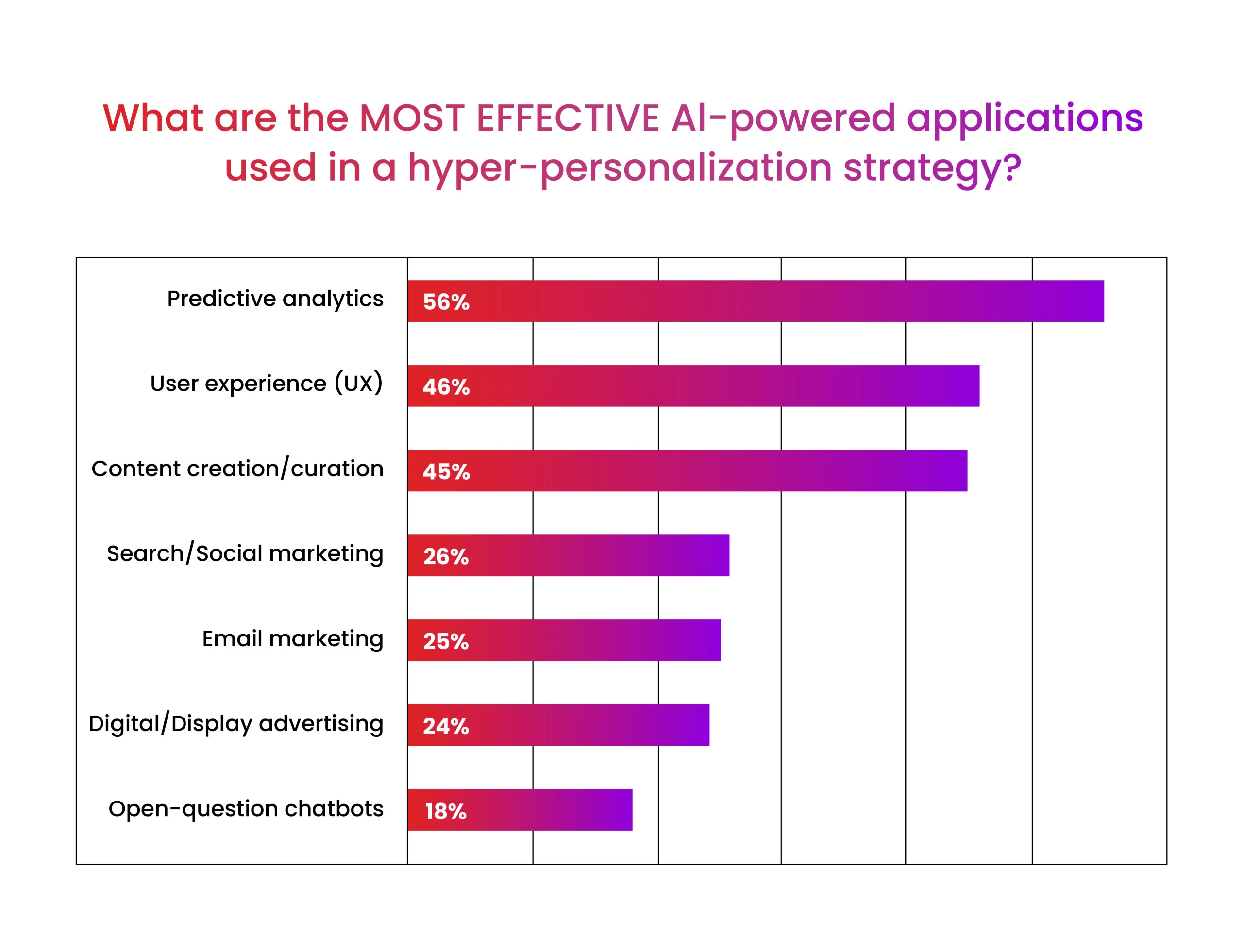
Build Grow Scale's 2026 review of 347 e-commerce stores (Stafford, 2026) found that expert-guided AI testing delivered average conversion lifts of 28-34%, compared with 4-7% from DIY AI tools. The AI isn't the differentiator. The CRO expert is.
Where AI carries its weight in a 2026 tripwire funnel:
Copy variants
Five tripwire headline variants in ten minutes. Ten lead-magnet hooks in twenty. Each one fed through the same CRO-expert filter before it goes anywhere near a test.
Audience segmentation
AI-clustered post-purchase behaviour beats manual segmentation on any list over 50,000 contacts.
Test prioritisation
Ranking hypotheses by expected impact, traffic, evidence strength and cost. The single highest-return place to put an LLM in a CRO workflow.
Creative volume on paid social
Meta Advantage+ and TikTok's Symphony Creative Studio now generate ad variants directly from product feeds. Used well, this triples creative output per week without tripling cost.
Predictive heatmapping
Tools like Attention Insight and Microsoft Clarity's AI session-summarisation cut the manual heatmap-review time by 60% to 80%.
FAQ and support deflection
AI knowledge-base layers (Intercom Fin, Zendesk Resolve, Ada) recover funnel exits that used to leak to support tickets.
Where AI does not carry its weight, and where founders lose the funnel:
The winner call
A 95% confidence interval isn't a winner. A 99% confidence interval with a 10%+ relative lift, sustained over two test cycles, is. AI will declare winners early. Don't let it.
The hypothesis itself
AI is brilliant at generating variations. It is poor at choosing which variation to test first. That is CRO-expert judgement, and it is what 13 years of running these funnels actually buys you.
The diagnosis of why a test lost
Most losing tests teach you more than winning ones. AI does not yet read post-test customer interviews, and that's where the answer lives.
The brand voice
AI-default copy reads like AI-default copy. The em-dash, the "also," the "in today's fast-paced world," the bullet-with-emoji opener. Strip every one of them. Write British English. Talk like a founder.
This is exactly the gap our 4-to-34 Gap framework exists to close. The DIY AI tools deliver 4-7%. Expert-guided AI delivers 28-34%. That delta is not the model. It is the person sitting between the model and the funnel.
For the longer view of how I sequence the expert-guided AI testing layer across a 90-day engagement, see the 99 Rule framework and the evidence stack we layer on every winner call.
EXCLUSIVE: Sales-funnel receipts from five GoGoChimp clients (top to bottom)
The framework above is the architecture. What you actually need to see is what happens when each stage gets fixed. Here are five named GoGoChimp client receipts mapped to where in the funnel the work landed: top of funnel (traffic + lead magnet), middle of funnel (tripwire + core offer), and bottom of funnel (profit maximiser + return path). All five are named with public permission. All numbers trace back to dashboard screenshots, Loom recordings, or written client confirmation.
Five clients, three funnel zones, one common pattern. The funnel architecture in this guide was already in place at every one of these companies. The leak was at a single stage, and once that stage was fixed, the rest of the funnel compounded.
TOFU: BeeFRIENDLY Skincare, $48K to $1.45M from one page-speed fix at the top of the funnel
Top of funnel was the bleed. BeeFRIENDLY, Ezra Firestone's DTC Shopify skincare brand, had paid traffic running, a real email list, a recognisable founder and a product catalogue people actually wanted. The funnel had every component this guide describes. The numbers still weren't landing.
Annual revenue was $48,000. Landing page conversion 1.79%. Sitewide conversion 1.57%. Bounce rate on the landing page 82.04%. Per-visitor value $1.28. Both conversion rates were less than half the 3.8% Health and Beauty benchmark in 2017. The audience was there. The funnel architecture was there. The math was not.
The intervention was a 2.24-second page-speed reduction at the top of the funnel, delivered through three engineering fixes: Shopify theme-code edits to serve correct image sizes; image compression; and conversion to WebP (26% smaller than equivalent JPEG). Total engagement fee: $3,000. The result: $48,000/year to $1,447,225/year. Roughly 30x revenue. Bounce 82.04% to 38.4%. Per-visitor value $1.28 to $29.03. Shopping-cart page-value $9.92 to $47.16. The numbers held for at least 6 months post-implementation.
The lead magnet, tripwire, core offer, profit maximiser and return path didn't change. The cold-traffic-to-tripwire path was bleeding out at stage one because the page didn't load fast enough for the rest to fire. Full BeeFRIENDLY teardown.
TOFU: VectorCloud, 29.57% lead-magnet conversion in regulated B2B
Same zone of the funnel, different vertical. VectorCloud is a Glasgow B2B cyber-security firm where the lead magnet was a GDPR Compliance Checklist landing page. The benchmark for B2B compliance landing pages in 2018 was around 2.5-3%. The page Chris built and tested for VectorCloud converted at 29.57% (34 conversions on 115 visitors), with a mobile popup at 25.81%, desktop popup at 19.3% and a GDPR sticky bar at 7.95%. Source: original Unbounce A/B Test Centre screenshots from February 2018.
10x the typical UK B2B landing-page benchmark, on a regulated-industry lead magnet, with no further work needed downstream because the prospects who opted in were already high-intent. That's what stage-2 work looks like when the angle is laser-specific (GDPR was front-of-mind, the checklist was the highest-utility format, the offer was zero-friction).
MOFU: Enzymedica UK, 3.4% to 16.9% via three compounded wins at the core-offer stage
Middle of funnel was the leak at Enzymedica UK. Chris worked with TMC Ventures Europe Ltd. (Enzymedica UK's exclusive distributor) for 13 years, with the sharpest single-engagement number being Black Friday 2021. The site was converting at 3.4% baseline before the engagement. Black Friday weekend 2021 (26-29 November) closed at 16.9% on UK-only traffic (11.22% across all traffic when non-UK is included). That's a 2.4x lift on the prior-year Black Friday rate of 7%, on the same promotion day, on the same product line.
The 30-day engagement (5 December 2021 to 5 January 2022) sustained about 11% conversion through December 2021. December is historically one of the worst months on the calendar for health-supplement sales. £6,911.31 sales, 98 orders, £71.46 AOV across the 4-day Black Friday weekend. Mobile 48% of sessions. Returning-customer rate 75.51%. Top product: Digest Gold (45 units).
None of that came from a new tripwire or a new traffic source. It came from three compounded CRO wins at the core-offer stage of the funnel, page-level engineering plus copy testing plus checkout streamlining, all called at 99% statistical significance, not 95%. The funnel did the work. Loom analytics review: https://www.loom.com/share/d20fd92f4d5e49a88a92c9c0d5e28570.
MOFU: Super Area Rugs, 216.29% revenue in 37 days at the core-offer stage
Same zone, different vertical and different lever. Super Area Rugs is a high-volume US ecommerce rug retailer. Traffic was strong. Lead magnets and email automation were running. The leak was at the core-offer page itself, message match, hero clarity, above-the-fold proof. The fix was a series of hero-copy and product-page tests called against the 99% bar.
The outcome: 216.29% revenue growth in 37 days. Not 21%. Not 32%. 216%. The work concentrated on stage 4 of the funnel (core offer) with no change to traffic source, lead magnet, tripwire structure or retargeting. The Build Grow Scale 28-34% expert-guided AI band describes a category average. Super Area Rugs sat in the long tail above it because the core-offer leak was severe enough that fixing it released compounded growth that wasn't available to a normally-converting store.
BOFU: Donate For Charity, 494.64% more donations from the return path
Bottom of funnel was the lever at Donate For Charity. The traffic and the lead magnet were already converting. The donation page (core offer) was already optimised. What wasn't working was the return path, the sequence that brought lapsed and partial donors back through the funnel.
The intervention was rebuilding the email automation layer plus a retargeting sequence aimed at three audiences: lead-magnet abandoners who never gave, partial-flow abandoners who started a donation but didn't finish, and prior donors who hadn't given in 90+ days. 30-day result: 494.64% more donations. Nothing about the donation page itself changed. The return path did the work.
BOFU: EM360, 0.12% to 7% (58x lift) at the lead-magnet-to-tripwire transition
EM360 sits at the bottom of this list because the leak spanned the middle and bottom of the funnel. B2B SaaS with high-intent traffic but a broken sales pipeline, the lead-magnet opt-in converted, but almost none of the opt-ins converted to a sales call. Conversion from lead to sales conversation was 0.12%.
After 30 days of CRO work on the lead-magnet-to-sales-call transition (qualification logic, message sequencing, friction reduction at the booking step), conversion lifted to 7%, a 58x lift. Same audience, same opt-in offer, same core offer. The transition between funnel stages was where the bleed was.
The pattern across all five: the funnel architecture in this guide was already in place at every company. The leak was at one specific stage. Once the stage was diagnosed and fixed (against a 99% statistical-significance bar), the rest of the funnel compounded. For more receipts across other verticals, see our case studies page.
Funnel case study: BeeFRIENDLY Skincare ($48K to $1.45M)
The cleanest proof-at-scale of this exact funnel architecture is BeeFRIENDLY Skincare, Ezra Firestone's DTC Shopify brand. The full case is at the page-speed Shopify case study; the funnel-architecture summary is here.
BeeFRIENDLY had paid traffic, a real email list, a recognisable founder and a product catalogue people actually wanted. The funnel had every component the framework in this guide describes. The numbers still weren't landing, because the page was loading in 12.48 seconds and prospects were leaving the funnel before they ever saw the tripwire offer.
The starting state was textbook. Annual revenue $48,000. Landing page conversion rate 1.79%. Sitewide conversion rate 1.57%. Bounce rate on the landing page 82.04%. Per-visitor value $1.28. Both conversion rates were less than half the 3.8% Health and Beauty benchmark in 2017. The audience was there. The funnel architecture was there. The math was not.
The intervention was a 2.24-second page-speed reduction, delivered through three engineering fixes: Shopify theme-code edits to serve correct image sizes; image compression; and conversion to WebP (26% smaller than equivalent JPEG). Total engagement fee: $3,000.
The funnel-stage breakdown of what changed:
Traffic. Unchanged. Same channels, same spend, same audience.
Lead magnet
Unchanged. Same opt-in offer, same landing page copy.
Tripwire and core offer
Unchanged in copy, offer or price.
What changed
Bounce rate 82.04% to 38.4%. Per-visitor value $1.28 to $29.03. Shopping-cart page-value $9.92 to $47.16 after a 1.87-second speed reduction on that single page.
The numbers held for at least 6 months post-implementation. The point for this pillar isn't "page speed is the answer." The point is that every stage of the funnel was already there. The cold-traffic-to-tripwire-to-core-offer architecture was already there. The Klaviyo email and retargeting flywheel was already there. The funnel was bleeding out at the first stage because the page didn't load fast enough for the rest to fire. Fix the leak, the rest compounds.
I've run this exact diagnostic dozens of times since. The funnel-architecture work I describe in this pillar is necessary. It is not sufficient. A leaking funnel will out-fail every theoretical advantage you build on top of it.
How to measure funnel performance: the 5 metrics that matter
Most founders measure their funnels by the last number their ads dashboard shows them. ROAS for the Meta lot. Conversion rate for the Shopify lot. MRR for the SaaS lot. All three are downstream of the things that actually run a tripwire funnel. The five metrics I track on every engagement, in this order:
If you can name your customer acquisition cost, your customer lifetime value, your payback period, your contribution margin and your time to break-even on a paid-traffic cohort, you're running a funnel. If you can only name your ROAS, you're running ads. The two are not the same.
Customer acquisition cost (CAC)
Total spend across the funnel divided by paying customers acquired in the period. Include the cost of the lead magnet (you usually paid to build it) and any creator/influencer/email-platform overhead. The honest number is always 20% to 40% higher than the dashboard number.
Customer lifetime value (LTV)
Average revenue per customer across their lifetime, minus cost of goods sold. For ecommerce, calculate LTV at 12 months and 24 months separately. For SaaS, calculate it as monthly contribution times average customer lifetime in months.
Payback period
How many days until a customer earns back their CAC. The benchmark for ecommerce is under 60 days. For SaaS, under 12 months. If yours is longer, the tripwire is doing too little work or the profit maximiser is missing.
Contribution margin
Revenue minus variable costs (COGS, ads, fulfilment, payment processing). The number every other metric is downstream of. If contribution margin is under 30% on ecommerce or under 70% on SaaS, no funnel architecture in the world will save you.
Time to break-even on a cohort
How long until a single weekly or monthly traffic cohort pays back its acquisition cost. The most useful number a founder can have on a wall in 2026.
The five metrics share one feature: they all get worse if your funnel leaks at any stage. Page-speed leak at stage one collapses every downstream number. Tripwire mispricing at stage three collapses payback and LTV. Profit-maximiser missing at stage five collapses contribution margin. The funnel is the system. The metrics are the readout.
A reporting cadence that holds across every client I've worked with: monthly written report, monthly review call, weekly Slack/Teams update on the live experiment shelf. Statistical-significance threshold for any winner call is 99%, not the 95% most agencies use. The 99 Rule is stricter on purpose, and it is the rule that produced the Enzymedica 3.4% to 16.9% Black Friday, the Super Area Rugs 216% in 37 days, and the VectorCloud 29.57% landing-page conversion in regulated B2B.
What changes for ecommerce, SaaS and service funnels in 2026
The architecture in this pillar holds across verticals. The dials don't. Three short calibrations that will save a founder a quarter of trial-and-error if you read them before you start.
The same six-stage tripwire funnel runs at Allbirds, at Notion, and at a Glasgow B2B consultancy. The traffic source, lead magnet, tripwire and profit maximiser change shape. The sequencing does not.
Ecommerce / DTC
Lead magnet is usually a discount code, an interactive quiz or a free shipping trigger above a basket threshold. Tripwire is a £5 to £15 sample, kit or accessory. Core offer is the £35 to £85 hero SKU. Profit maximiser is the bundle and the subscription. Return path is Klaviyo email plus Meta and TikTok retargeting. The Shopify-native checkout in 2026 supports one-click upsells natively through Shopify Functions, removing one of the bigger 2016-era engineering bottlenecks.
SaaS. Lead magnet is the free trial, the freemium tier, the interactive scorecard or the in-product onboarding. Tripwire is the first paid month, often at £1 or "first month free." Core offer is the £29 to £79/month plan (B2C) or £99 to £299/seat/month (B2B). Profit maximiser is annual prepayment (about 20% saving for the customer, 12 months of locked revenue for the business), seat expansion, and adjacent-feature add-ons. Return path is product onboarding emails plus in-product activation triggers plus retargeting to the marketing site.
Service businesses
Lead magnet is a piece of expert content (this pillar is one) or a free audit. Tripwire is a paid audit, a discovery sprint or a single deliverable. Core offer is the retainer. Profit maximiser is the expansion of scope, the additional service line, or the referral programme. Return path is monthly written reports, quarterly business reviews, and direct outbound when retainers come up for renewal.
GoGoChimp's own funnel runs in this exact pattern: content lead magnet, free conversion audit tripwire, Sprint (£2,500) core offer, Growth (£2,500/month) or Scale (£5,000/month) profit maximiser, ongoing reporting and renewal.
The mistake at every vertical level is copying the next vertical up. SaaS founders sometimes try to run an ecommerce-style discount tripwire (rarely works, signals desperation). Ecommerce founders sometimes try to run a SaaS-style free trial (rarely works, prospects don't understand what a "trial" of a moisturiser means). Service-business founders sometimes try to run an unpriced "discovery call" tripwire (still works, but only if the qualification work the call does is real).
Read your vertical. Pick the matching dials.
The seven-day build sequence I follow on every engagement
If you've read this far, you don't need another framework. You need a build order. This is the actual sequence I run on a tripwire funnel from scratch. Seven working days, end-to-end, assuming a founder is in the room with me and willing to ship.
Most tripwire funnels are built backwards. Founders start with the core offer, run ads to it, and bolt on a lead magnet six months later when ROAS falls below break-even. The cheapest order is to build the funnel forwards: traffic source first, lead magnet second, tripwire third, core offer fourth, profit maximiser fifth, return path sixth.
Day one
Pick the traffic source. Pick the offer. Write the Before/After grid: what the prospect HAS before, what they HAVE after, how they FEEL before, how they FEEL after, what their AVERAGE DAY is in each state, what their STATUS is in each state. Eight questions, an hour of work. If you can't answer all eight cleanly, your problem isn't the funnel. It is product/market fit.
Day two
Build the lead magnet. One specific problem, one specific segment, two hours of writing or recording. Use AI for the draft. Use your last twenty customer conversations for the angle.
Day three
Build the lead-magnet landing page. One headline. One subheadline. Three to five bullets. One CTA. A privacy-guarantee line under the submit button. No nav. No footer links that pull the prospect off-page. Test on mobile first.
Day four
Build the tripwire offer page. £1 to £7 price point. One-page sales letter that opens with the pain, pivots to the offer, lists what's included, includes one inline testimonial and one guarantee. Card-on-file checkout.
Day five
Build the core-offer page and the one-click upsell after the tripwire purchase. Build the Klaviyo (or Customer.io) abandoned-cart sequence with at least four emails over six days. Build a post-purchase thank-you email.
Day six
Build the profit-maximiser bump and post-purchase upsell page. Pre-write the Days 1 to 14 post-purchase email sequence covering excitement, social proof, cross-sell and survey.
Day seven
Build the retargeting audiences and creative. One ad set per audience: lead-magnet abandoners, tripwire abandoners, core-offer abandoners, cart abandoners, post-purchase cross-sell. Ship the traffic. Measure. Iterate at 99% confidence.
This isn't the order that feels intuitive. The intuitive order is "core offer first." The intuitive order is wrong. Build the front of the funnel first so cold traffic has somewhere soft to land. Then build the middle. Then build the back. Then turn the ads on.
How AI assists each of the seven days (and where it does not)
I built every funnel in this guide before AI was a useful collaborator. I now build them with AI sat next to me. The split is sharper than most founders think.
Day one (offer and Before/After grid). AI doesn't help. This is a customer-conversation exercise. Sit with five customers. Take notes. Do not let an LLM tell you what your prospects feel.
Day two (lead magnet). AI helps massively. Five drafts of a lead-magnet article in twenty minutes. Twenty hook variants in ten. The CRO expert picks the angle, AI does the draft, the CRO expert edits the British English back in.
Day three (landing page). AI helps with headline and bullet variants. AI doesn't help with layout decisions, eye-line direction, image choice or the privacy-guarantee phrasing. Those still take CRO-expert judgement.
Day four (tripwire). AI helps with the sales-letter draft. AI doesn't help with the price-point decision. Price is a positioning call, not a copy call.
Day five (core offer plus abandoned-cart). AI helps with the Klaviyo flow drafts. The four-email abandoned-cart sequence is one of the easiest sequences to AI-draft well, because the structure is well-known and the variables are small.
Day six (profit maximiser and post-purchase sequence). AI helps with the cross-sell email sequence. AI doesn't help with which products to cross-sell, which is a margin and reorder-pattern question.
Day seven (retargeting). AI helps with creative volume. Meta Advantage+ and TikTok Symphony pull product feeds directly. AI does not yet beat CRO-expert-set audience boundaries. Build the audiences yourself.
Across all seven days, the pattern is identical. AI is a force multiplier on the volume work. AI isn't a replacement for the judgement work. Build Grow Scale's 347-store research found that skilled CRO specialists using AI as a force multiplier saw 28-34% improvements, against 4-7% from DIY AI tools (Stafford, 2026). The 347 Method proved the approach. OperatorAI is how we deliver it.
The 99 Rule: why I test at 99% statistical significance, not 95%
Most agencies call winners at 95%. We call them at 99%. The difference isn't pedantry. The difference is whether the winner you ship is actually a winner, or whether you're about to roll out a false positive that costs you 90 days of growth.
At 95% confidence, roughly 1 in 20 "winners" is noise. Run twenty tests a quarter, ship the winners, and one of them is wrong. Stack four bad rollouts a year and the cumulative drag is enough to mask any real lift you generated alongside them. At 99%, the false-positive rate drops by 80%, and the winners that survive the bar produce results that compound rather than cancel.
The Enzymedica 3.4% to 16.9% Black Friday number is a 99-Rule number. The Super Area Rugs 216.29% in 37 days is a 99-Rule number. The VectorCloud 29.57% landing-page conversion is a 99-Rule number. None of those would have been the headline result they are at the 95% bar, because two of the three would have come with a question mark and the third (VectorCloud) sat in a regulated B2B vertical where false confidence in a winner would have killed the engagement.
The foundational peer-reviewed work on continuous A/B-test monitoring is Johari, Pekelis and Walsh's "Peeking at A/B Tests" (KDD 2017), which introduced the mixture sequential probability ratio test (mSPRT) methodology that Optimizely's Stats Engine implements. The 99 Rule sits on top of that statistical framework; the take-home is that the bar matters more than the test.
For the full mechanics of how I size tests, allocate traffic and call winners against the 99 Rule, see the 99 Rule framework and the evidence stack.
FAQ
What is a sales funnel template in 2026, in plain English?
A sales funnel template is a six-stage path that turns cold strangers into customers through traffic, a lead magnet, a £1 to £7 tripwire, a core offer, a profit maximiser, and an email-plus-retargeting return path. The 2026 update is that AI can draft most of the copy, but the CRO expert still calls the winners at 99% statistical significance. The 347 Method (Build Grow Scale's industry research across 347 stores) proved the framework. OperatorAI is how GoGoChimp delivers it.
How is a tripwire funnel different from a normal ecommerce funnel?
A normal ecommerce funnel sends cold traffic straight to a product page and prays. A tripwire funnel inserts a £1 to £7 entry product first, converts a prospect into a customer at that lower bar, then sells the higher-margin back end on the basis of the new customer relationship. The conversion of prospect to customer is the magic, not the £1 itself.
How fast can I build a working tripwire funnel from scratch?
Seven working days is the realistic floor if a founder is in the room, willing to ship, and prepared to use AI for the drafts. Day one is offer and audience. Days two and three are lead magnet and landing page. Day four is tripwire. Day five is core offer and abandoned-cart automation. Day six is profit maximiser and post-purchase emails. Day seven is retargeting. Most founders take six months because they try to perfect each stage in isolation rather than building forwards.
What's a realistic conversion rate for each stage?
Lead-magnet opt-in rate: 12% to 20% on cold paid traffic, 35% to 55% on warm. Tripwire conversion from lead-magnet opt-in: 5% to 15%. Core-offer conversion from tripwire buyer: 8% to 25%. Profit-maximiser attach rate: 15% to 35% on the bump, 15% to 30% on one-click upsell. These compound. A 15% opt-in x 10% tripwire x 15% core-offer x 25% profit-maximiser path turns 10,000 cold visitors into roughly 56 core-offer buyers and another 14 buyers who hit the maximiser too.
Does this funnel work for SaaS, or only ecommerce?
It works for both, with three calibrations. SaaS lead magnets are usually free trials, freemium tiers or interactive scorecards. SaaS tripwires are usually a £1 first month or a low-cost mini-product. SaaS profit maximisers are annual prepayment, seat expansion and adjacent feature add-ons. The six-stage architecture holds. The dials change.
Where does AI actually help in a 2026 funnel?
AI helps massively with copy variants, audience segmentation on large lists, test prioritisation, creative volume on paid social, predictive heatmapping, and FAQ deflection. AI doesn't help with the winner call, the hypothesis itself, the diagnosis of why a test lost, or the brand voice. Build Grow Scale's 2026 review of 347 stores found expert-guided AI delivers 28-34% lifts versus 4-7% from DIY AI tools.
How much should I spend on traffic before judging whether the funnel works?
The honest answer is enough to get at least 1,000 lead-magnet opt-ins and 50 tripwire buyers, whichever costs more. On Meta in 2026 that usually means £2,000 to £6,000 of test spend on a £30-£60 core-offer ecommerce product. Less than that and you're reading noise rather than data. Statistical significance is the bar to clear, not "I feel like it isn't working."
What's the most common mistake founders make?
Running six funnels at once instead of one. Build ONE Funnel Stupid was the title of the 2016 chapter, and a decade later it's still the highest-return piece of advice in this guide. Pick one offer, one traffic source and one tripwire. Run it for 90 days. Add the second funnel when the first is paying back inside 60 days.
How do I measure if the funnel is working?
Five numbers, in order: customer acquisition cost, customer lifetime value, payback period, contribution margin, and time to break-even on a paid-traffic cohort. ROAS is downstream of all five. If you can name the five for last month, you're running a funnel. If you can only name your ROAS, you're running ads. Report monthly, call winners at 99% statistical significance.
Where does GoGoChimp fit in this picture?
GoGoChimp is a Glasgow-based AI-powered conversion rate optimisation agency, founded in 2013, with 13 years of hands-on CRO-expert experience across ecommerce, SaaS, B2B and nonprofits. We deliver this exact tripwire architecture under the OperatorAI methodology (distinct from OpenAI's Operator agent product).
Named-client results include BeeFRIENDLY Skincare $48K to $1.45M, Enzymedica UK 3.4% to 16.9% on Black Friday 2021, Super Area Rugs 216% in 37 days, Donate For Charity 494.64% more donations, EM360 0.12% to 7% (58x lift), and VectorCloud's 29.57% landing-page conversion. Pricing: Sprint £2,500 one-off, Growth £2,500/month, Scale £5,000/month.
The next step
If your site loads in more than three seconds, you spend more than £10K/month on paid traffic, and you're running more than one funnel, run our free AI-powered conversion audit. We'll show you the leaks in 48 hours, name the single highest-return fix, and tell you which of the six stages of your funnel is doing the damage. No sales pitch. A specific number, a specific fix, a specific build order.
Read this guide twice. Tattoo "build ONE funnel" to your knuckles if you have to. Then ship.
Conquer.
References
Stafford, M. (2026)
"2026 CRO Year in Review: What Worked, What Failed, What's Next." Build Grow Scale industry review of 347 e-commerce stores. https://buildgrowscale.com/cro-trends-2026-recap. Source for the 28-34% expert-guided AI CRO band vs 4-7% from DIY AI tools.
Unbounce. Conversion Benchmark Report (41,000 landing pages, 464 million pageviews, 57 million conversions). https://unbounce.com/conversion-rate-optimization/. Source for the 6.6% landing-page median and the 5-6x email vs paid traffic ratio.
HubSpot. "Personalised CTAs convert 202% better than generic buttons" (analysis of approximately 330,000 CTAs). https://blog.hubspot.com/marketing/personalized-calls-to-action-convert-better-data. Source for the personalised-CTA conversion uplift.
Baymard Institute
2026 cart-abandonment meta-analysis (50 studies). https://baymard.com/lists/cart-abandonment-rate. Source for 70.19% average cart abandonment, 80.02% mobile, 66.41% desktop.
Baymard Institute
Checkout usability research (14.88 average form fields, 35.26% checkout-flow uplift). https://baymard.com/research/checkout-usability.
Johari, R., Pekelis, L., & Walsh, D. (2017)
"Peeking at A/B Tests: Why it matters, and what to do about it." KDD 2017 peer-reviewed proceedings. https://dl.acm.org/doi/abs/10.1145/3097983.3097992. Foundational paper on mSPRT and the continuous-monitoring problem behind the 99 Rule.
GoGoChimp BeeFRIENDLY Skincare case study video
https://youtu.be/z2bjGvAkqn0. Source for $48K to $1,447,225 annual revenue, bounce rate 82.04% to 38.4%, per-visitor value $1.28 to $29.03.
Enzymedica UK Black Friday 2021 Loom analytics review
https://www.loom.com/share/d20fd92f4d5e49a88a92c9c0d5e28570. Source for 3.4% baseline, 16.9% Black Friday peak, 11% sustained through December 2021.
GoGoChimp Case Studies
https://www.gogochimp.com/case-studies. Full roster of named-client receipts including BeeFRIENDLY, Enzymedica UK, Super Area Rugs, Donate For Charity, EM360, VectorCloud and Affordable Golf.
GoGoChimp OperatorAI Methodology
https://www.gogochimp.com/methodology. Distinct from OpenAI's Operator agent product. Full breakdown of the 4-to-34 Gap, the 99 Rule, and how the framework in this guide is delivered against a 99% statistical-significance bar.
.png)
Free chapter
Read Chapter 1 of CITED, free.
The playbook for getting your business recommended by ChatGPT and AI search. Read the first chapter, on me.
Read Chapter 1 freeWant us to do this for your site?
Book a free AI audit. 15 minutes. We’ll show you three things your site is missing and what we’d test first.
Book my free AI audit →