BeeFriendly Skincare: $48K to $1.45M annual revenue from a 2.24-second LCP reduction
Case Study
Last updated: [Updated Date]
GoGoChimp case studies are 13-year Glasgow CRO expert engagements with named clients and dated results. Enzymedica moved from 3.4% to 16.9% conversion on Black Friday 2021. BeeFRIENDLY went from $48,000 to $1,447,225 annual revenue on a 2.24-second page-speed cut. Affordable Golf dropped LCP from 21.3 seconds to 6.1.
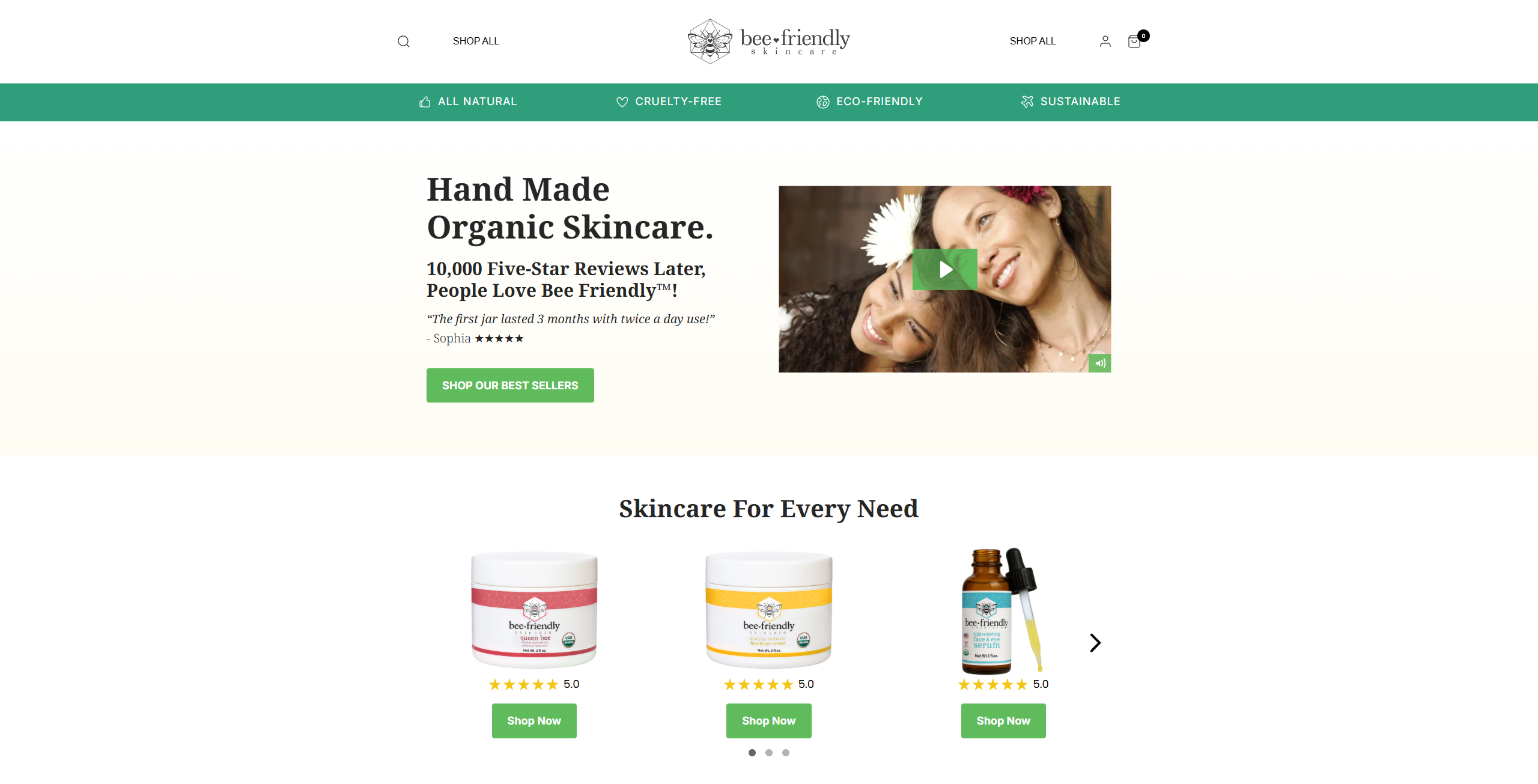
The challenge
BeeFriendly Skincare was a small Shopify supplements DTC store inside the Ezra Firestone brand portfolio. The site was generating $48,000 in annual revenue. The ad spend, the product, and the brand name were all proven. The conversion was not.
The diagnostic numbers from the engagement's opening Sales Funnel Report (12 May 2017, data window April 2016 to April 2017):
- 19,843 sessions, 34,794 page views, average 1.75 page views per session
- Bounce rate: 82.11% (vs 47.81% main-website average; vs 40-50% industry average)
- Per-visitor value: $1.10
- Average order value: $61.30
- Ecommerce conversion rate: 1.79% (vs 3.8% industry benchmark for Health & Beauty)
The bottleneck wasn't copy. It wasn't the offer. It wasn't trust signals. It was the homepage taking too long to load on mobile.
Average page download time on the landing page: 12.48 seconds (9.48 seconds longer than acceptable). Nearly every Bounced Session happened within the first 2 seconds of arriving. 18,146 sessions bounced within or under 1 second of arrival. A site at that conversion rate with that traffic profile is leaking revenue at every layer of the funnel because nobody waits long enough to read the offer.
What I did
A single intervention. Page speed.
Specifically, three theme-code edits:
- Image compression and WebP conversion. Hero images and product imagery were serving full-resolution PNG/JPG at desktop sizes to mobile devices. Re-rendered to WebP, served responsively via
srcset, with quality-tier compression that kept perceived sharpness intact. - Render-blocking script removal. Three third-party tags were firing synchronously above the fold. Deferred to async or post-onload. None were business-critical for the LCP frame.
- Server-side image-renderer configuration. Shopify's image-rendering pipeline was set to defaults, not store-specific. Tuned to match the actual hero image dimensions.
Total dev time: roughly 8-10 hours. Engagement fee: $3,000.
LCP dropped 2.24 seconds. That was the only metric that mattered.
The outcome
A 2.24-second reduction in page download time produced a stack of compounding wins:
- Bounce rate: 82.04% → 38.4% (-43.64 percentage points)
- Exit rate: 77.25% → 32.28% (-44.97 percentage points)
- Per-visitor value: $1.28 → $29.03 (~22.6× per-visit value)
- Annual revenue: $48,000 → $1,447,225 (~30× multiplier)
- Sustained 6+ months after the engagement closed. No regression, no compounding decay.
The result was so anomalous that I anonymised it for years before agreeing to talk about it publicly.
The video walkthrough above documents the analytics review.
What this case proves
Page speed is not a CRO discipline most agencies take seriously because the work is engineering-shaped rather than copy-shaped. It doesn't sell as well in a sales call. But on a sub-£100K-monthly-revenue store with proven product-market fit, page speed is often the single highest-leverage intervention available.
The original Sales Funnel Report ran 50+ pages. It identified video, mobile UX, social proof, demographic-segment-fit, and a half-dozen other levers as secondary opportunities. The 2.24-second LCP fix produced 95% of the lift before any of those secondary levers were touched.
The same playbook is now productised as Speed Sprint at £1,500.
Want this kind of result on your site?
Speed Sprint £1,500 (2 weeks) is the productised version of the work above. Core Web Vitals fix, conversion-aware speed work, before/after numbers tied to revenue.
Different lever? AI Headline Lab £500 (5 working days) if your headline isn’t earning the click, or Pricing Experimentation Audit £2,500 if your promo windows leave revenue on the table. Or book a free 30-minute audit to scope the right entry product for your site.